SCIENTIFIC ANALYSIS
THOUGH the comprehensive FORENSIC SCIENTIFIC ANALYSIS REPORT IS currently being completed and forthcoming
PIGMENTS and BINDERS IDENTIFIED TO DATE INCLUDE :
Titanium white (COPRECIPITATED) ▪ Barium sulfate (BaSO4) ▪ Pigment Red 4 (β-naphthol red) ▪ CADMIUM yellow ▪ Chromium yellow (mixed chromates) ▪ Prussian blue (iron hexacyanoferrate) ▪ Chrome green (chromium oxide + Prussian blue mixture)
Chalk ▪ Gypsum ▪ Kaolinite ▪ Talc ▪
[Particularly affirming is the presence of “coprecipatated titanium white”. THIS PARTICULAR FORMULATION FOUND in TITANOX BRANDS haD been a STAPLE Pigment of the new york abstract expressionist from 1940 - 55]
ACADEMIC RESEARCH
visual ANALYSIS
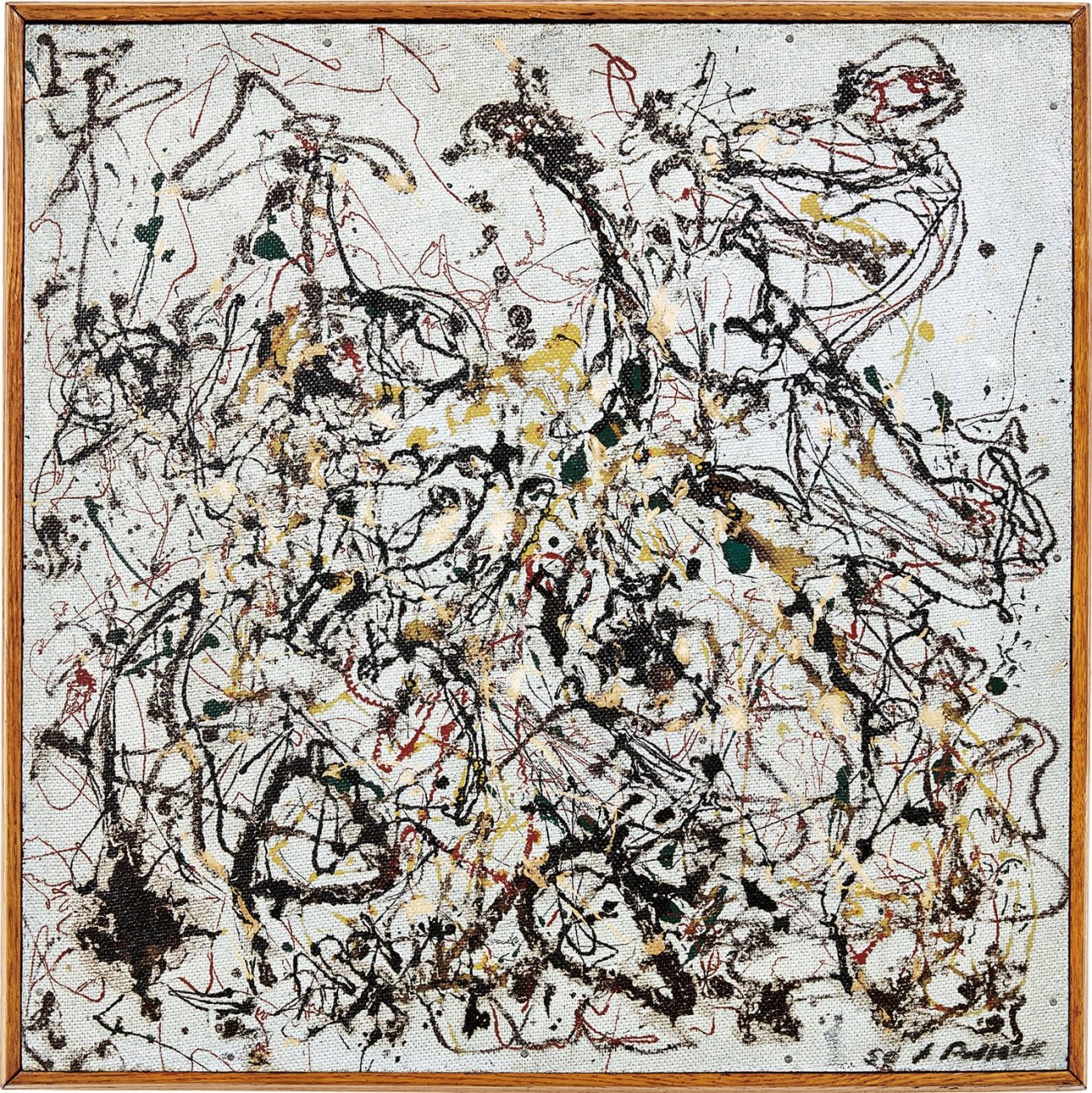
We previously stated THAT our INITIAL attribution wasn’t Jackson Pollock. Though we were familiar with his art we hadn’t studied his techniques and materials. And because of the textual three dimensional nature of the paintng, we considered that it was possibly a mixed media work BY ALFONSO OSSORIO, mistaking the squiggly applications of oil paint for wire or string until it arrived and we were able to examine it in hand.
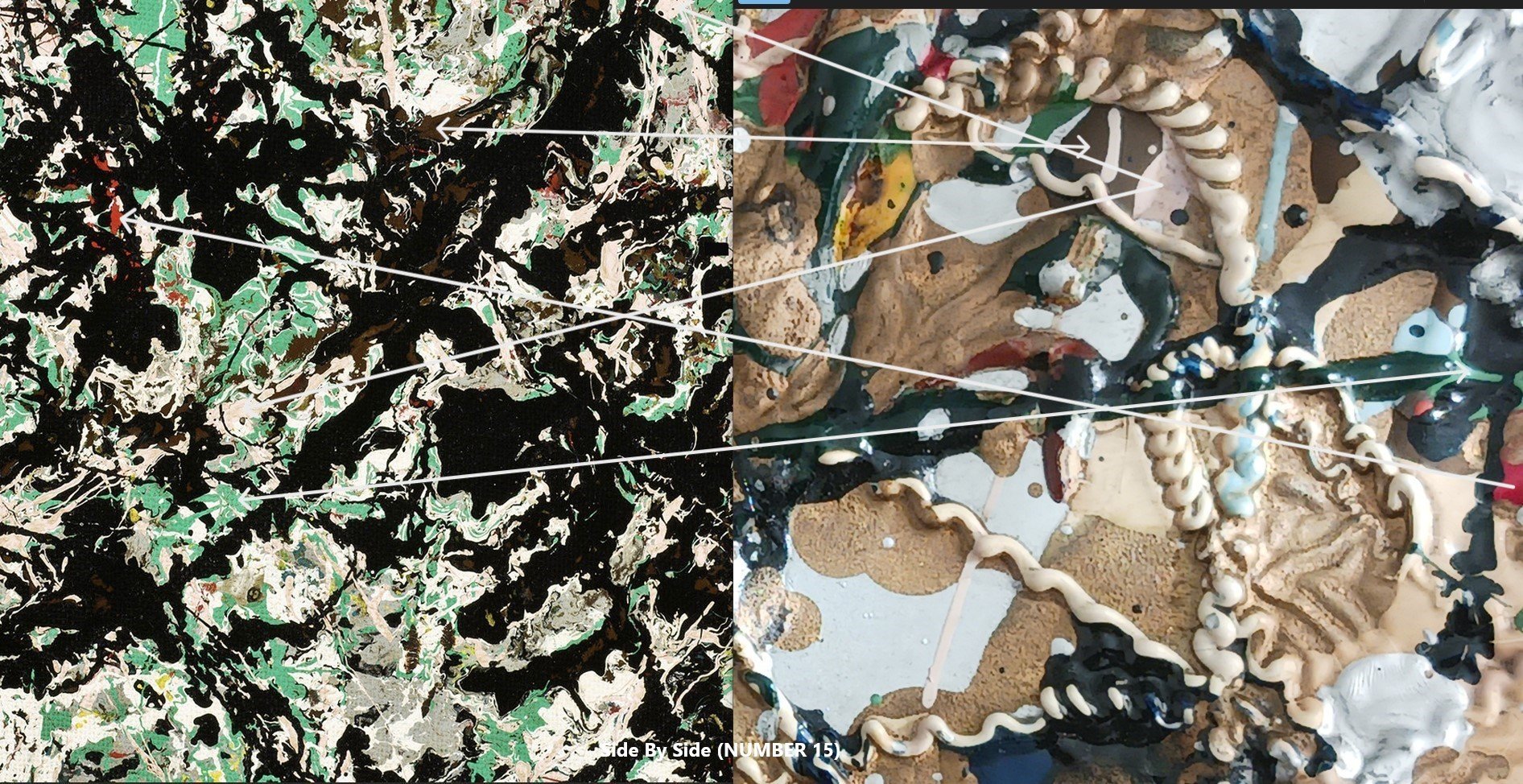
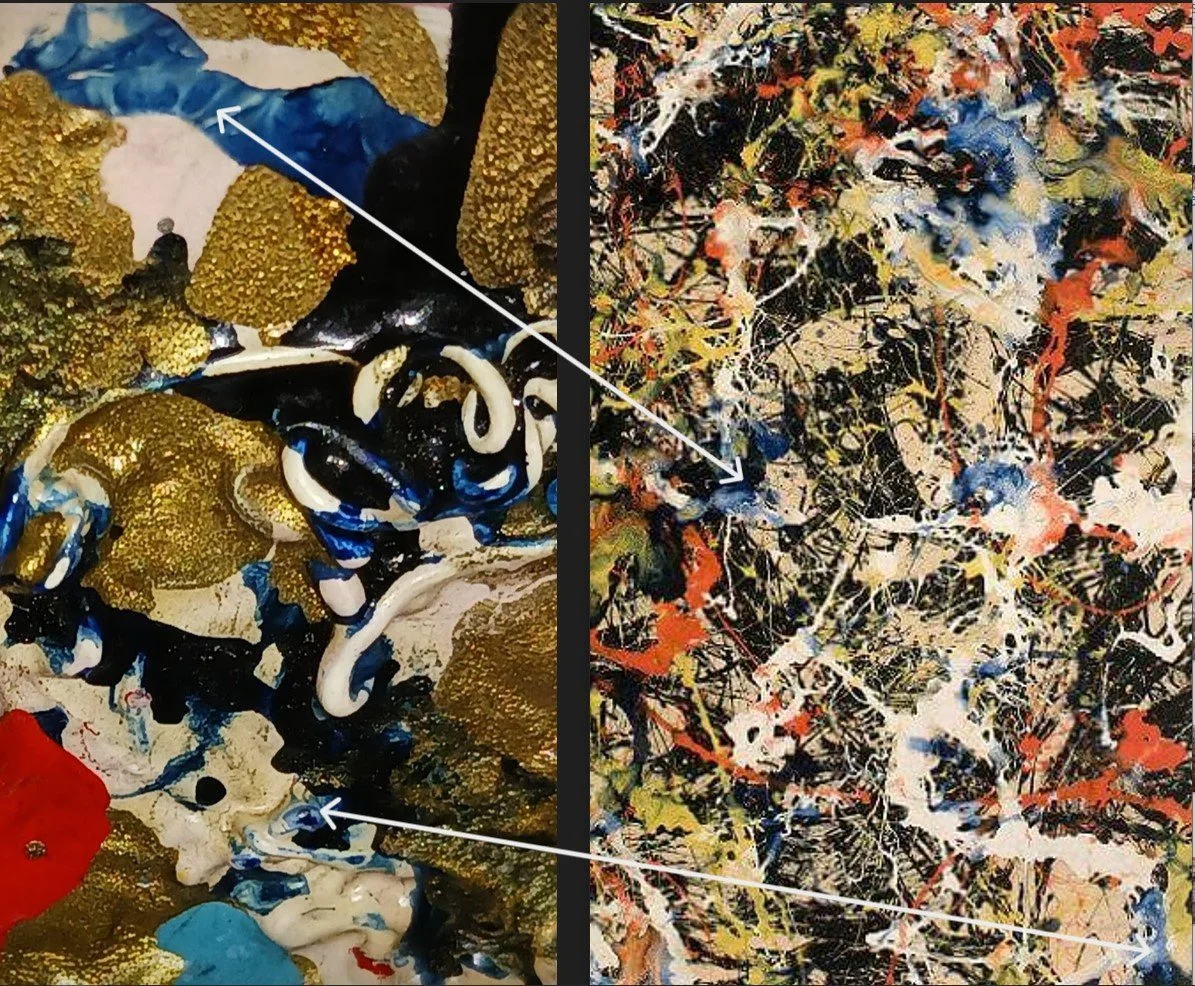
When it arrived we captured a comprehensive group of images in varying light and from various angles. We then set about downloading large file images of established Jackson Pollock paintings. Below are the side by side comparative images between our discovered painting and established Pollocks. We have captioned each pairing to emphasize the particular characteristics we intend to highlight.
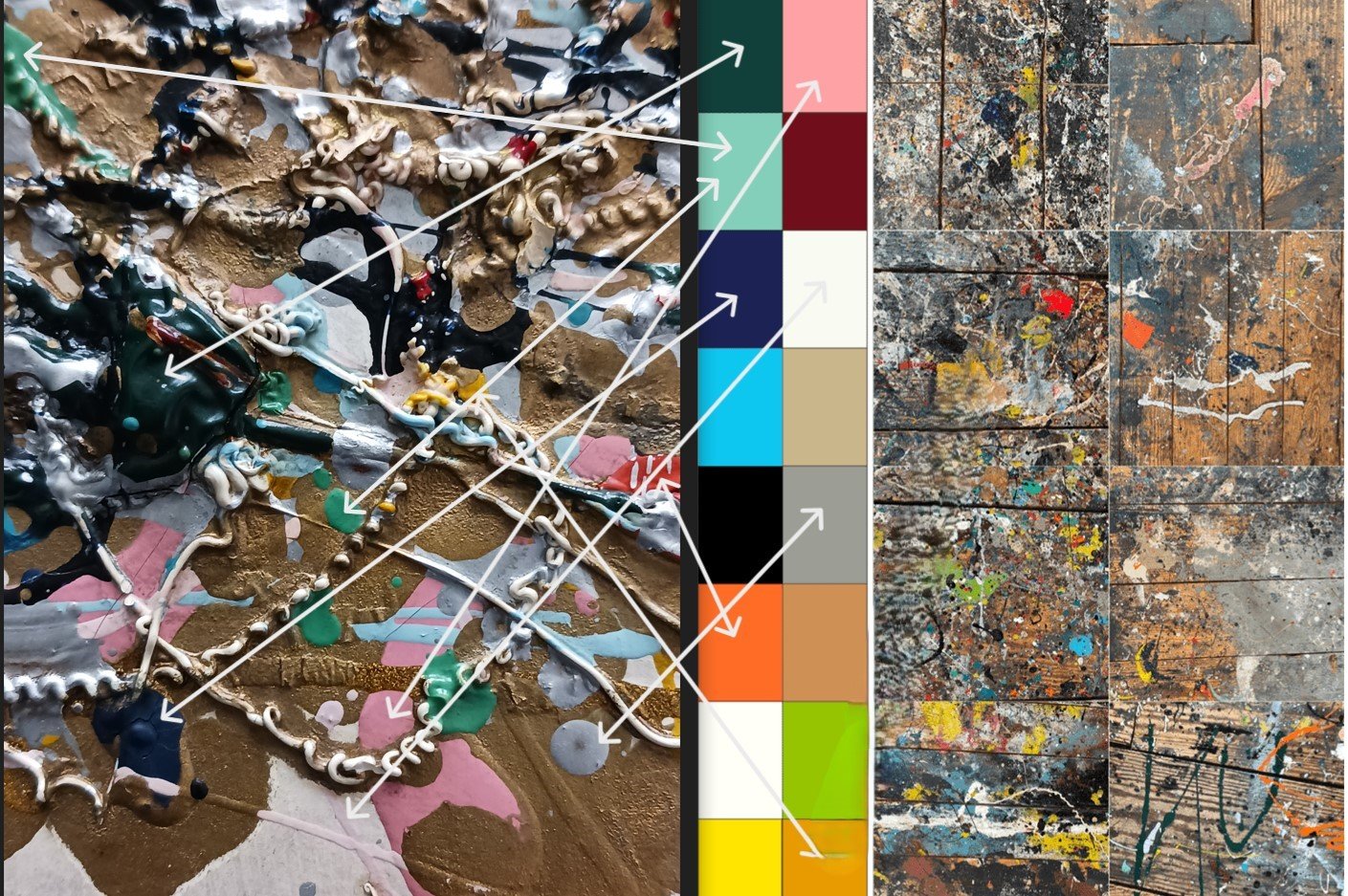
CHART OF PRIMARY PIGMENTS PRESENT ON
POLLOCK’S STUDIO FLOOR
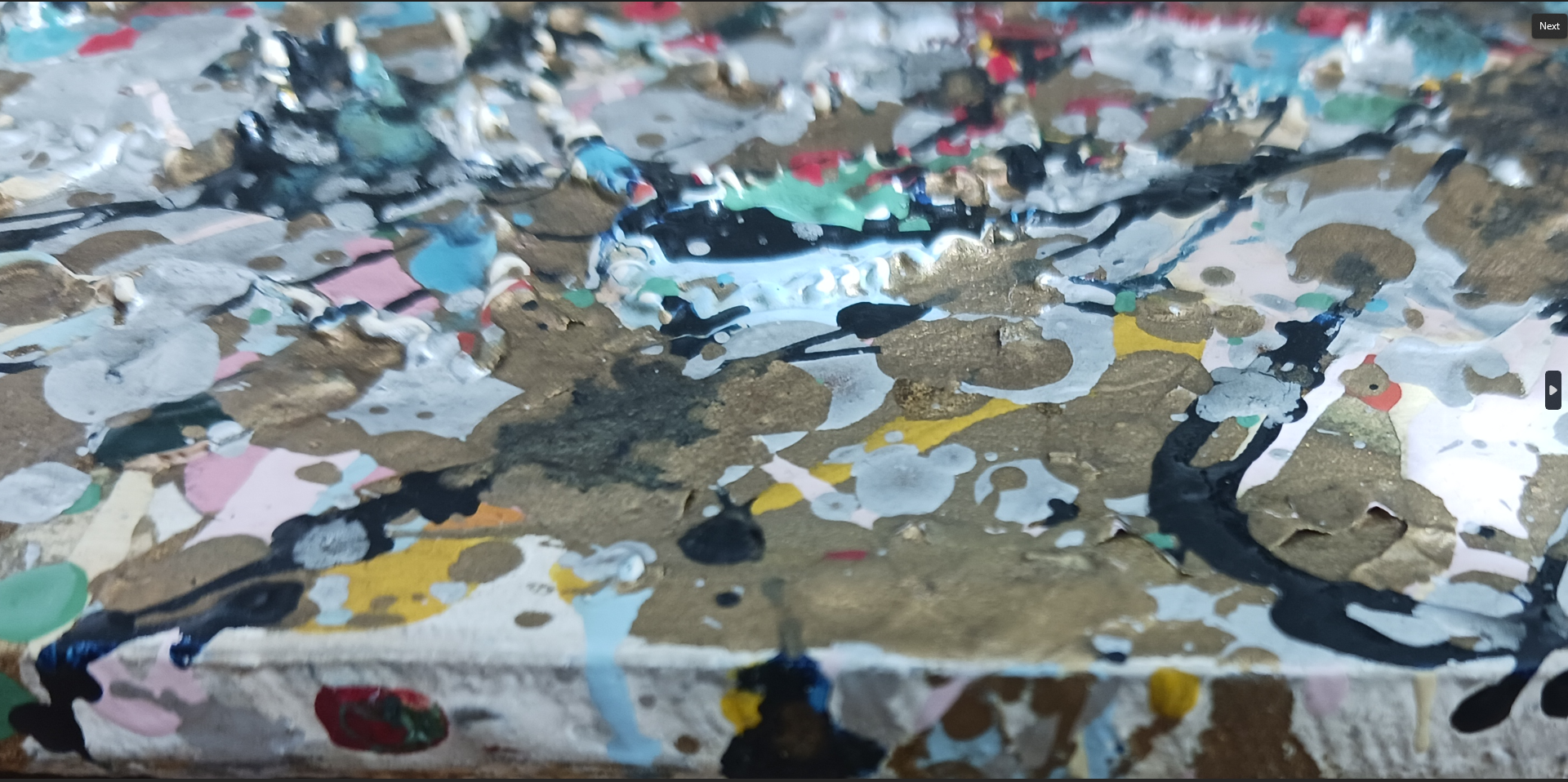
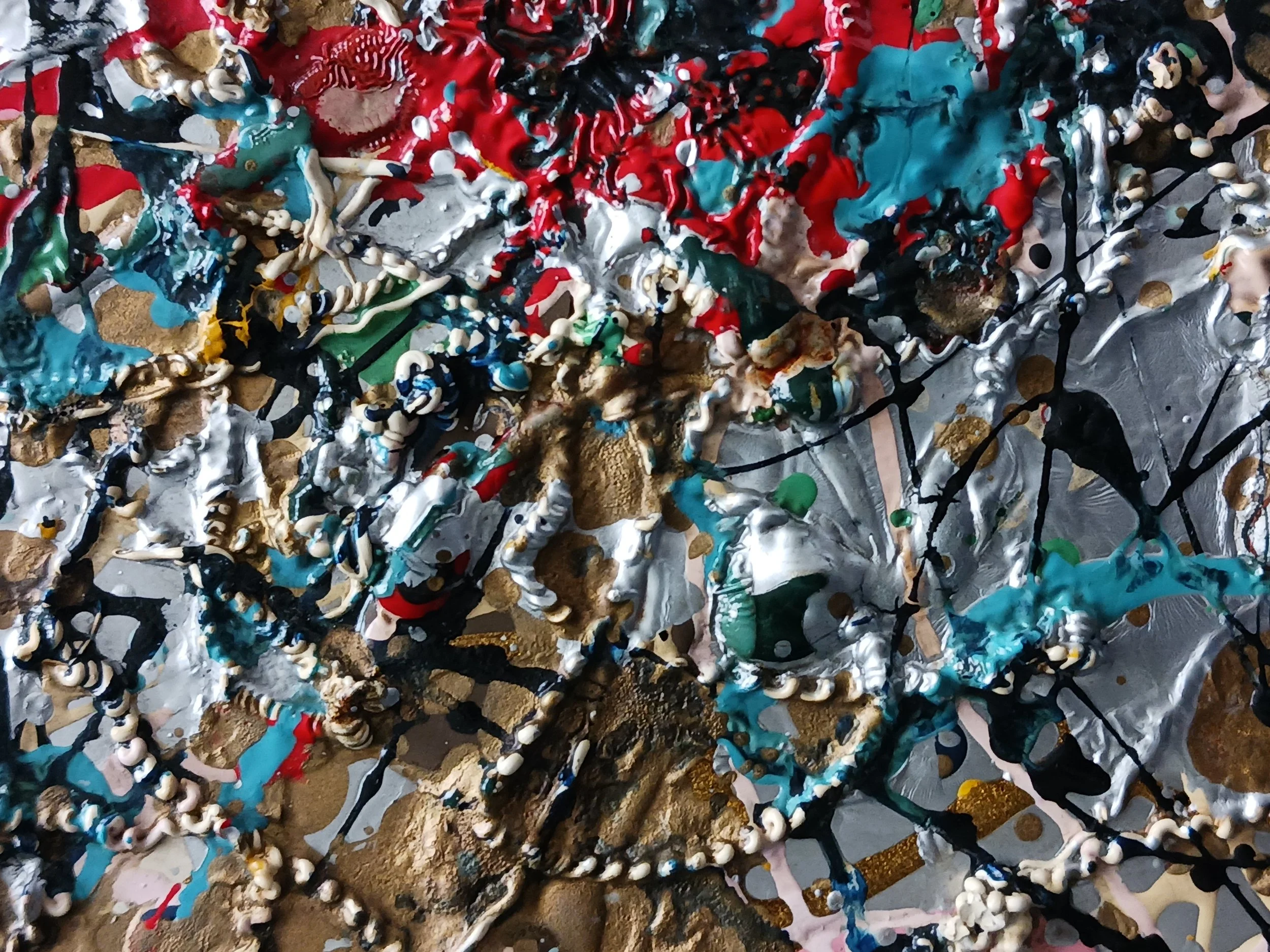
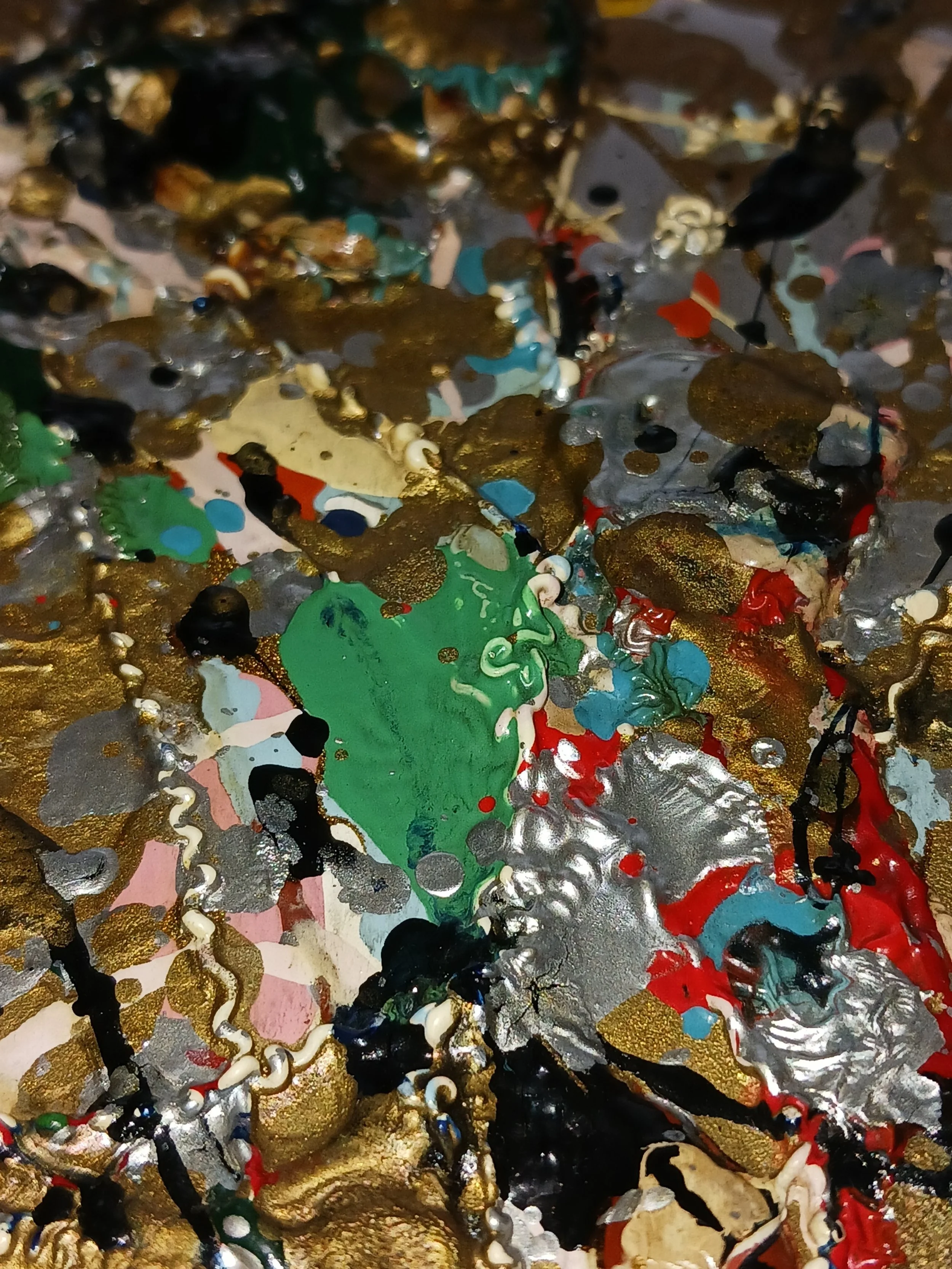
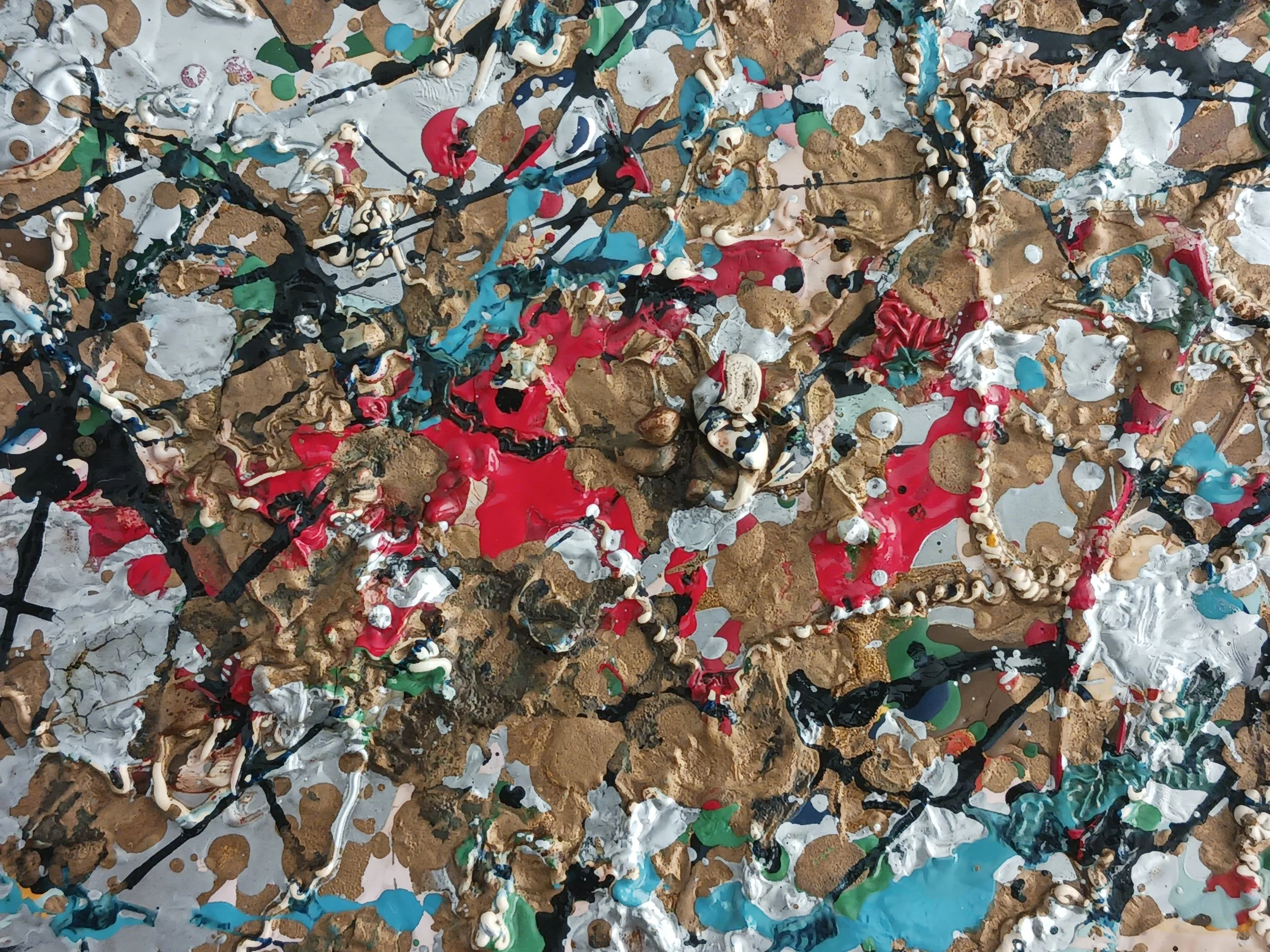
CLOSE-UP IMAGES
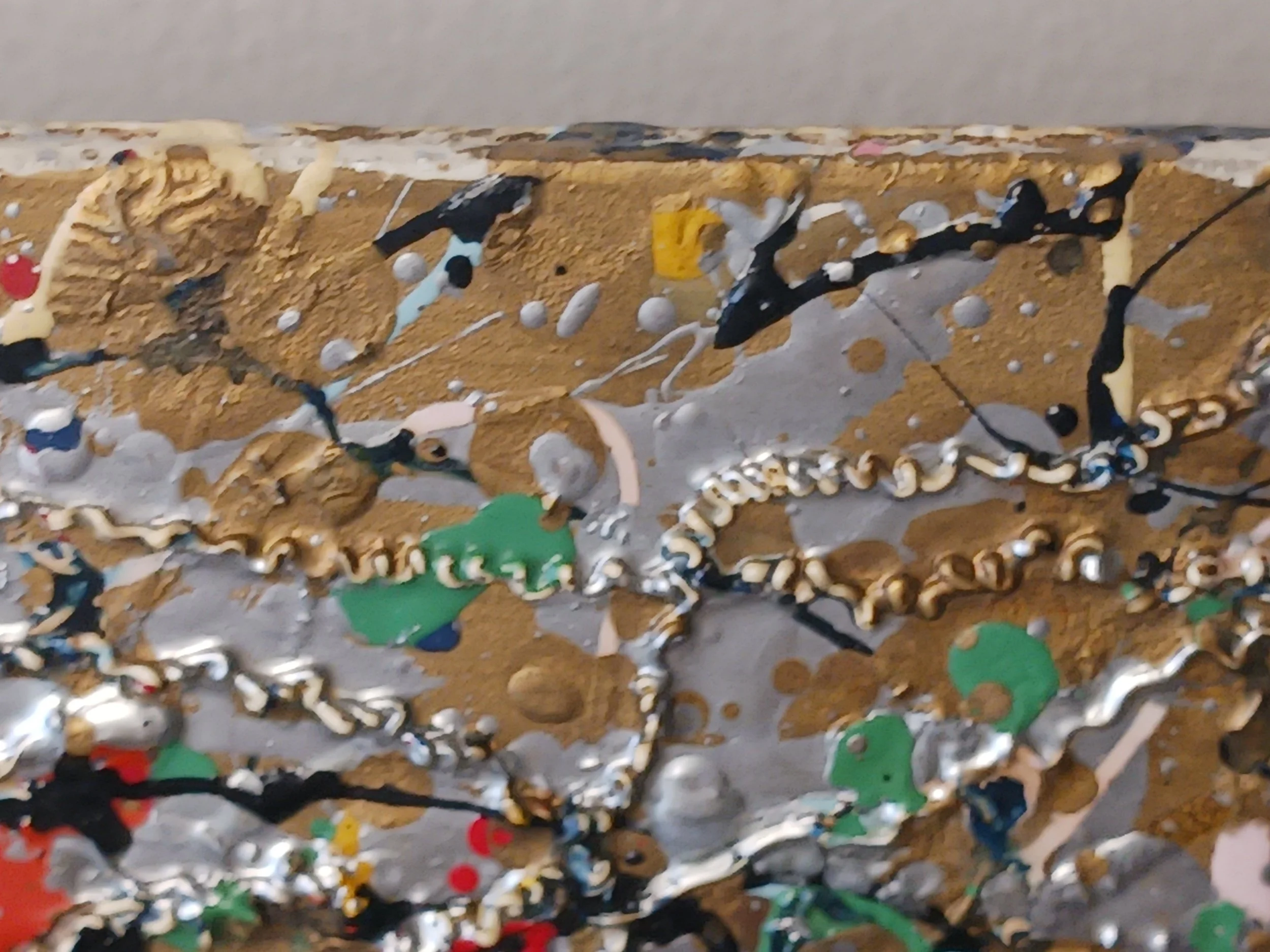
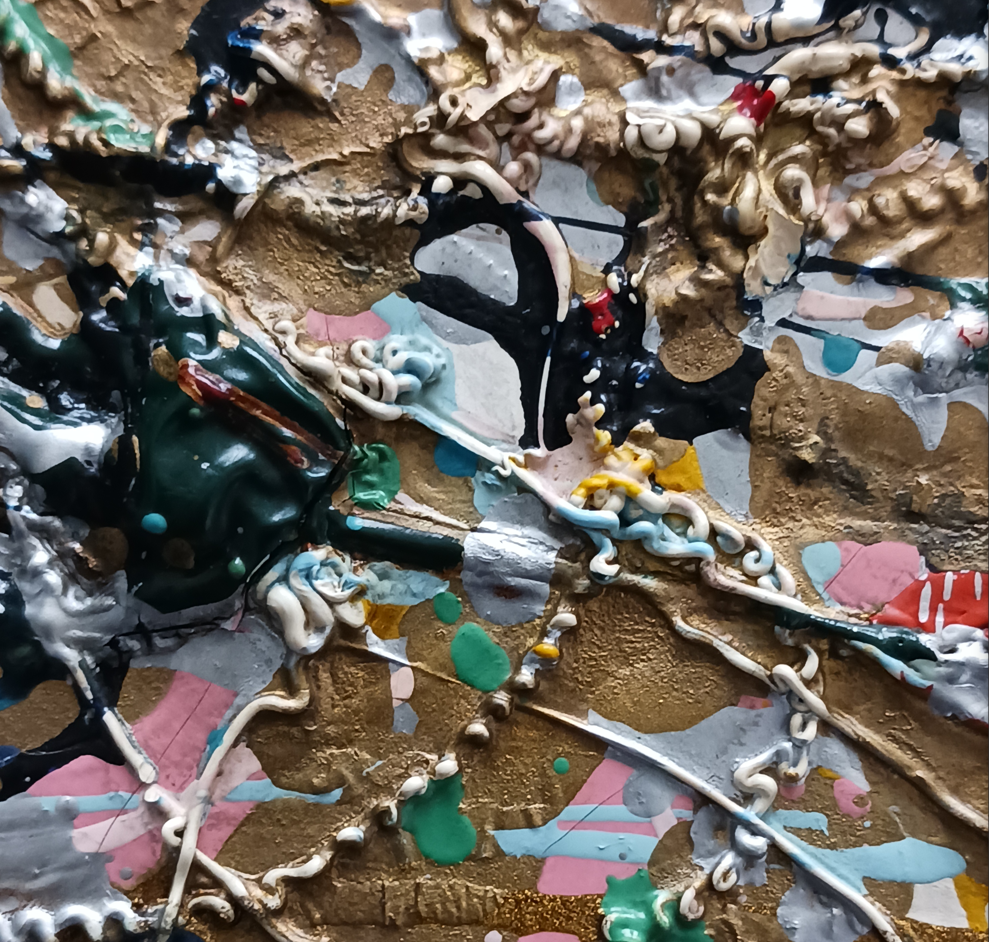
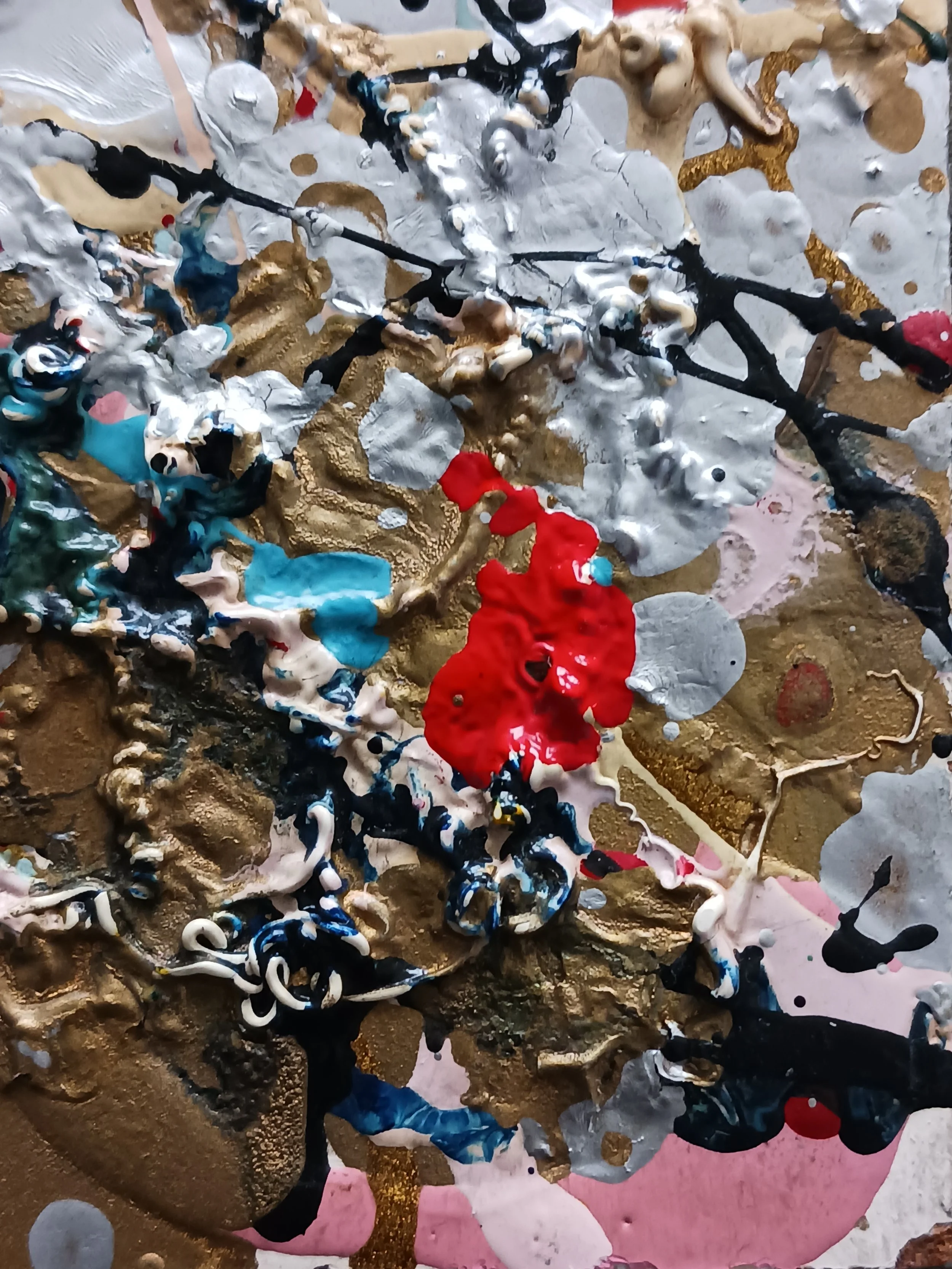
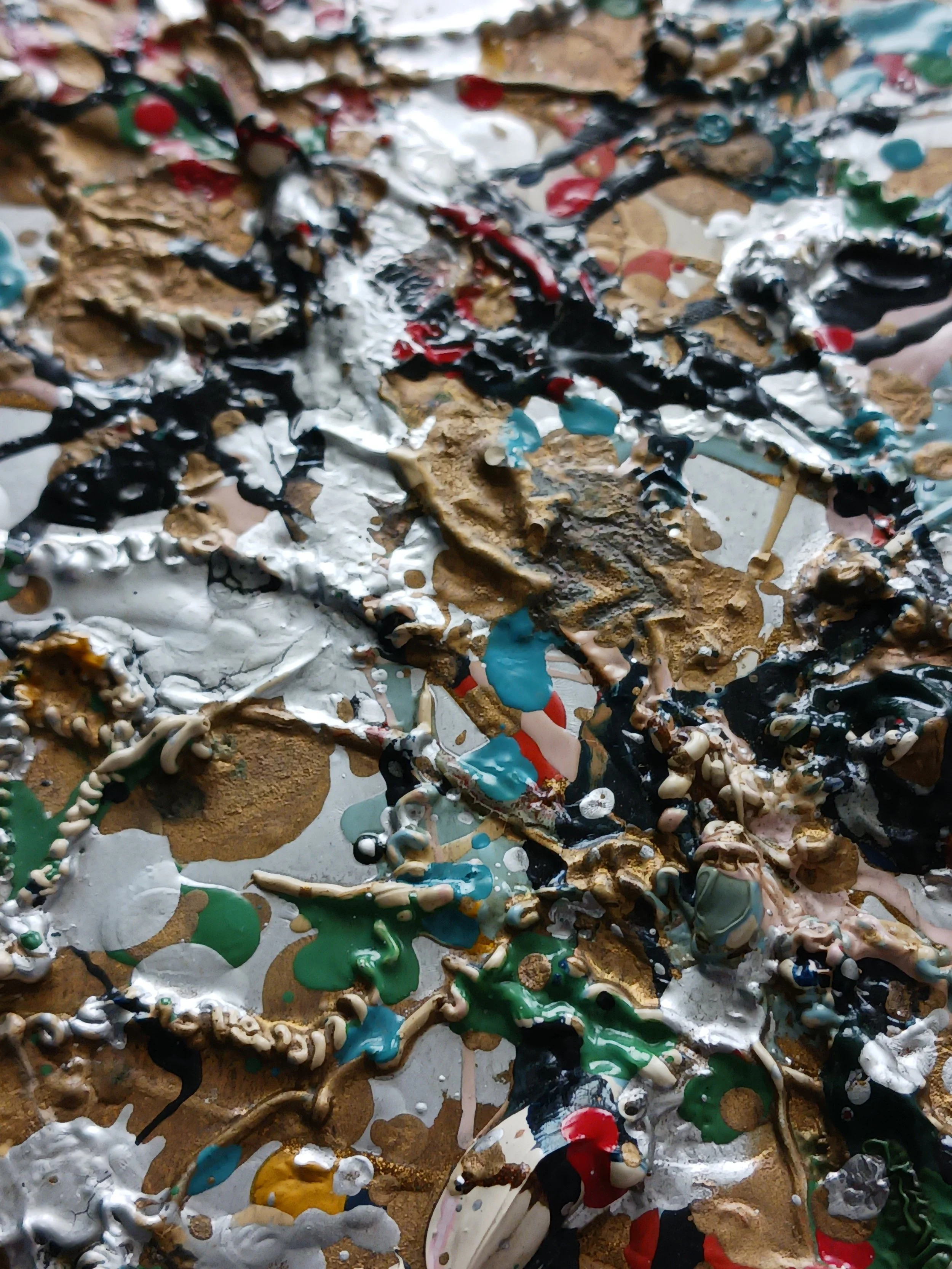
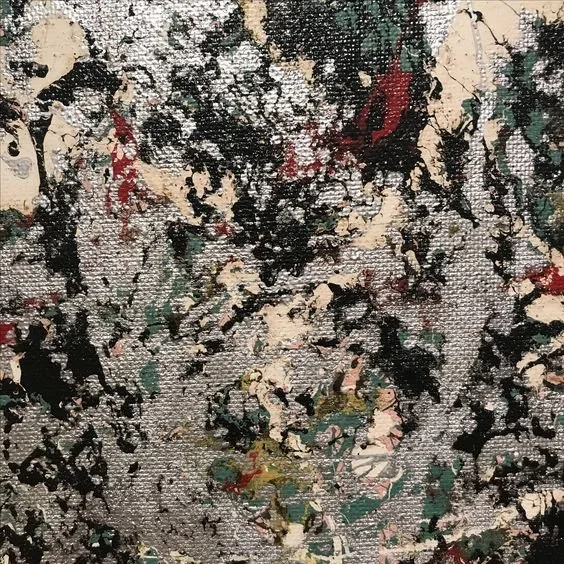
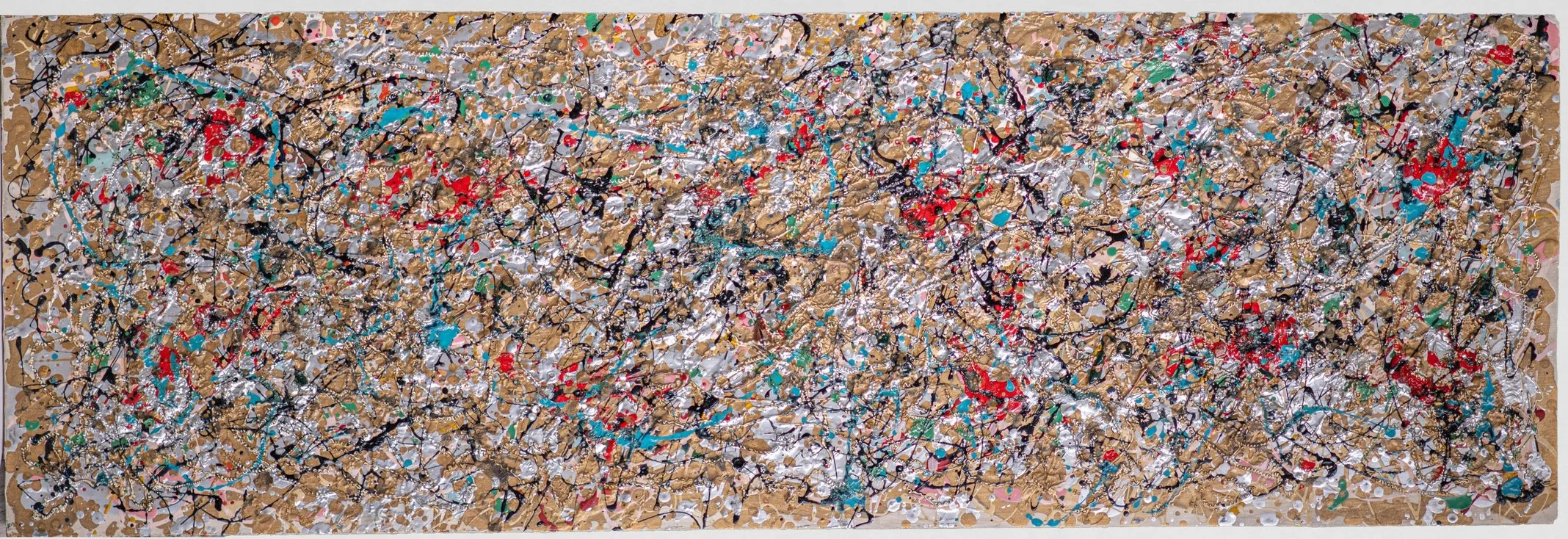
When we examined the paintng closely we discovered its energy and movement. It was created spontaneously and yet with extraodinary artistic intuition. There are wonderful material interactions, idiocyncrasies, and accidents. There is a glorious “messiness” and layering which represent the authenticity of this painting. The painting speaks for itself and therefore we believe it speaks for Jackson Pollock
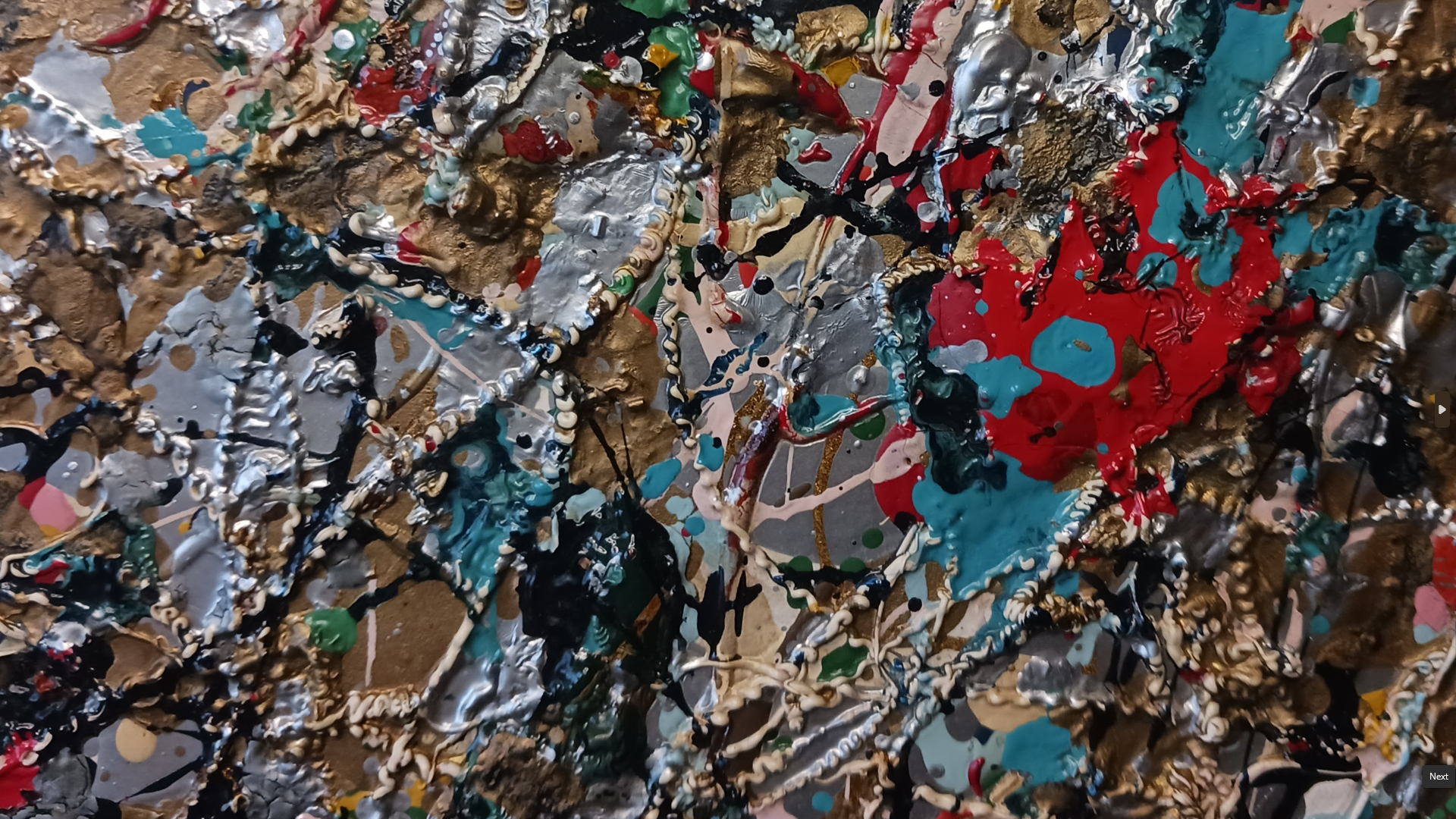
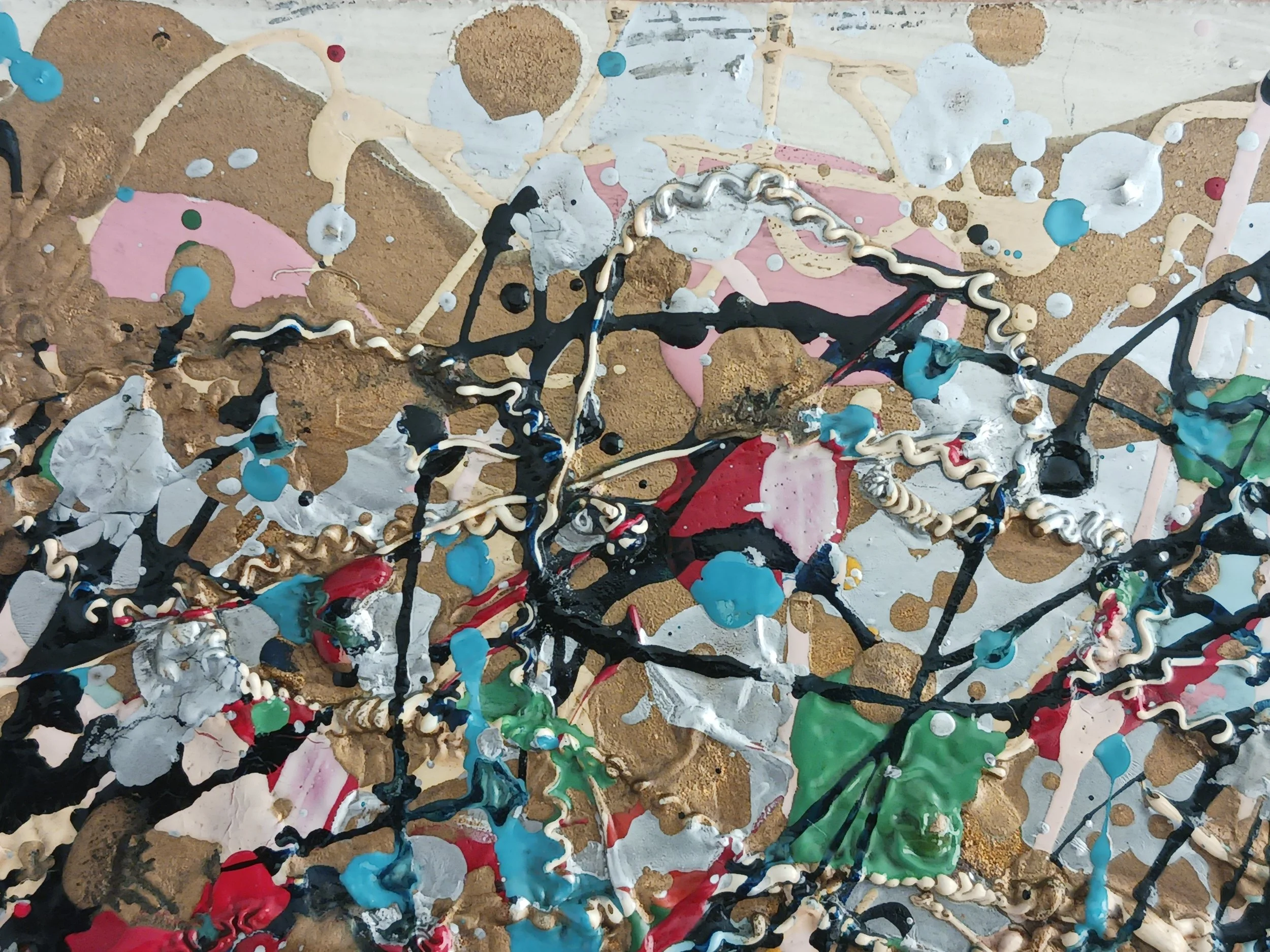
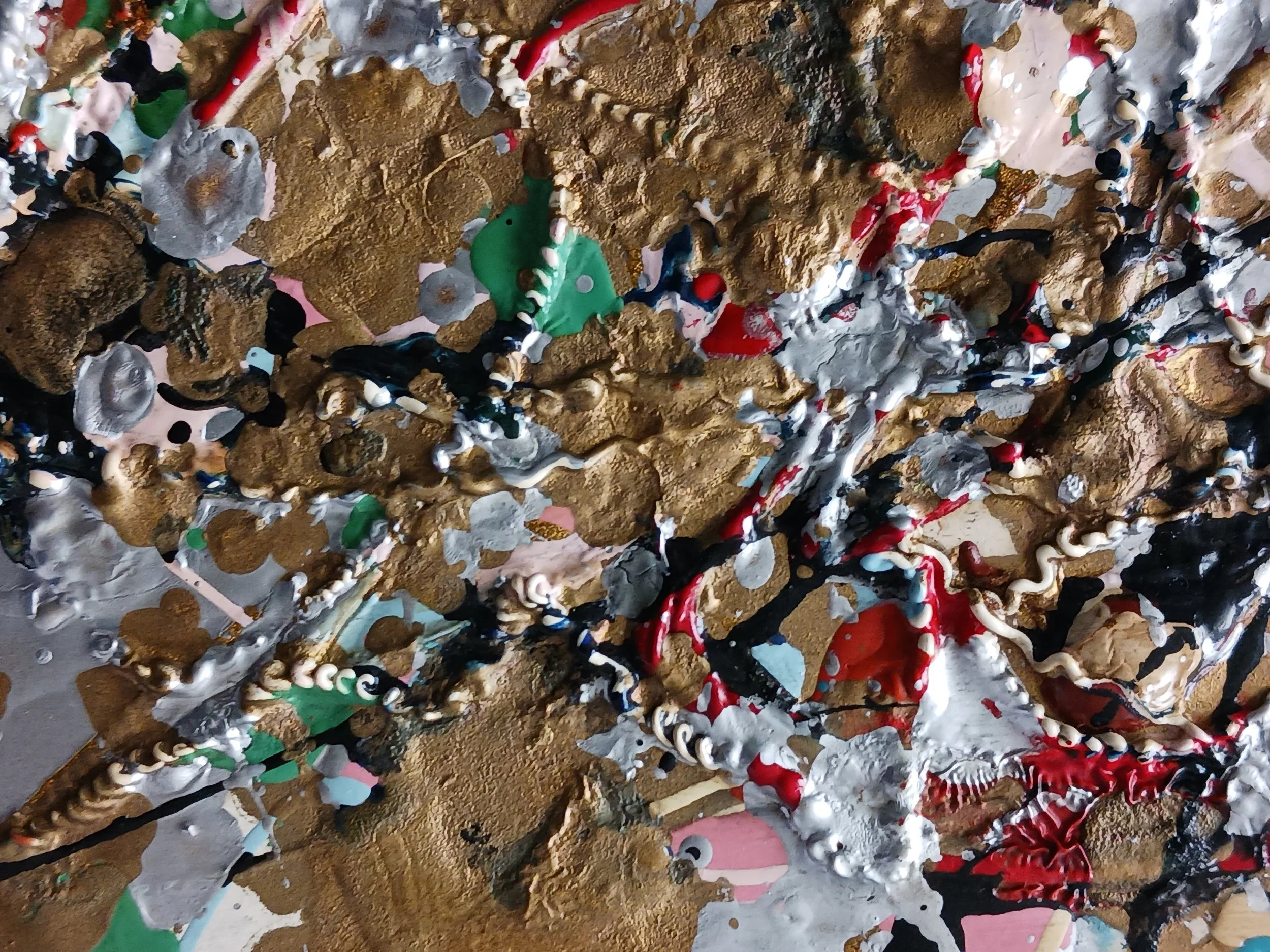
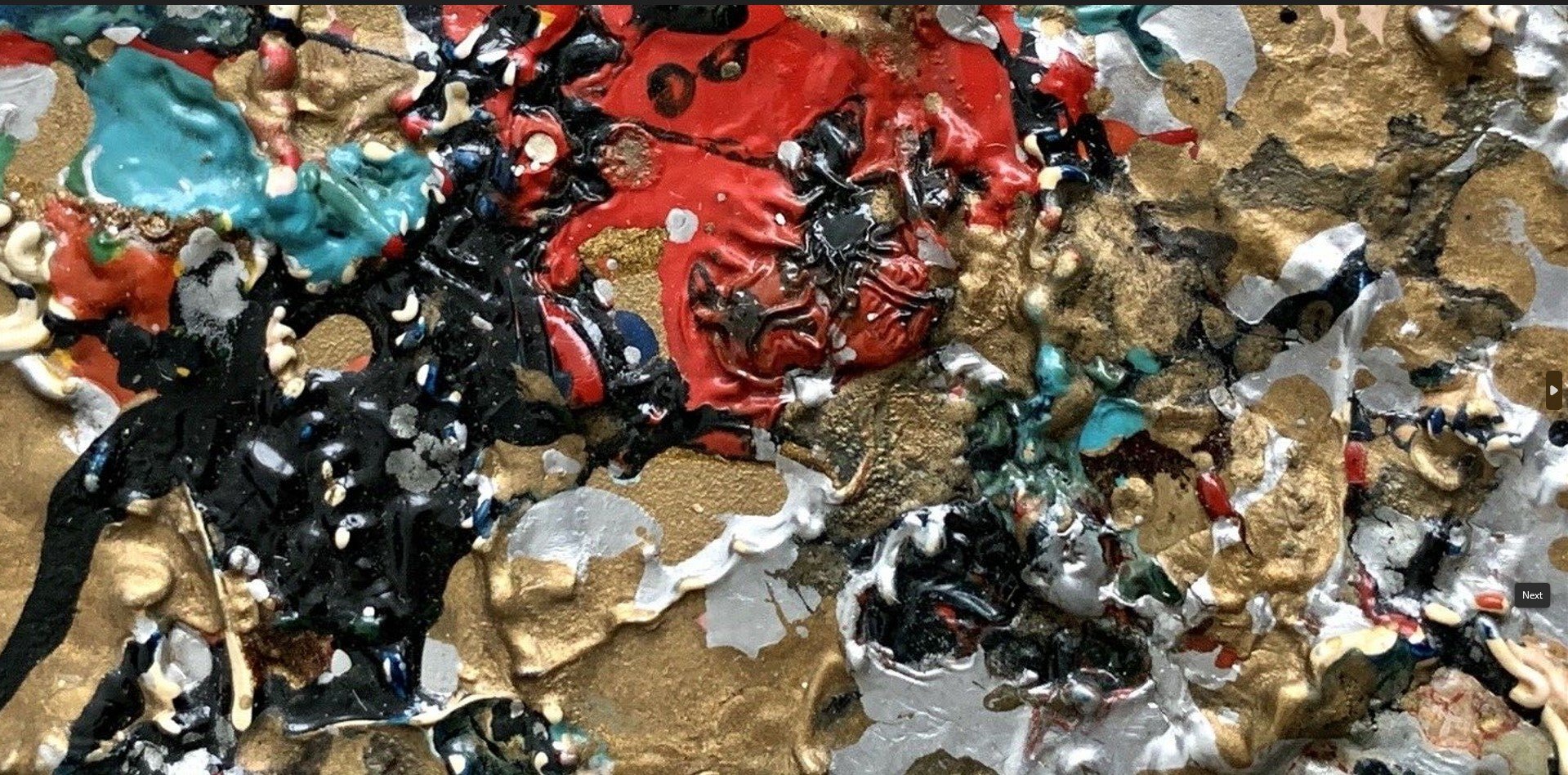
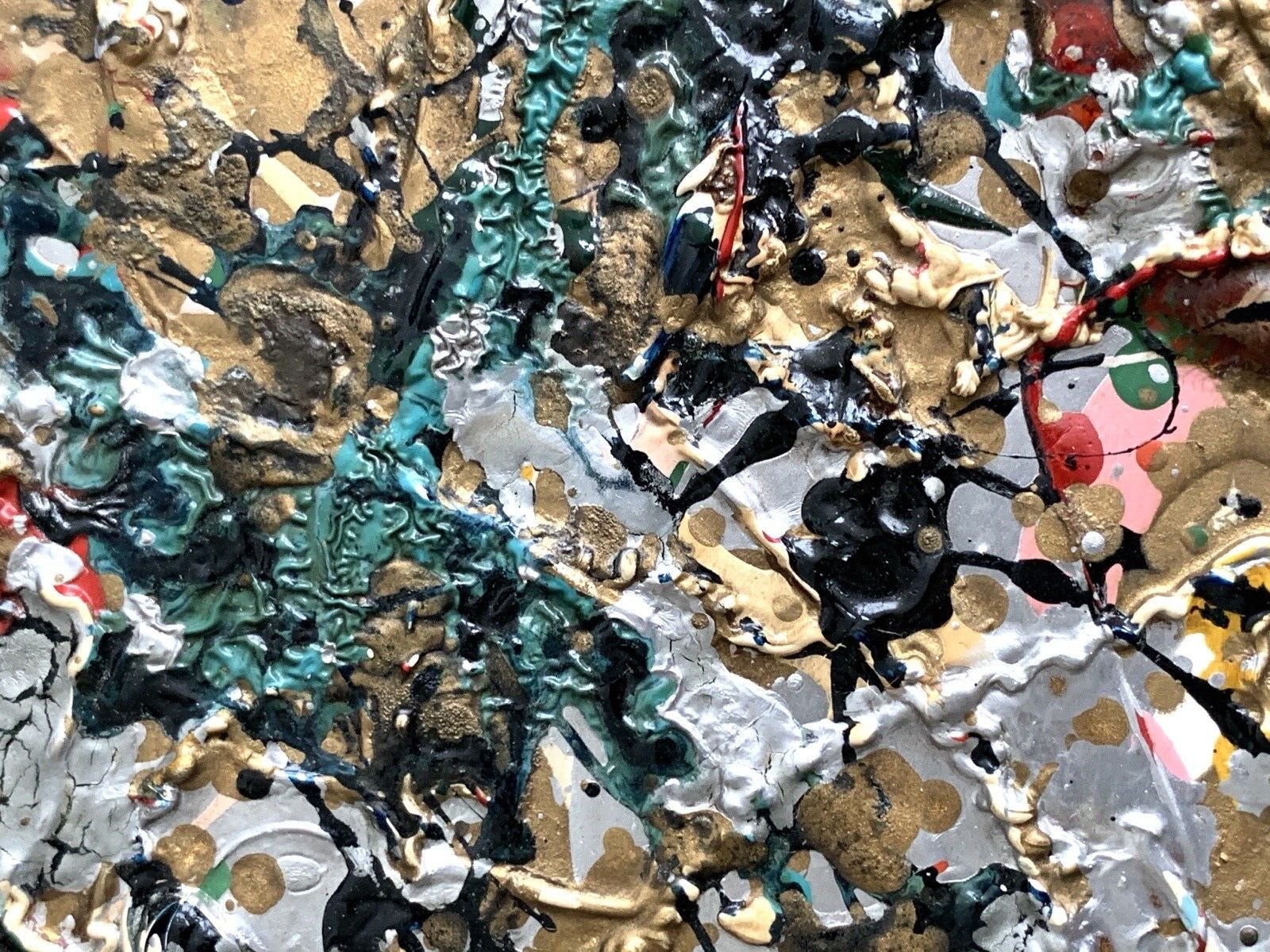
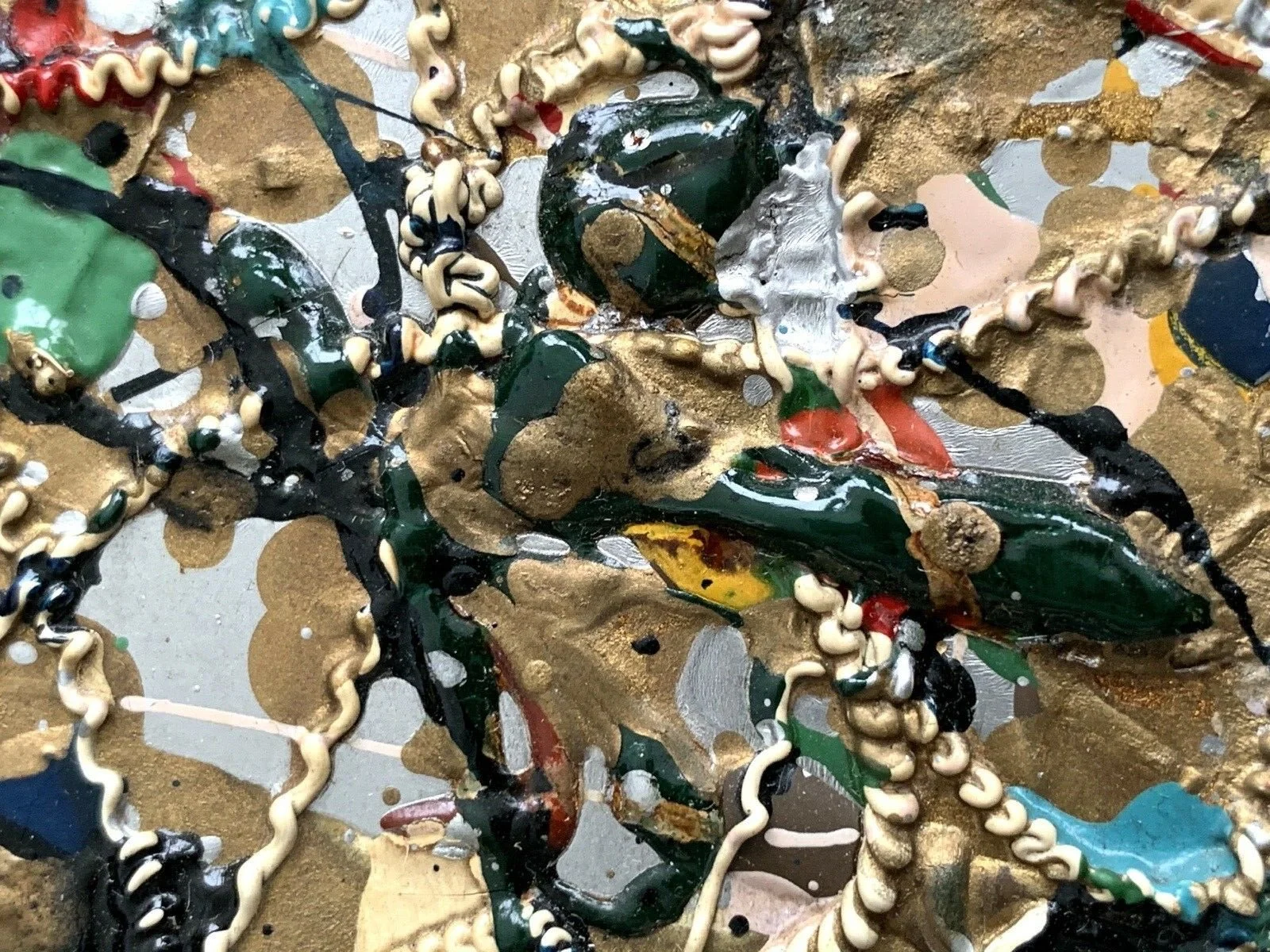
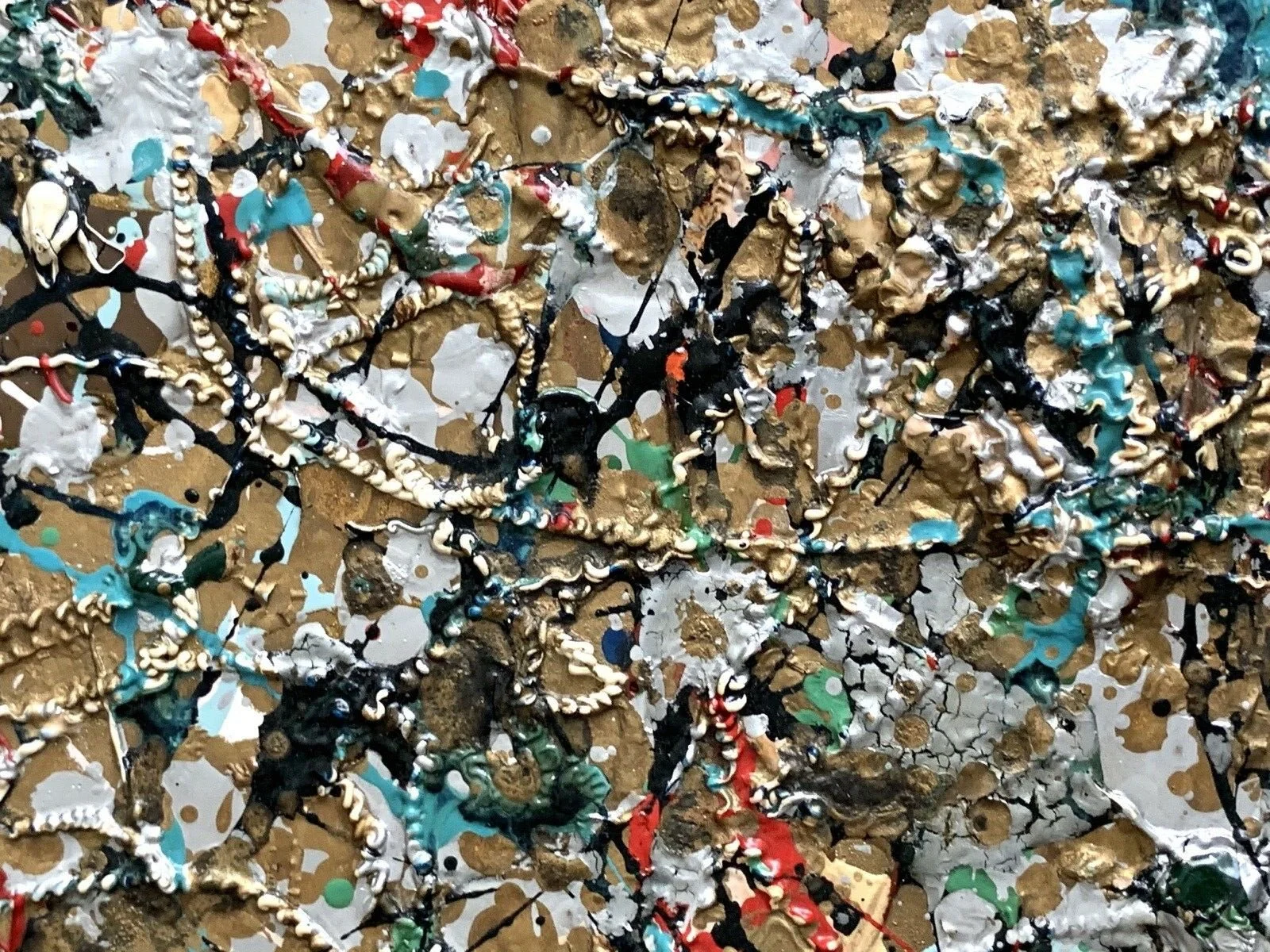
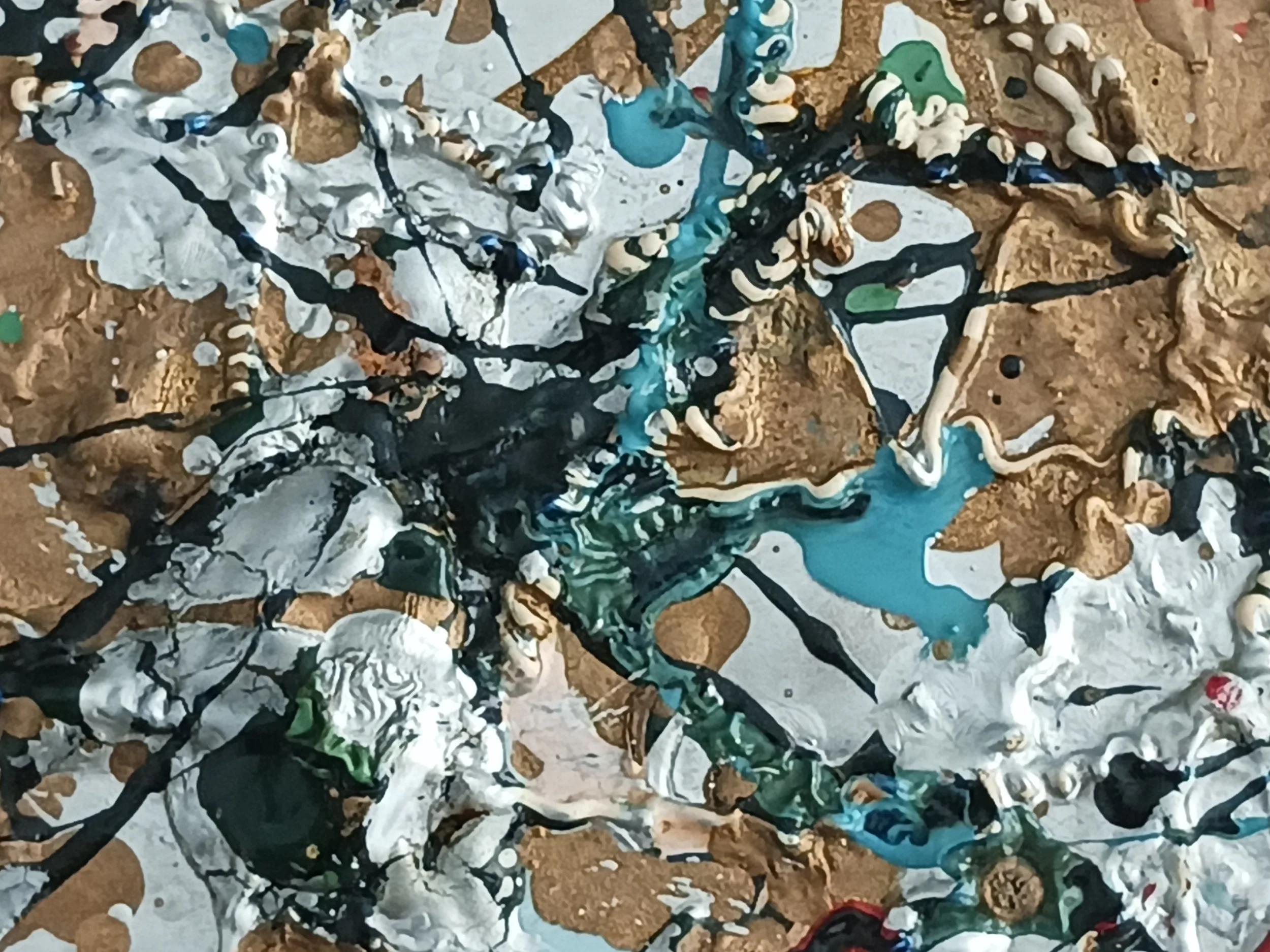
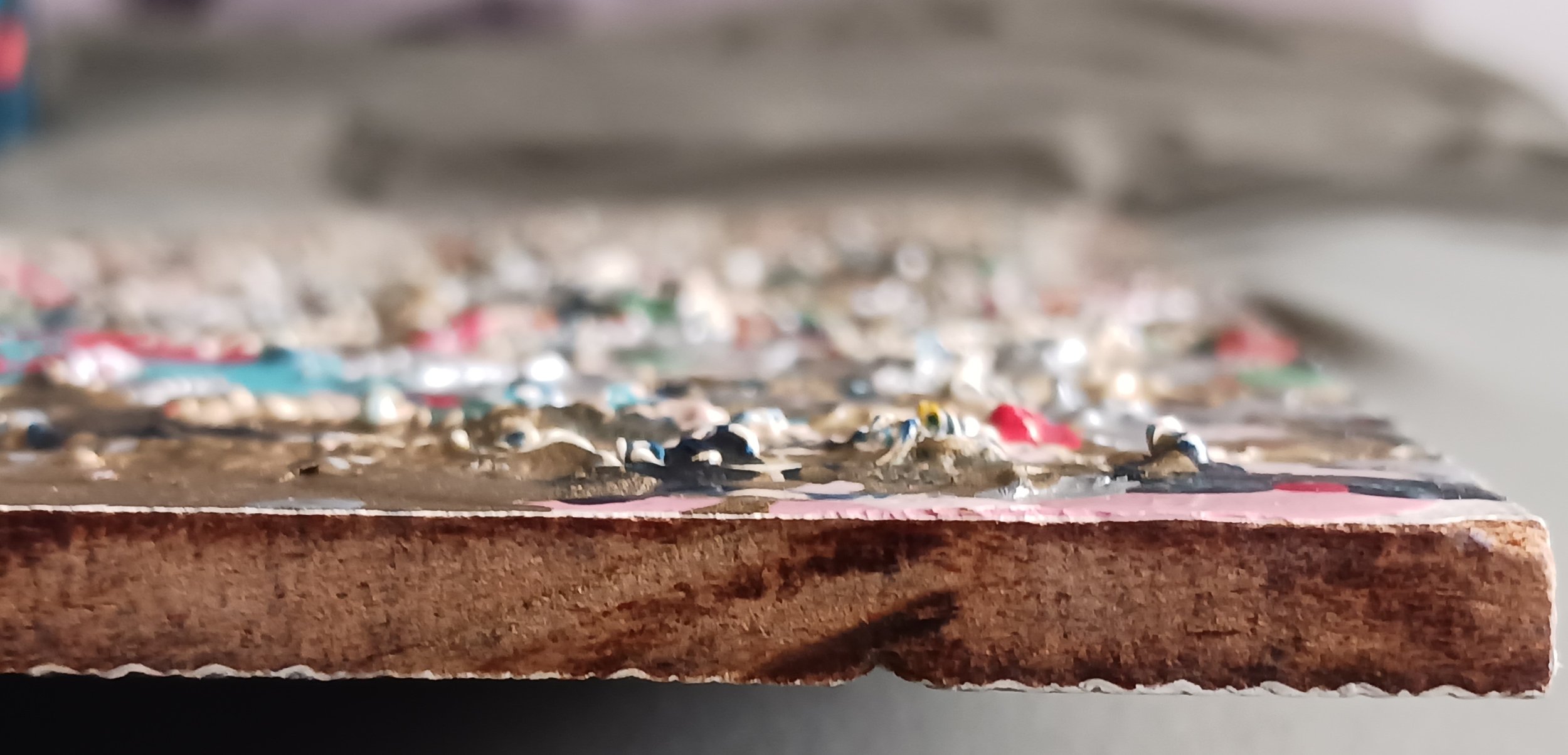
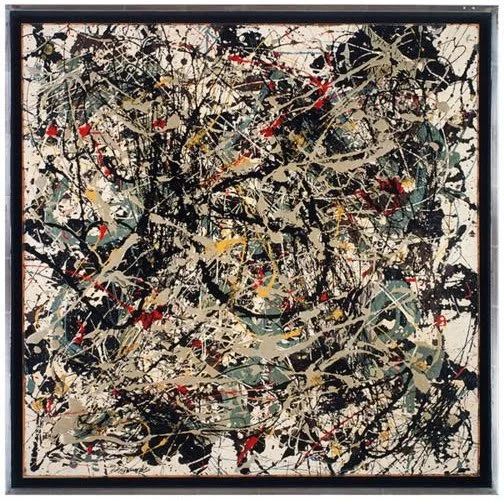
COMPARISON oF TECHNIQUES AND STRUCTURE
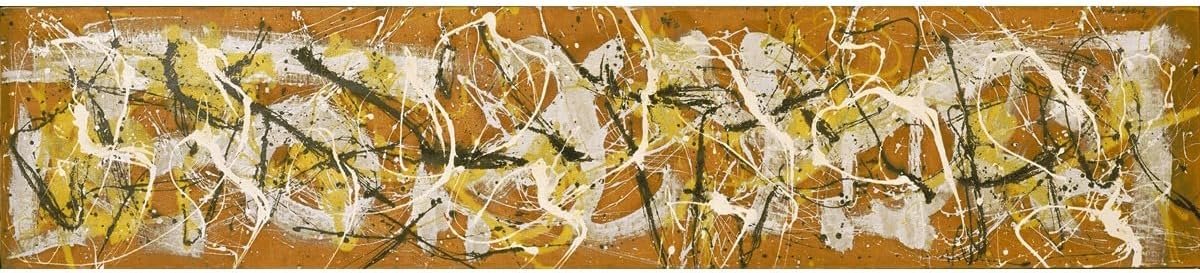
[ SQUARE POURING 1948 ]
[ Number 7, 1950 ]
IN VISUAL CONTEXT WITH DRIP PAINTING s EXECUTED ON FIBERBOARD (MASONITE) AND PARTICULARLY IN 1950 (WHEN WE BELIEVE the gold Pollock WAS CREATED)
When we had a strong inkling that this could indeed be a painting by JACKSON POLLOCK we began a very thorough and engaging survey of all the available images of his “Drip Period” paintings. Below is that survey and visual comparative anaylsis between our painting and known Pollock paintings from the same period. We are presenting the survey in groups in order to bring attention to specific aspects, (material, structure, technique, style, and idiocyncrasies) of our painting in specific context with known Pollock works which are representational and establish precedent.
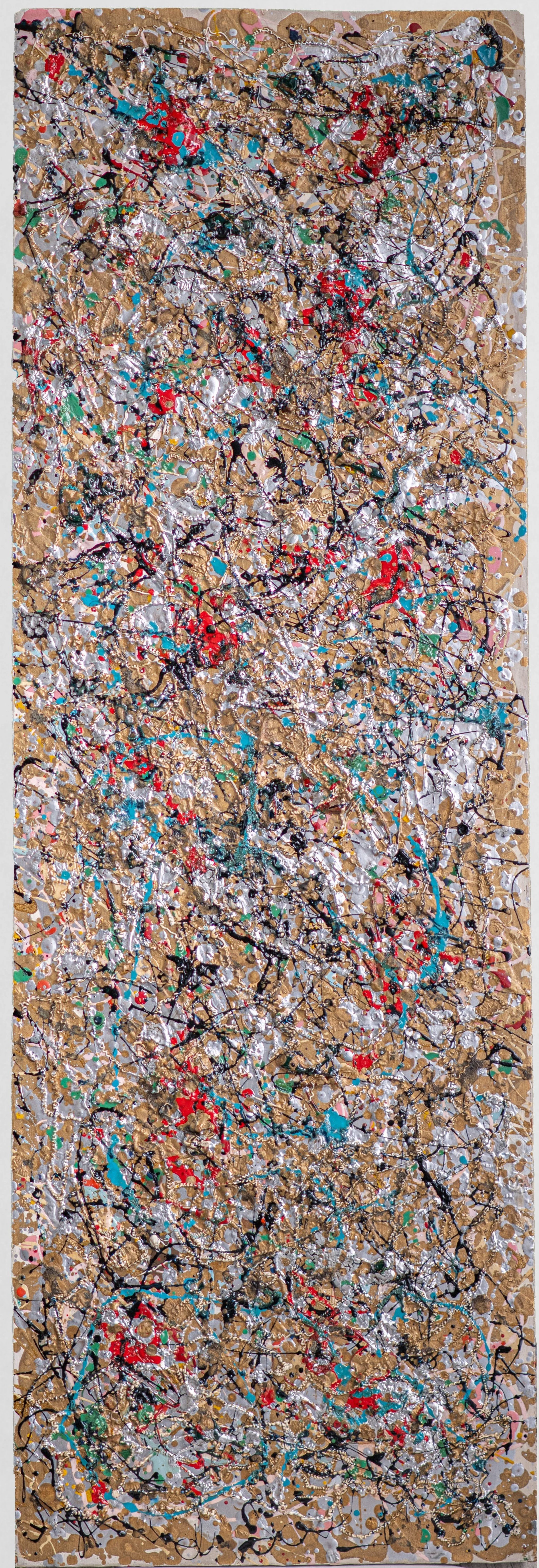
RECTO
WORKS on FIBERBOARd
[ NUMBER 18, 1950]
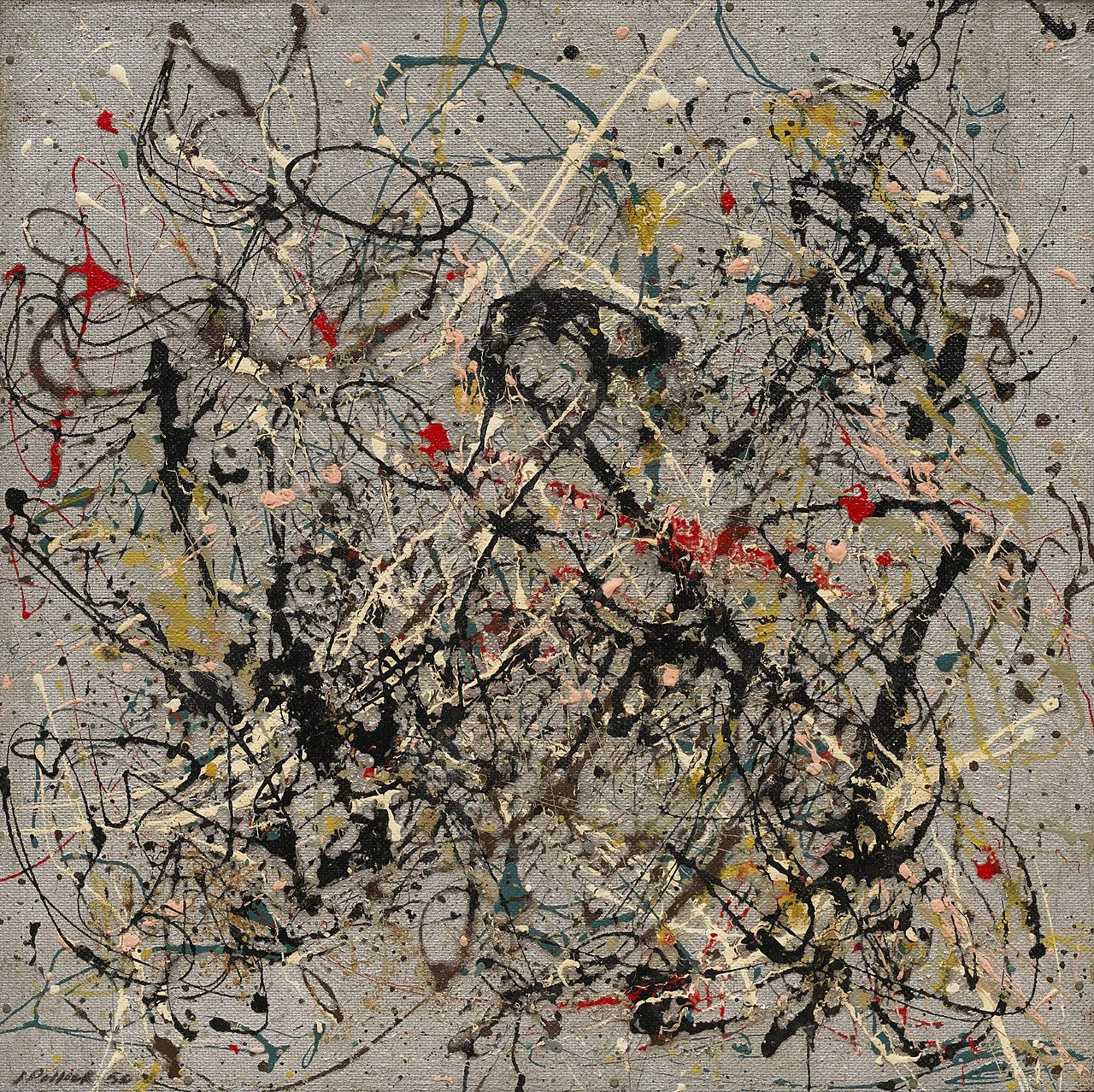
[ NUMBER 12, 1950 ]
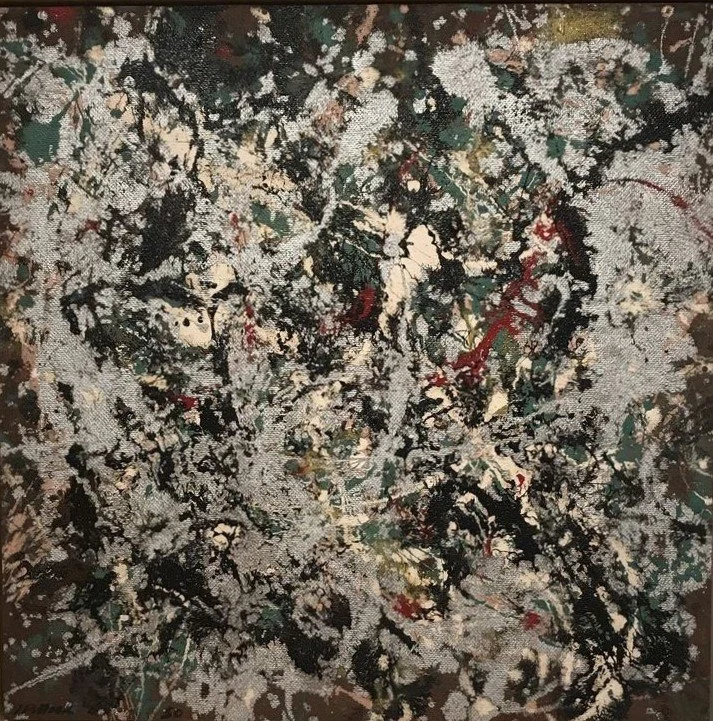
[ NUMBER 21, 1950 ]
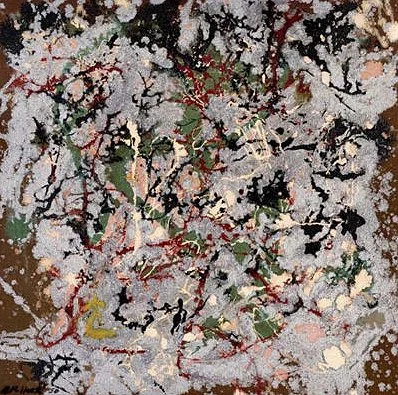
[ NUMBER 20 , 1950 ]
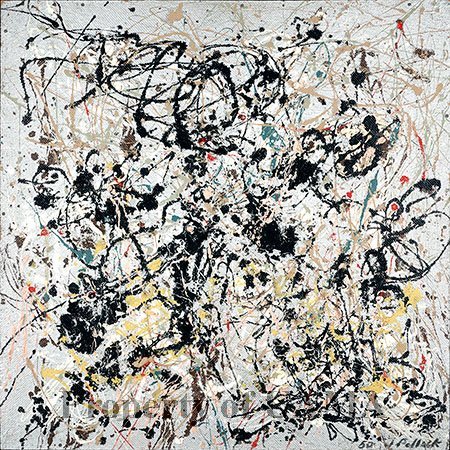
[ NUMBER 16 , 1950 ]
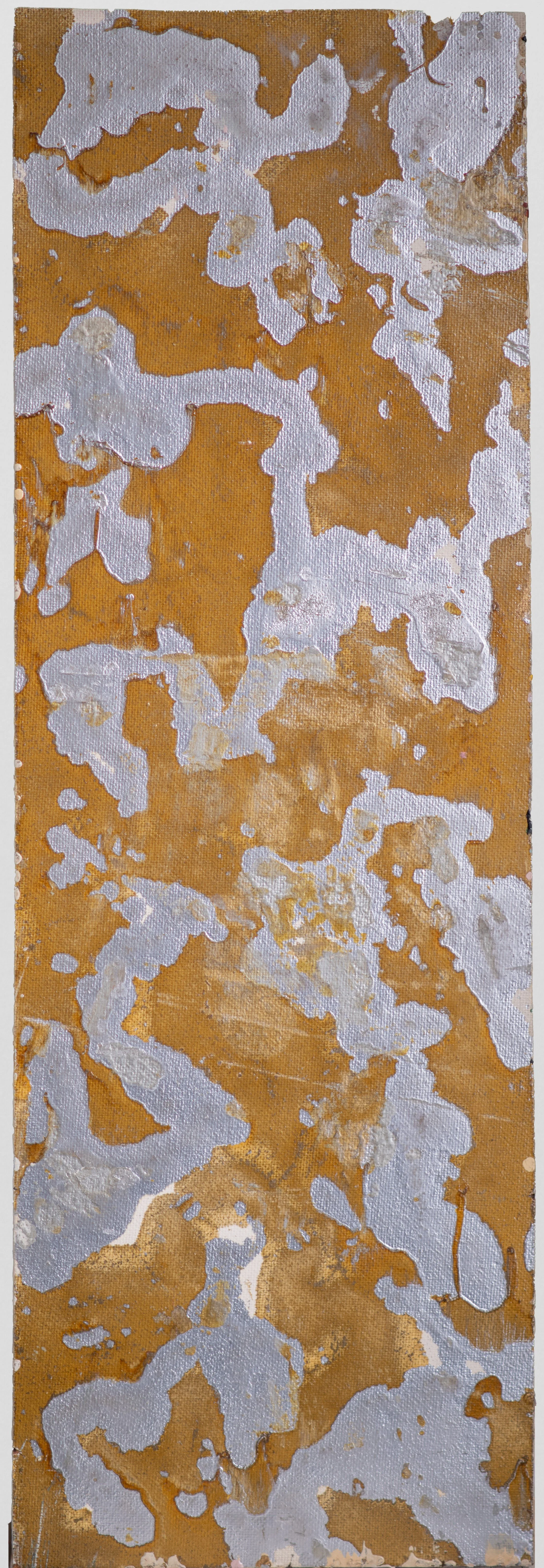
VERSO biomorphic RENDERING COMPARISON
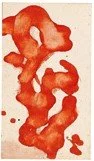
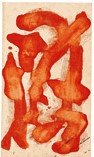
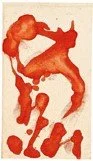
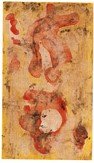
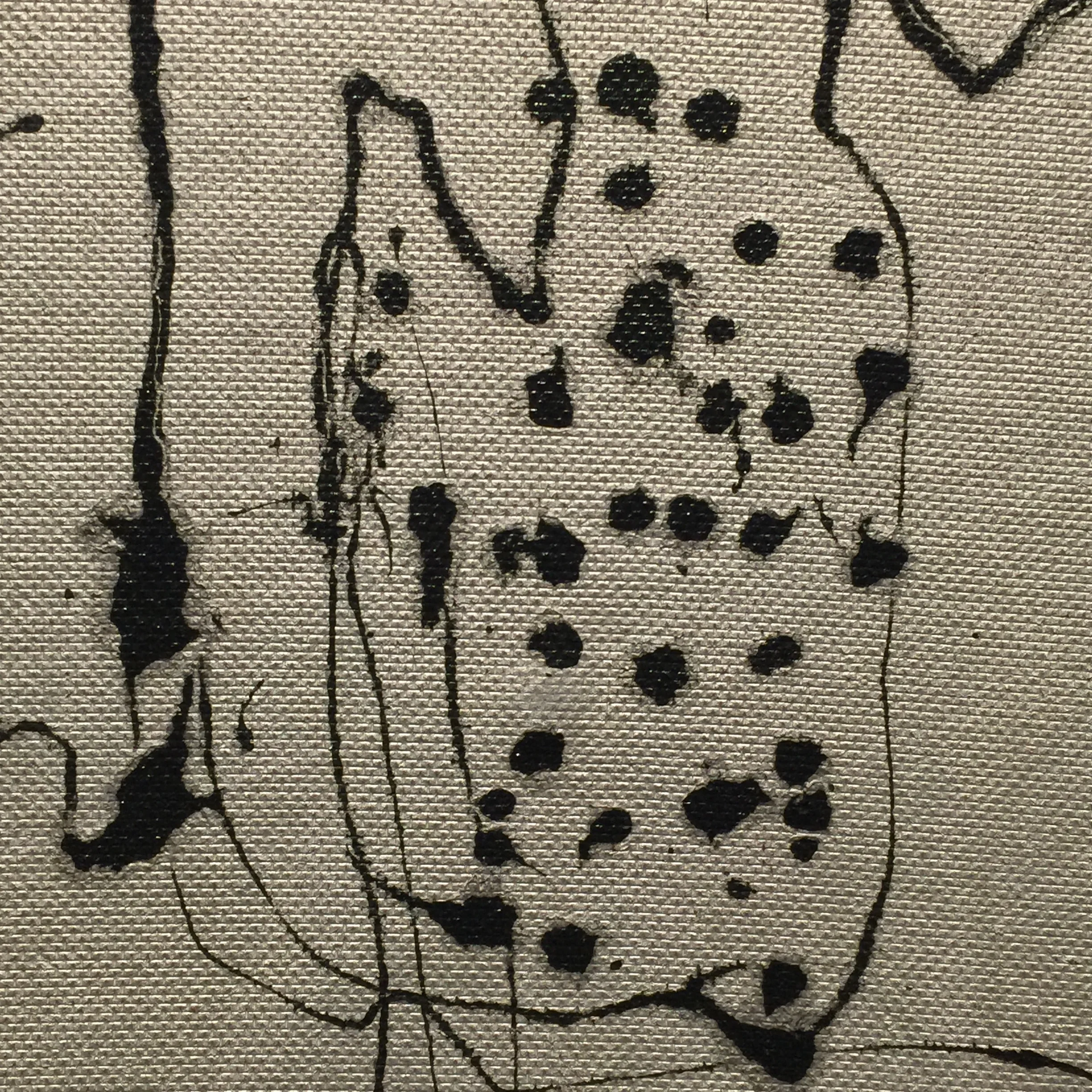
Initially we didn’t know what to make of the presence of the aluminum painting verso. it was only after we began to do a deeper dive into Jackson pollock’s ouerve (consulting the pollock catalogue raisonne ) that we were able to consider the biomorphic type renderings (verso) in context. Though Pollock incorporated such techniques and symbology throughout his career the Red Paintings, 1950 appear to be most directly related. Their similarity is striking .
VERSO
[ RED PAINTINGS (4-6) 1950 ]
[ RED PAINTINGS (1 - 6) 1950 ]
[ RED PAINTINGS (1-3) 1950 ]
[NUMBER 20 , 1950 ]
FIBER BOARD COMPARISONs
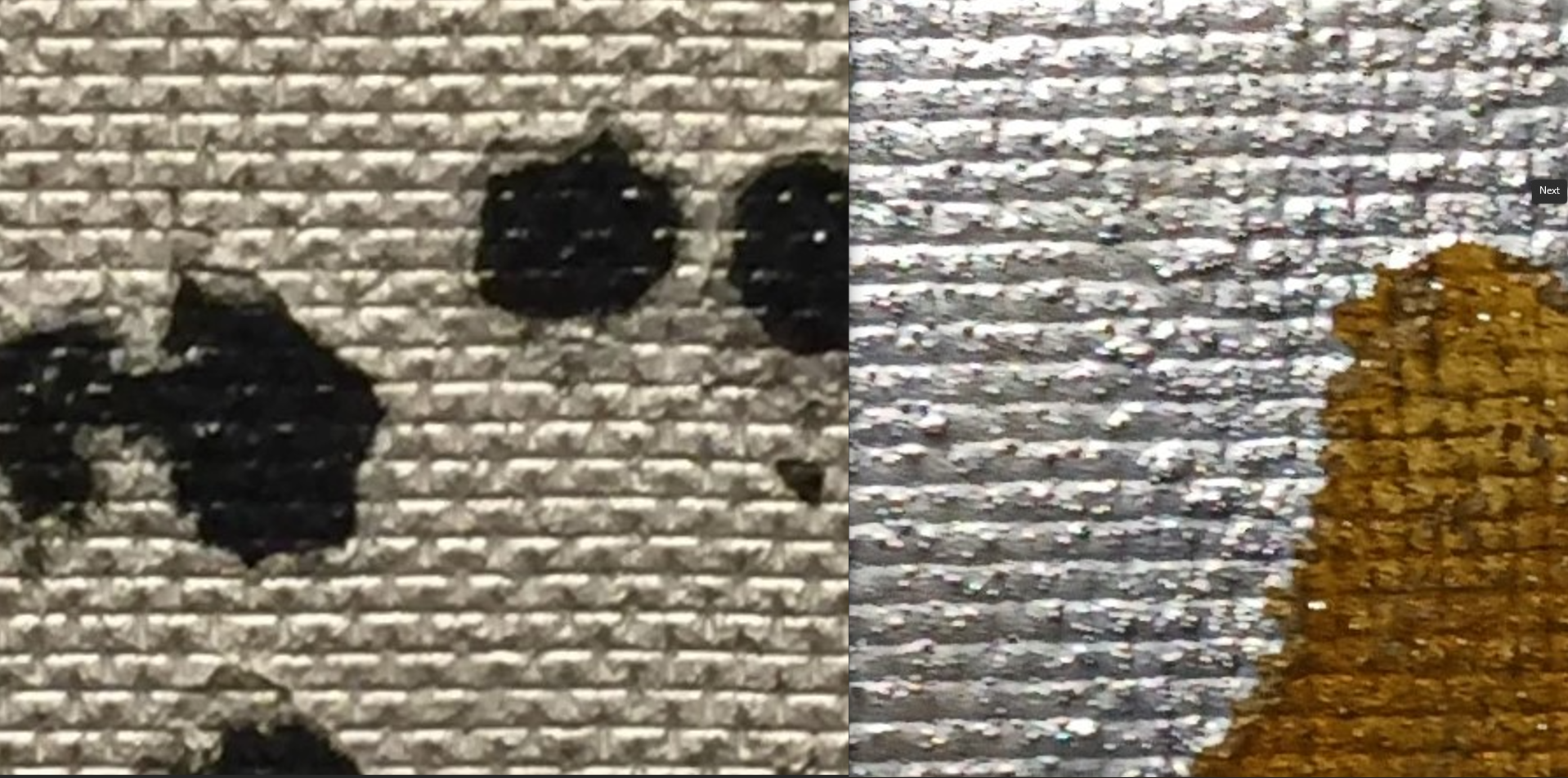
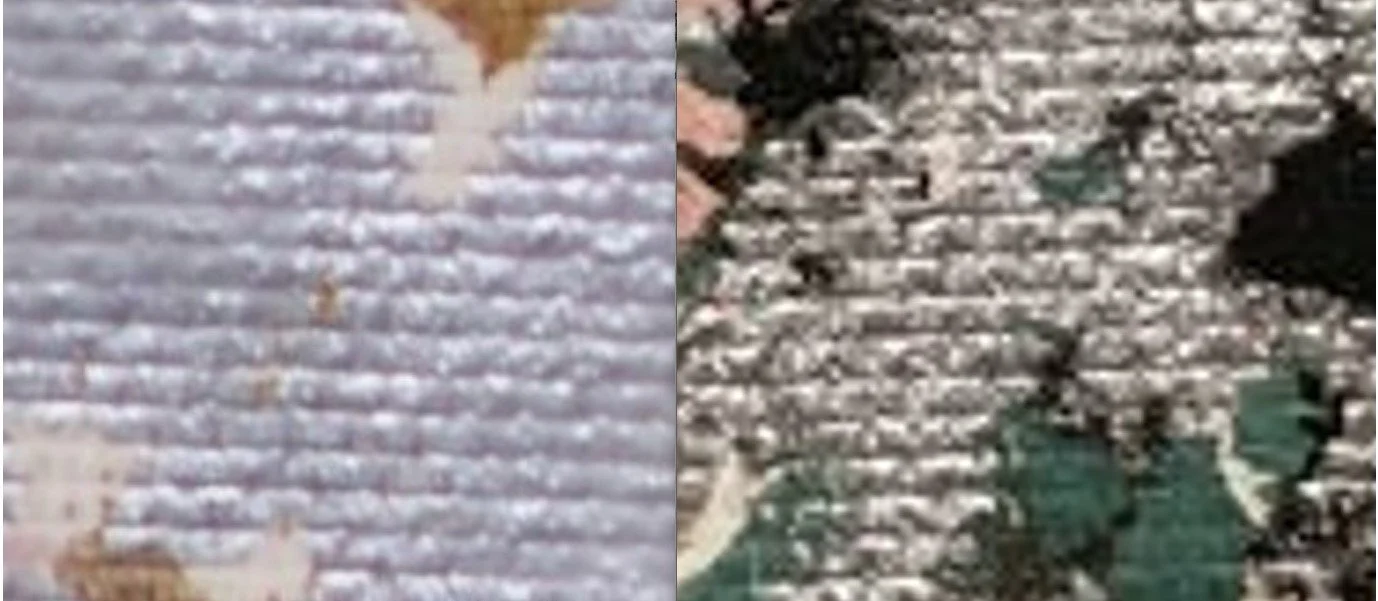
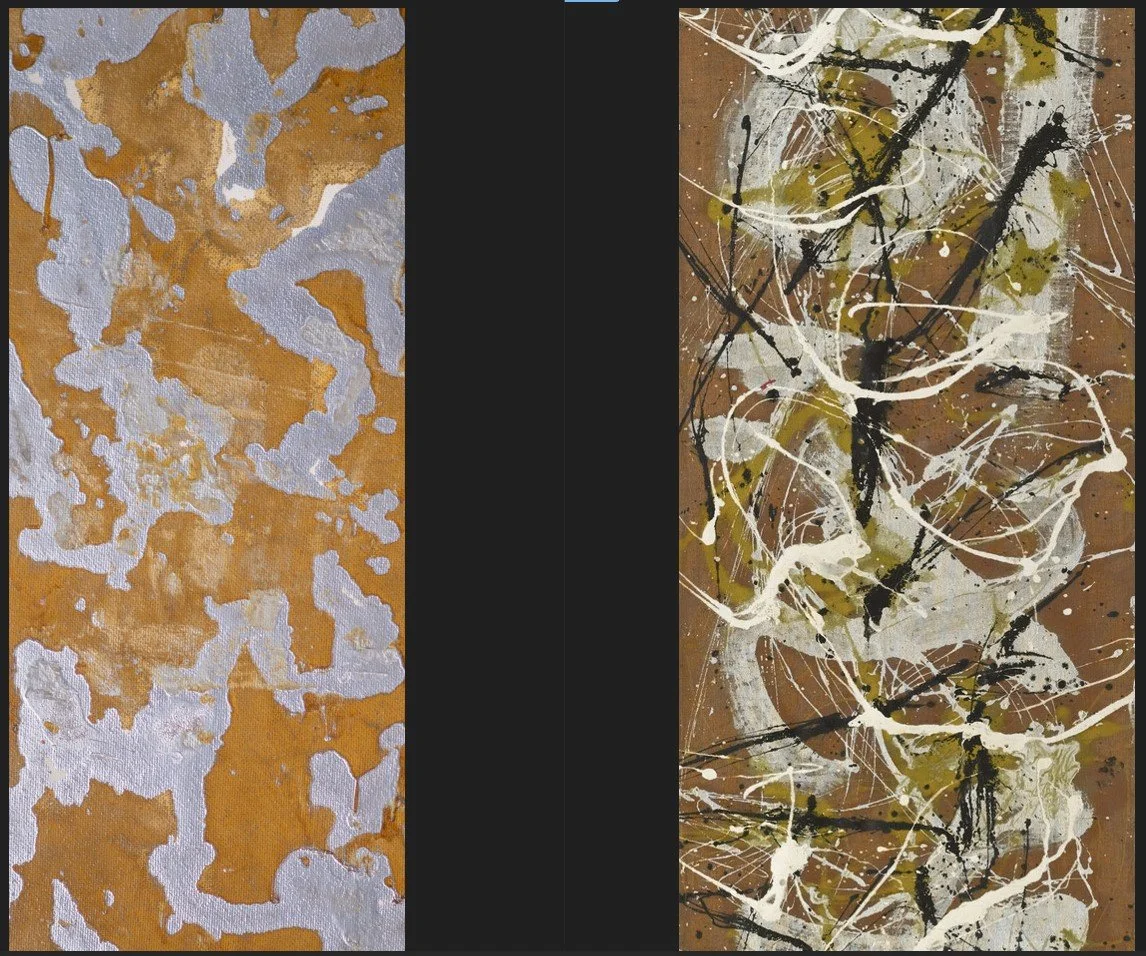
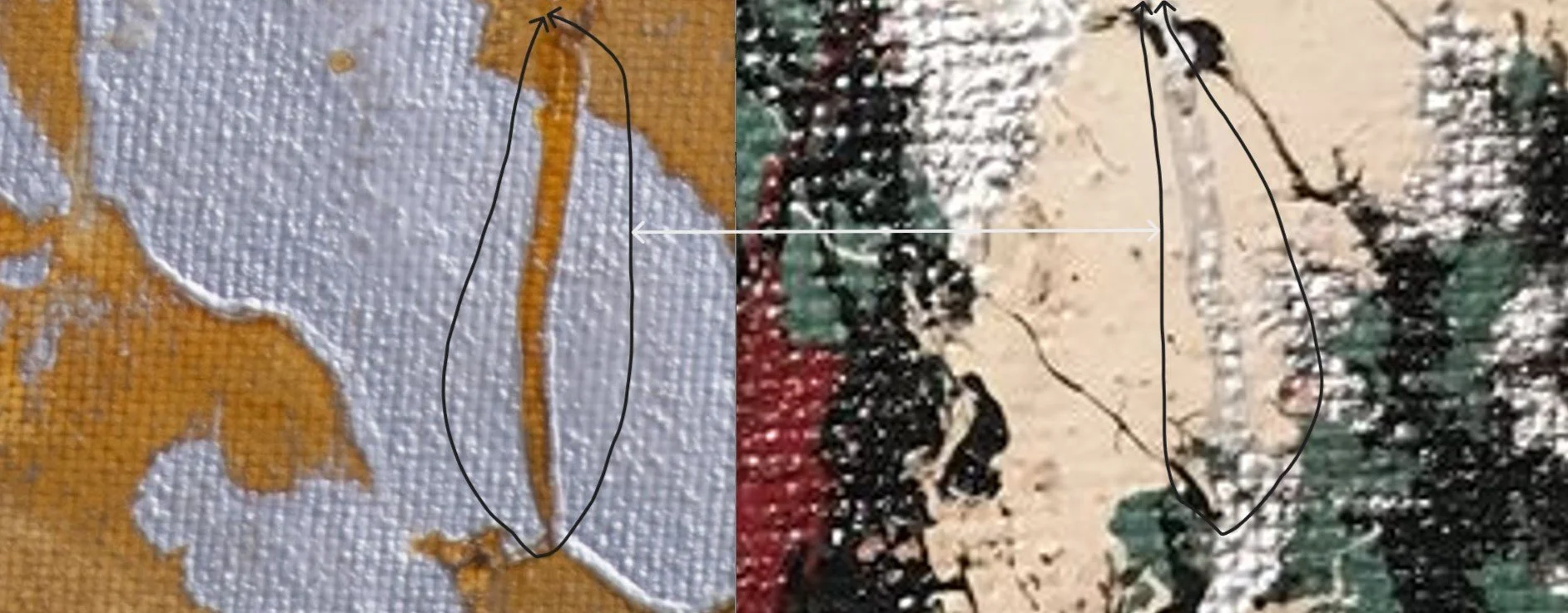
We eventually discovered large file images of known Pollock painting executed on fiberboard and we were amazed to discover that the press impressions are identical.. We also discovered similar idiocyncrasies. Below are visual references and captions.
[ Silver Square 1950 ]
[ GP verso ]
[ NUMBER 21 1950 ]
[ GP verso]
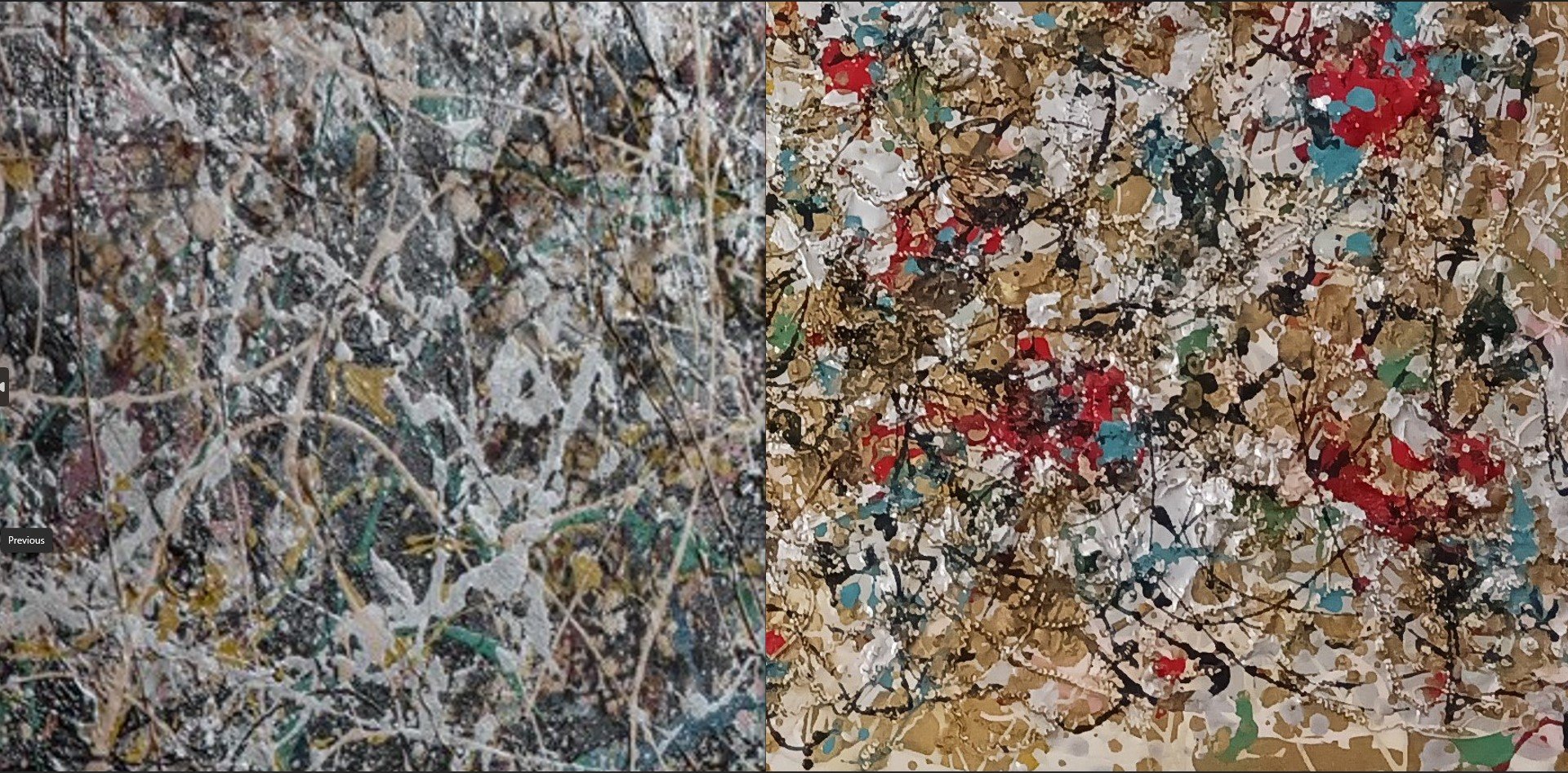
Visual primary pigments comparison
JACkson pollock’s studio floor
CHART OF PRIMARY PIGMENTS ON POLLOCK’S STUDIO FLOOR
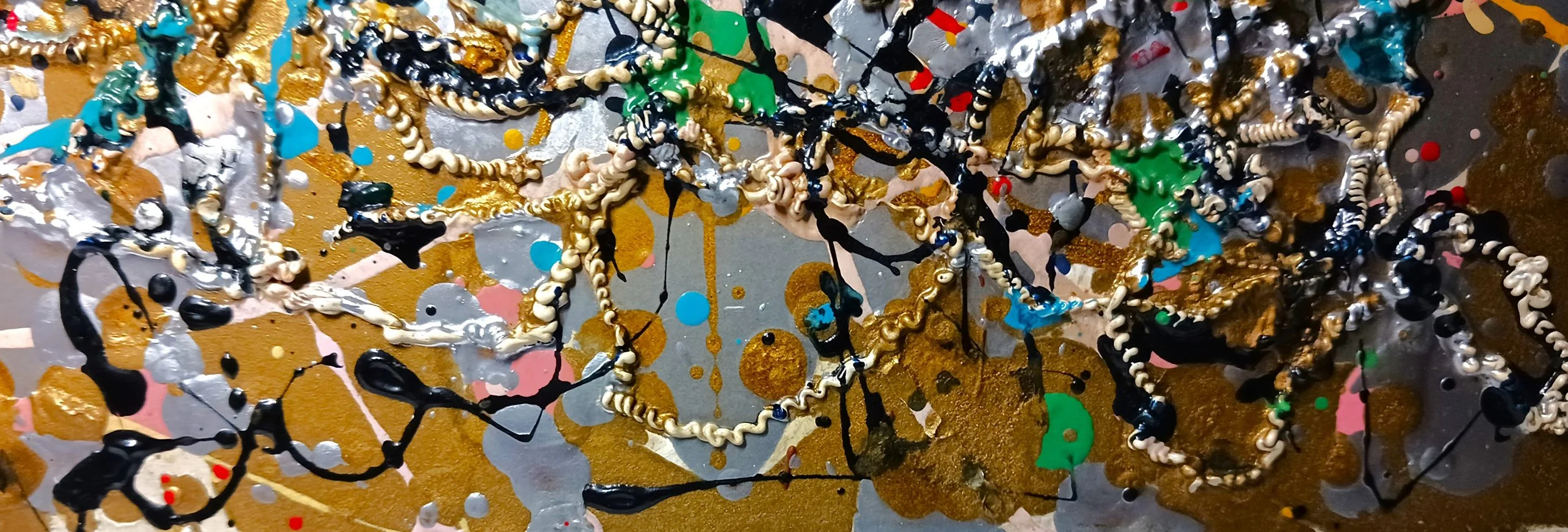
SECTION OF THE GOLD POLLOCK
Section of Painting Studio Floor
[ number 28 1950 ]
[ Convergence 1952 ]
[ GREEN SILVER 1949 ]
[ NUMBER 31 1950 ]
[ BLUE POLES 1952 ]
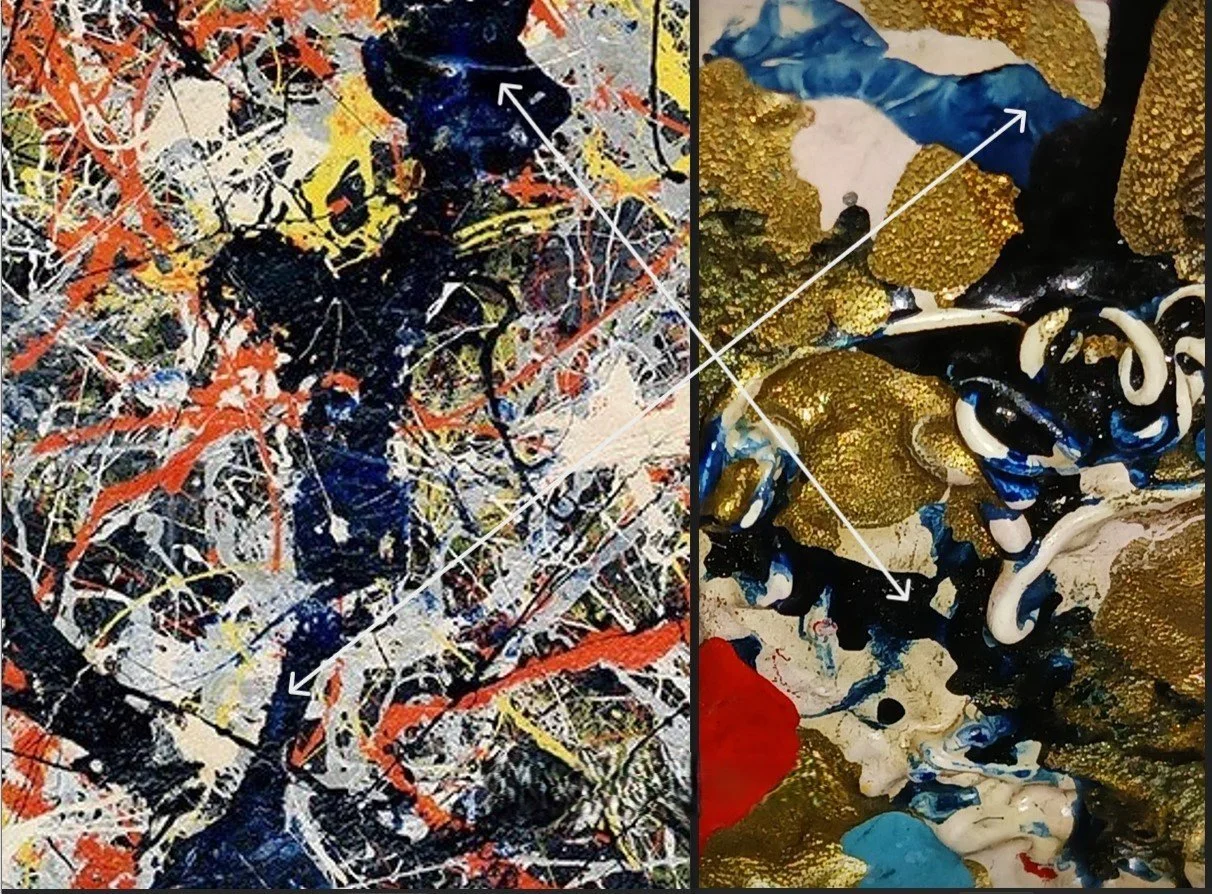
[ number 28 1950 ]
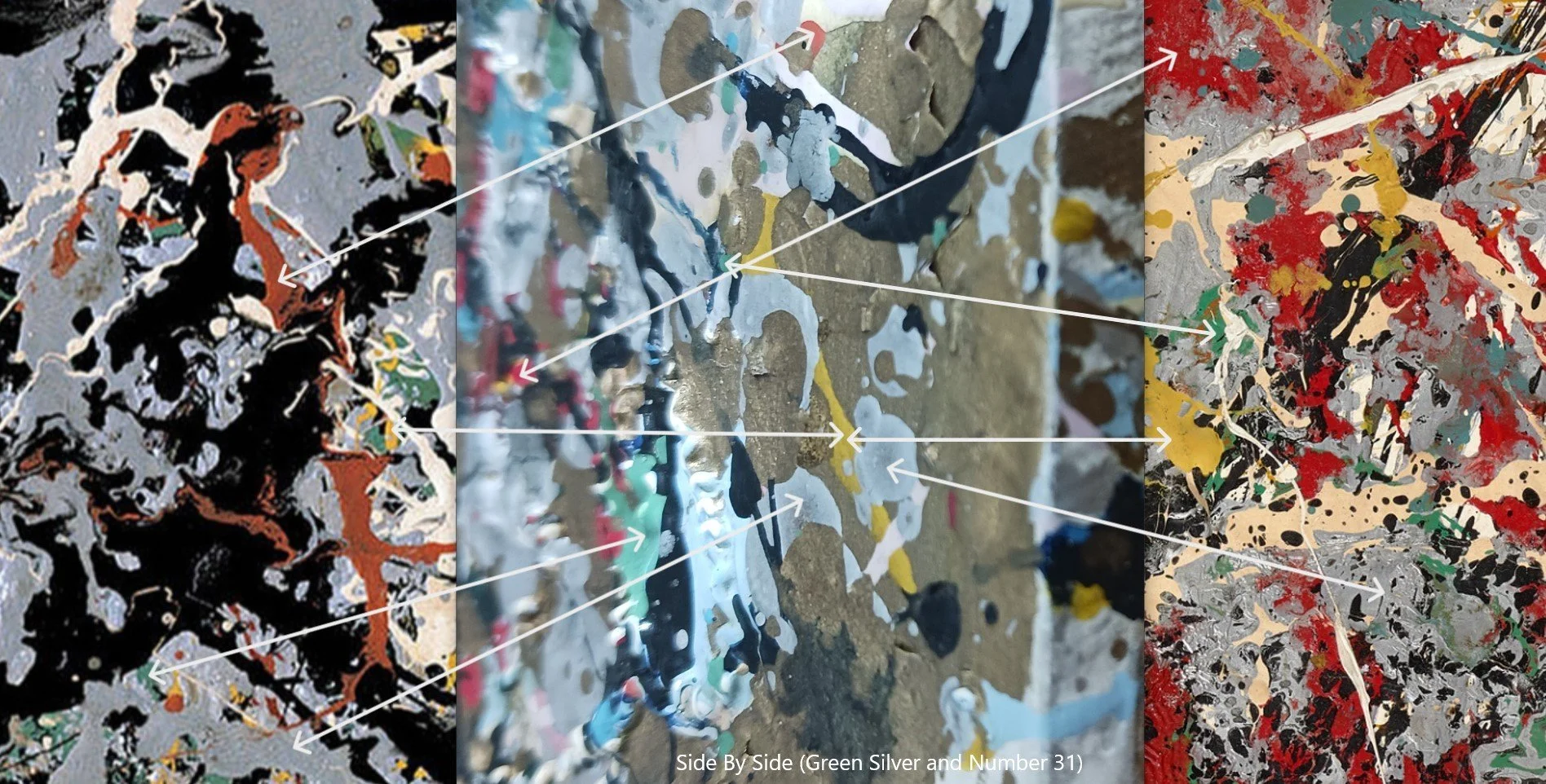
SIDE BY SIDE COMPARISONS
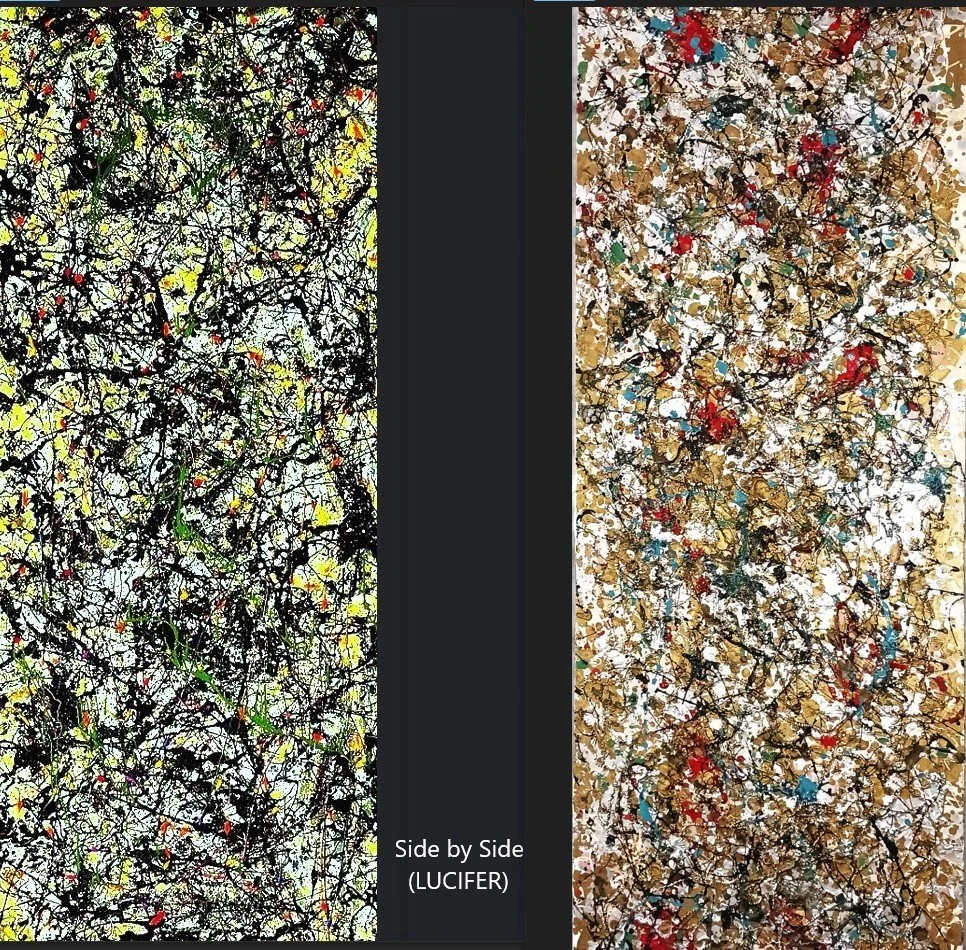
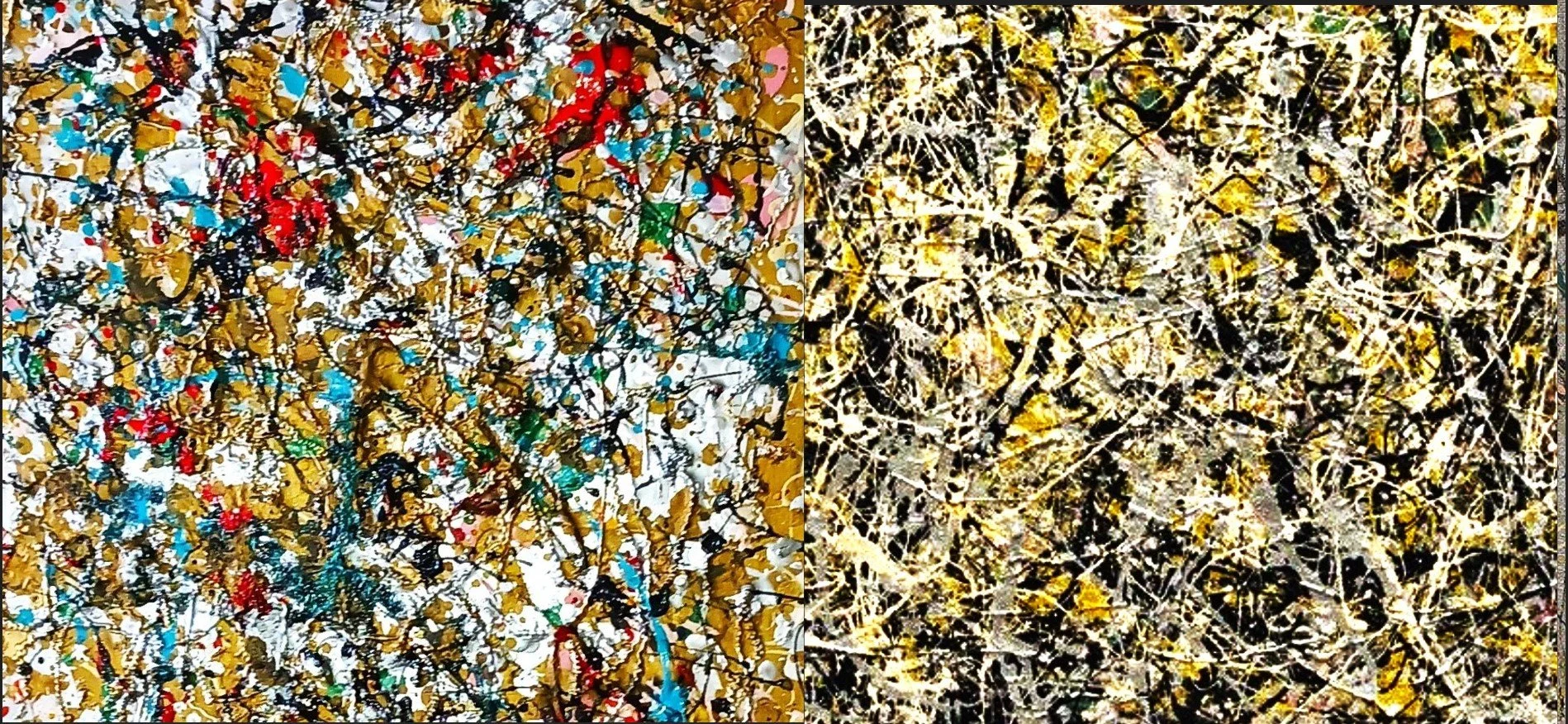
Side by side comparisons were actually the beginning of our visual analysis. They are what led us to seriously consider a Jackson Pollock attribution. The palette, techniques, idiocyncrasies, and structure all contribute to an artist’s artistic DNA.
STRUCTURE
[ LUCIFER 1947 ]
[ RECTo]
[ NUMBER 4 , 1951]
[ NUMBER 7 1950 ]
[ RECTO (monochrome) ]
[ NUMBER 31 , 1950 ]

Example of similar squiggling, coiling, and clustering
Example of similar squiggling and coiling
NUMBER 4 , 1949
Evidence of similar squiggling, coiling, and clustering
Progression of style and structure over three years
NUMBER 9A 1948
NUMBER 2 1949
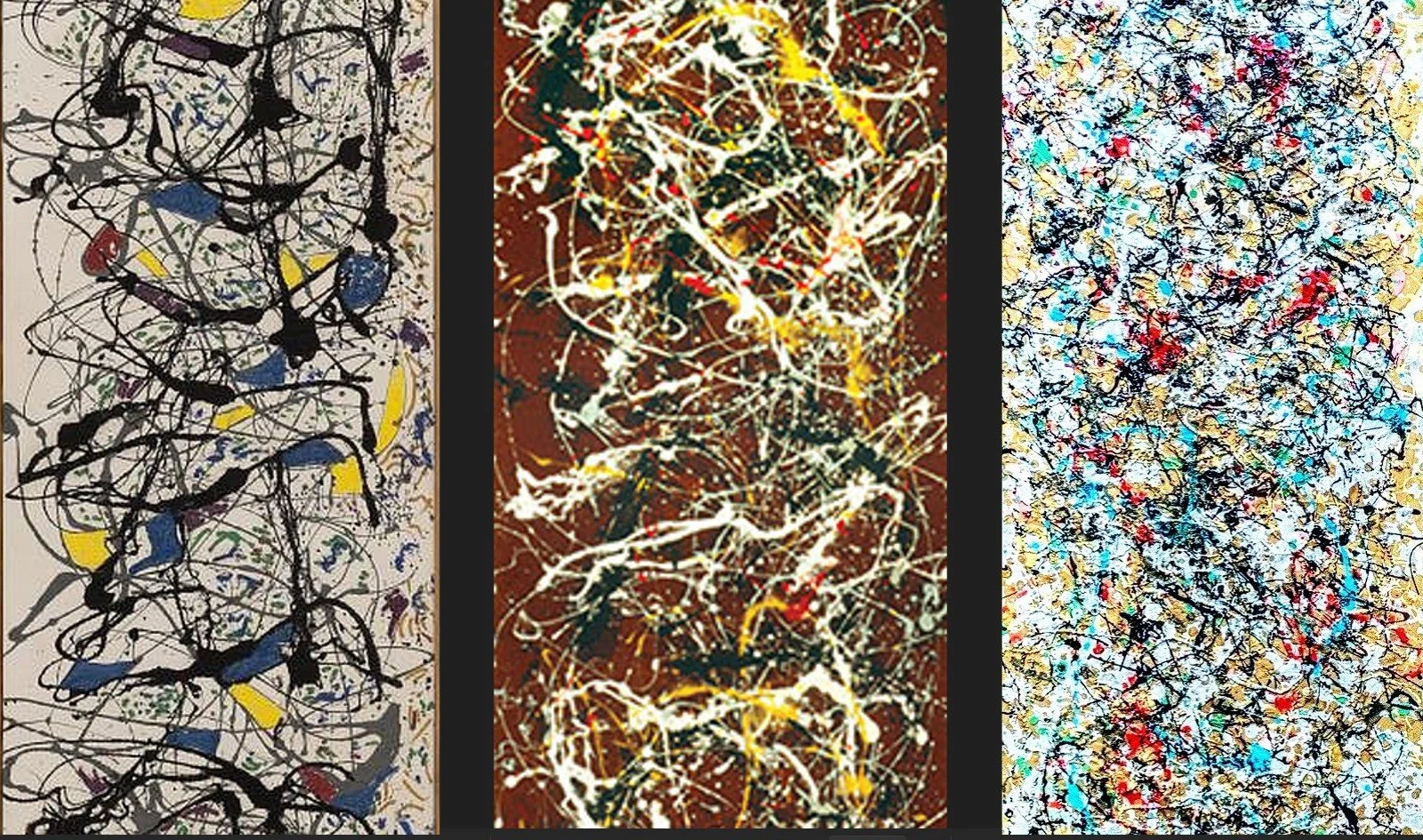
SIDE BY SIDE [ monochrome] RED PIGMENT ENHANCEMENT

BLUE POLES NUMBER 11 1952
[ NUMBER 21 , 1950 ]
Evidence of similar squiggling, coiling, and clustering
[ NUMBER 7A, 1948 ]
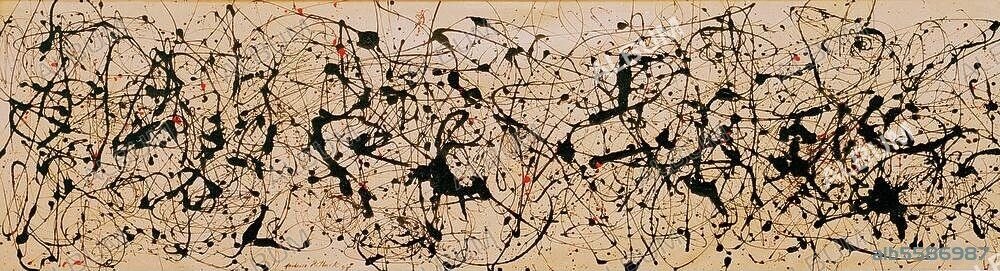
[ NUMBER 7A, 1948 ]
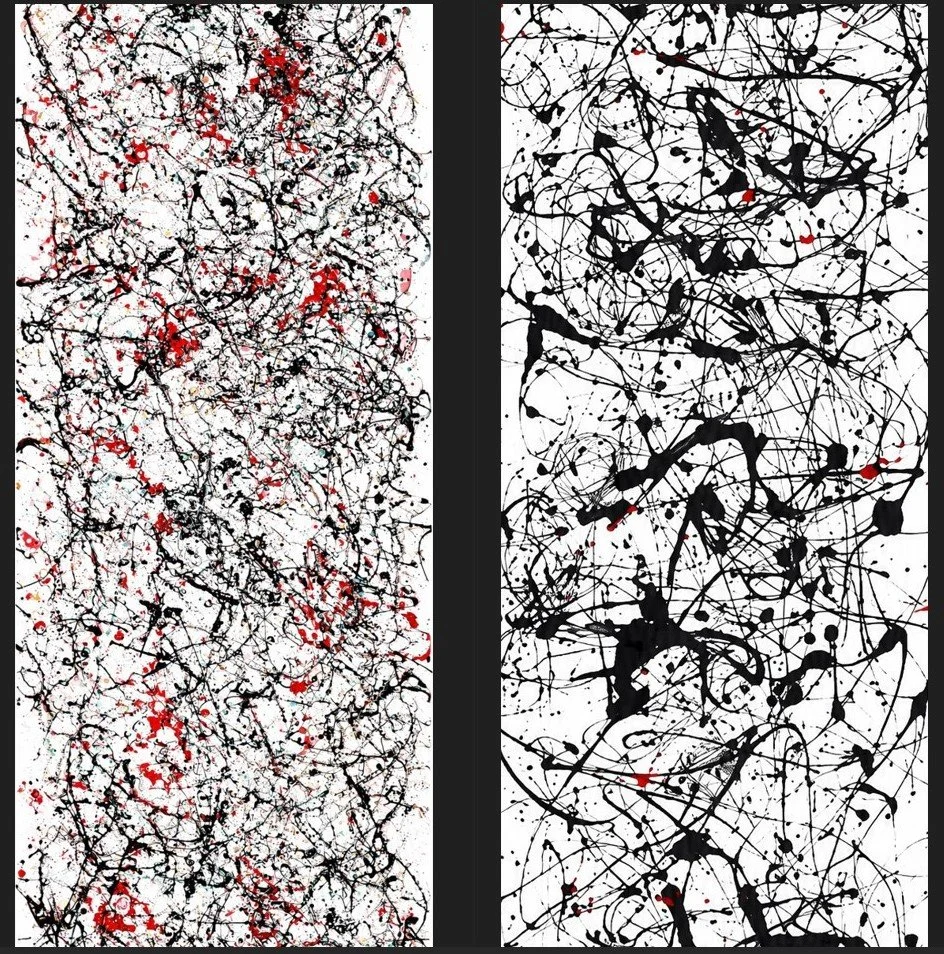
[ number 1, 1949 ]
Monochrome conversion
[ mural on indian red ground 1950 ]
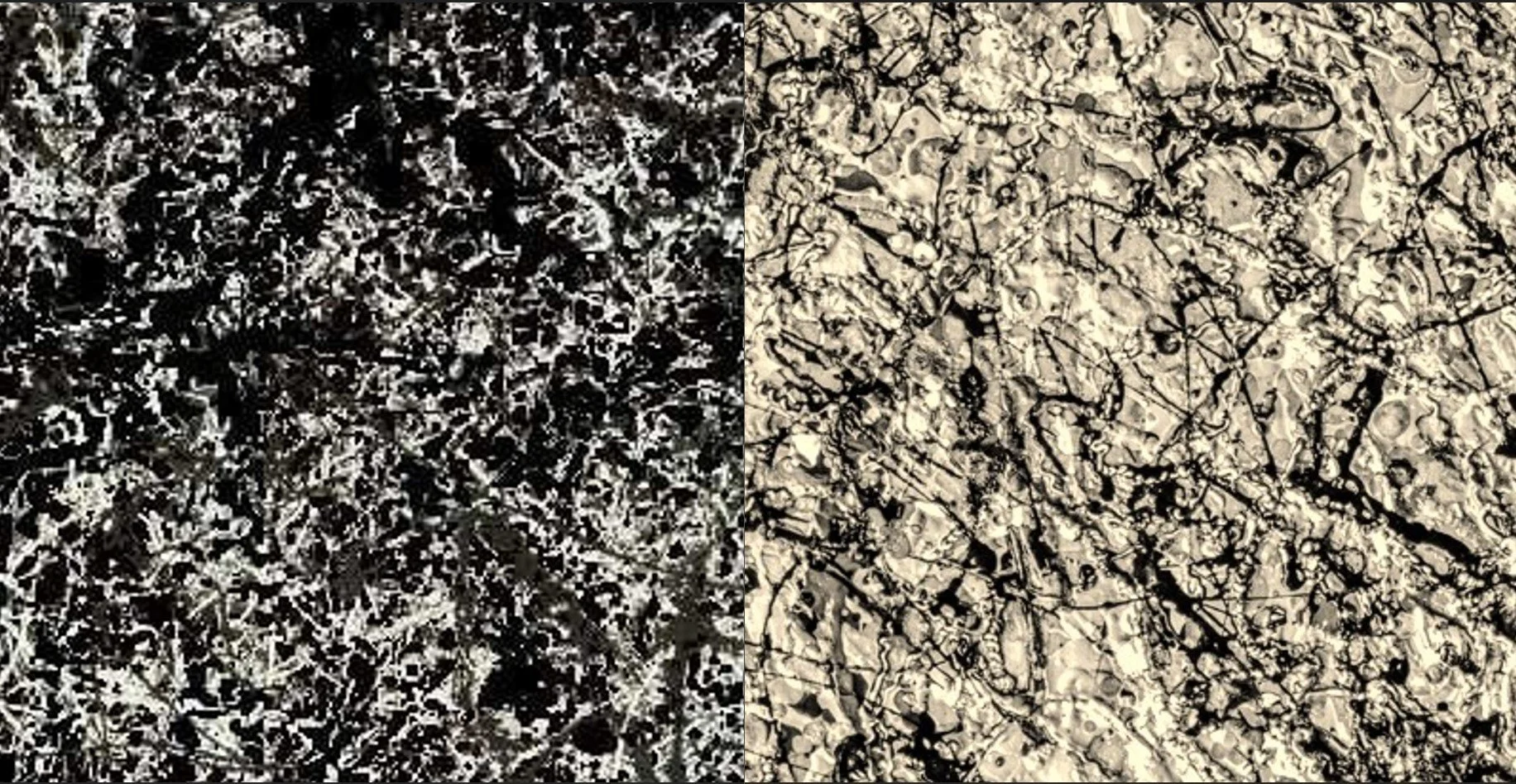
NUMBER 4 , 1949
Inclusions
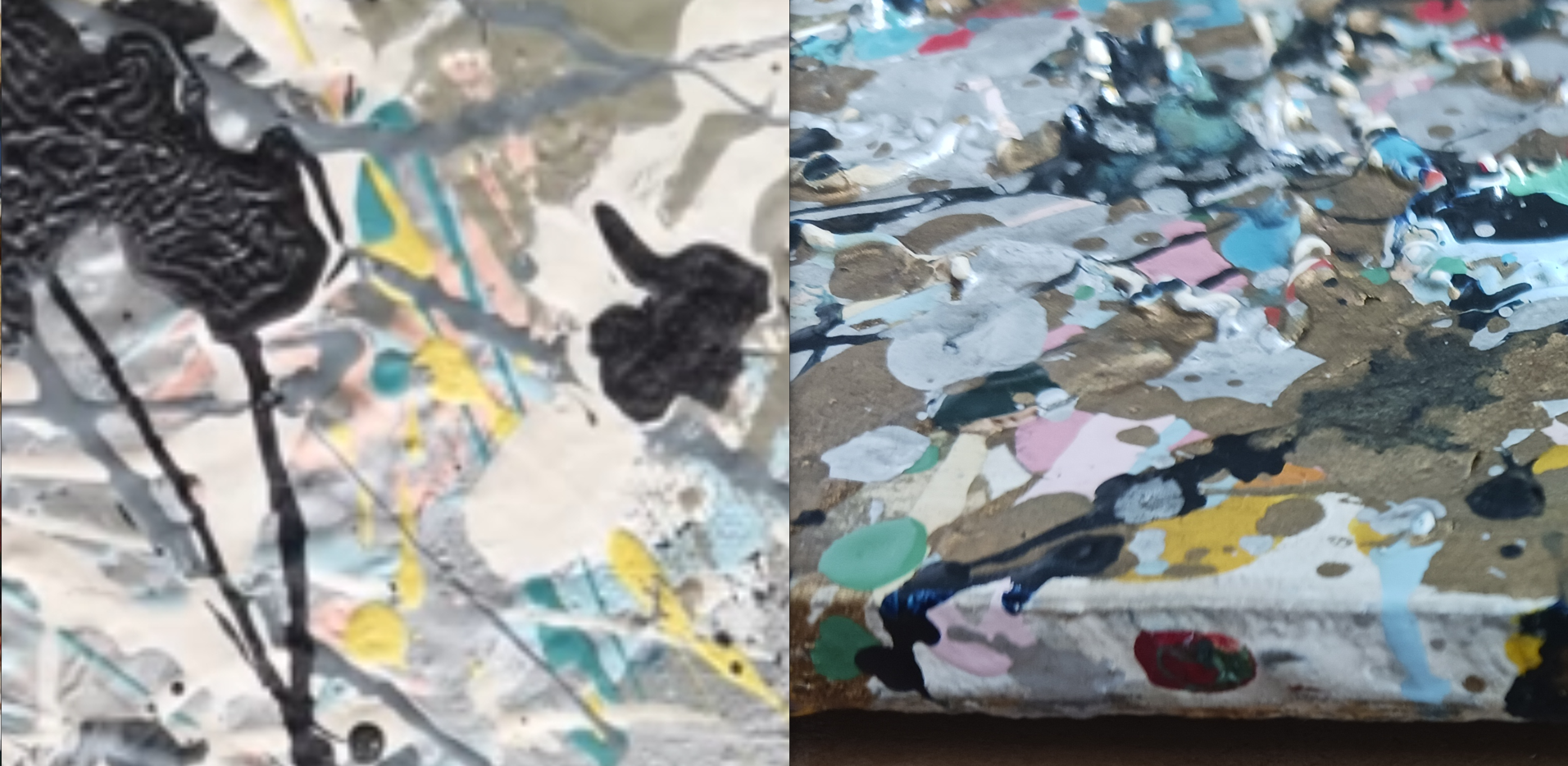
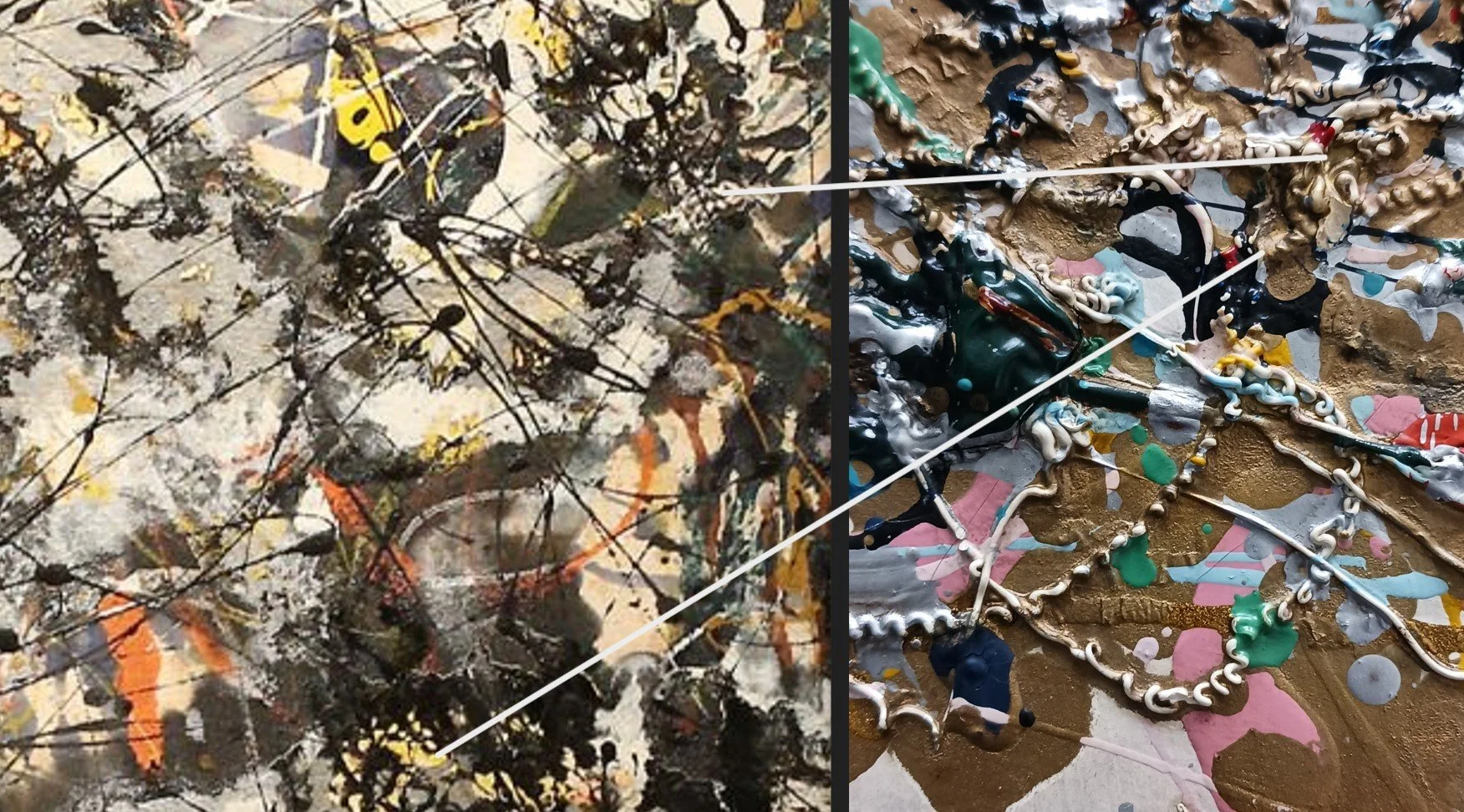
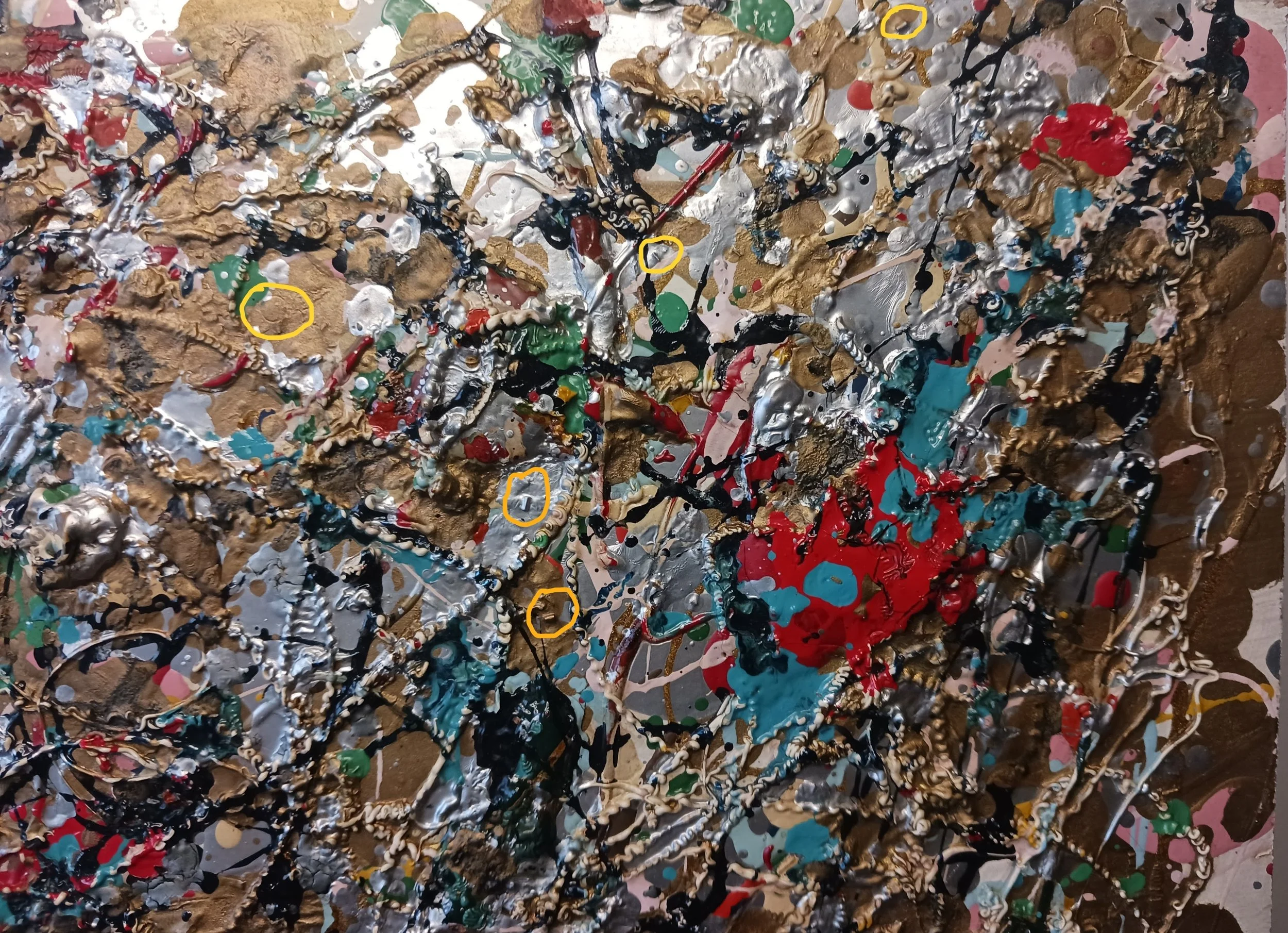
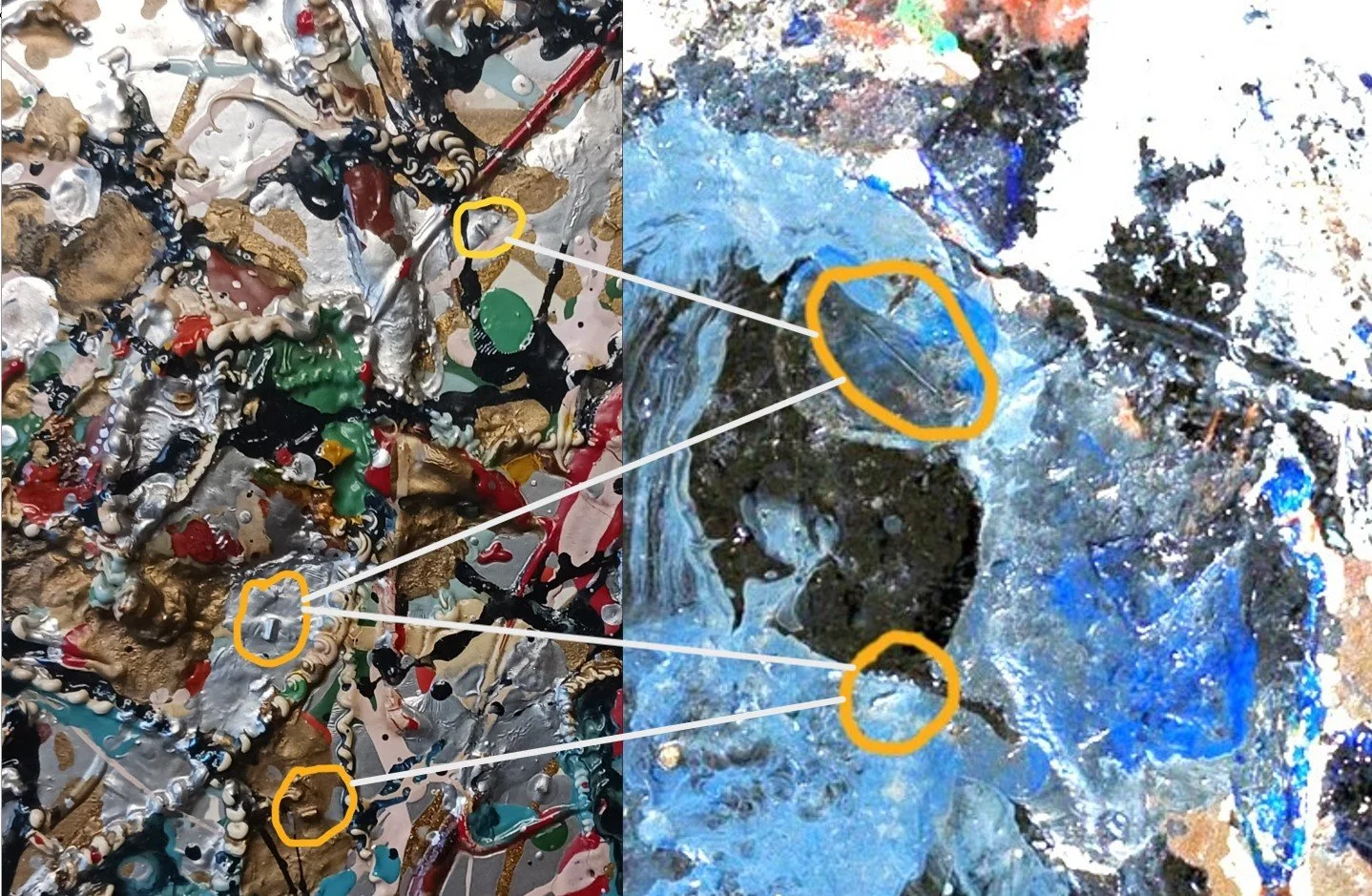
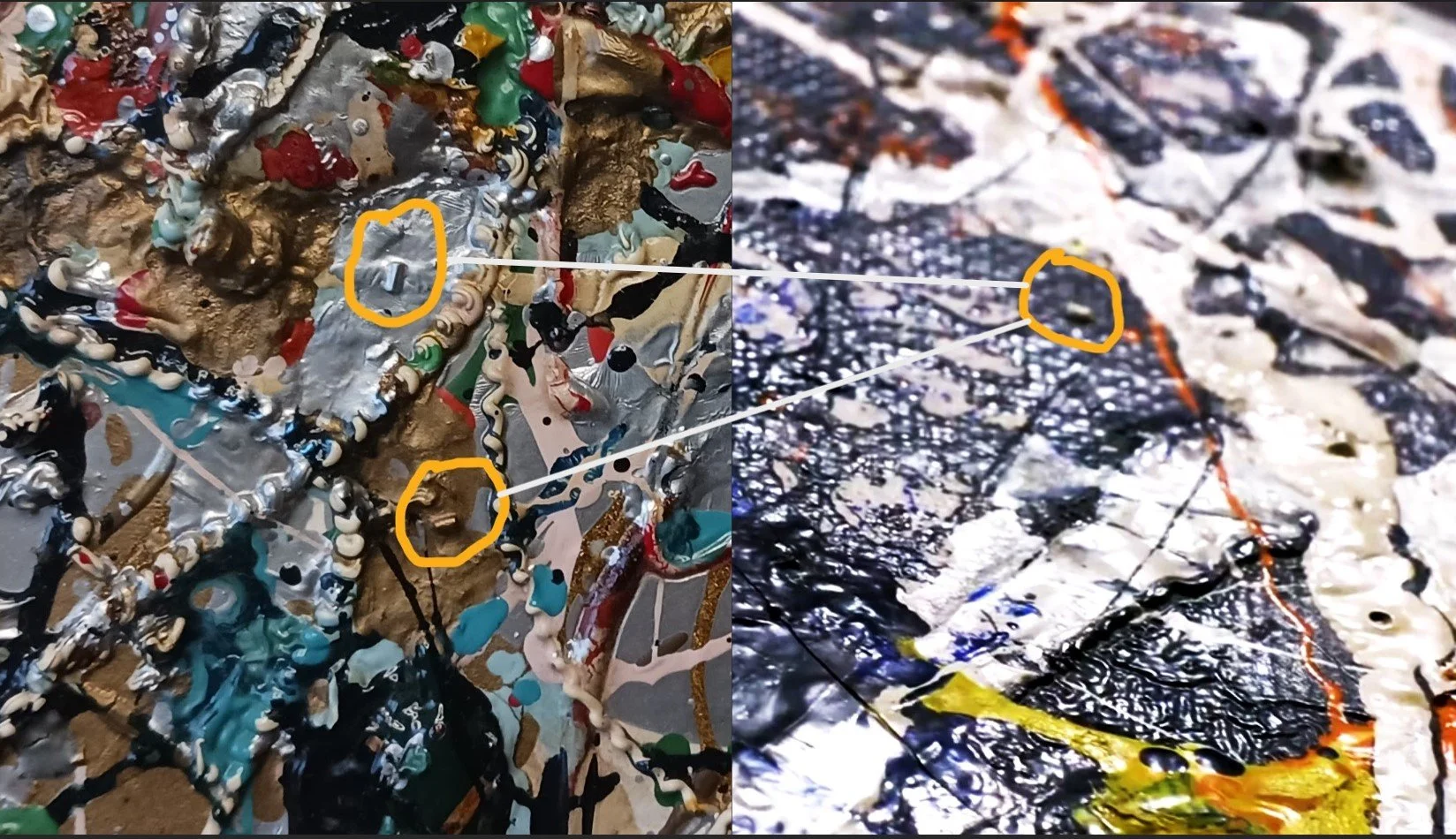
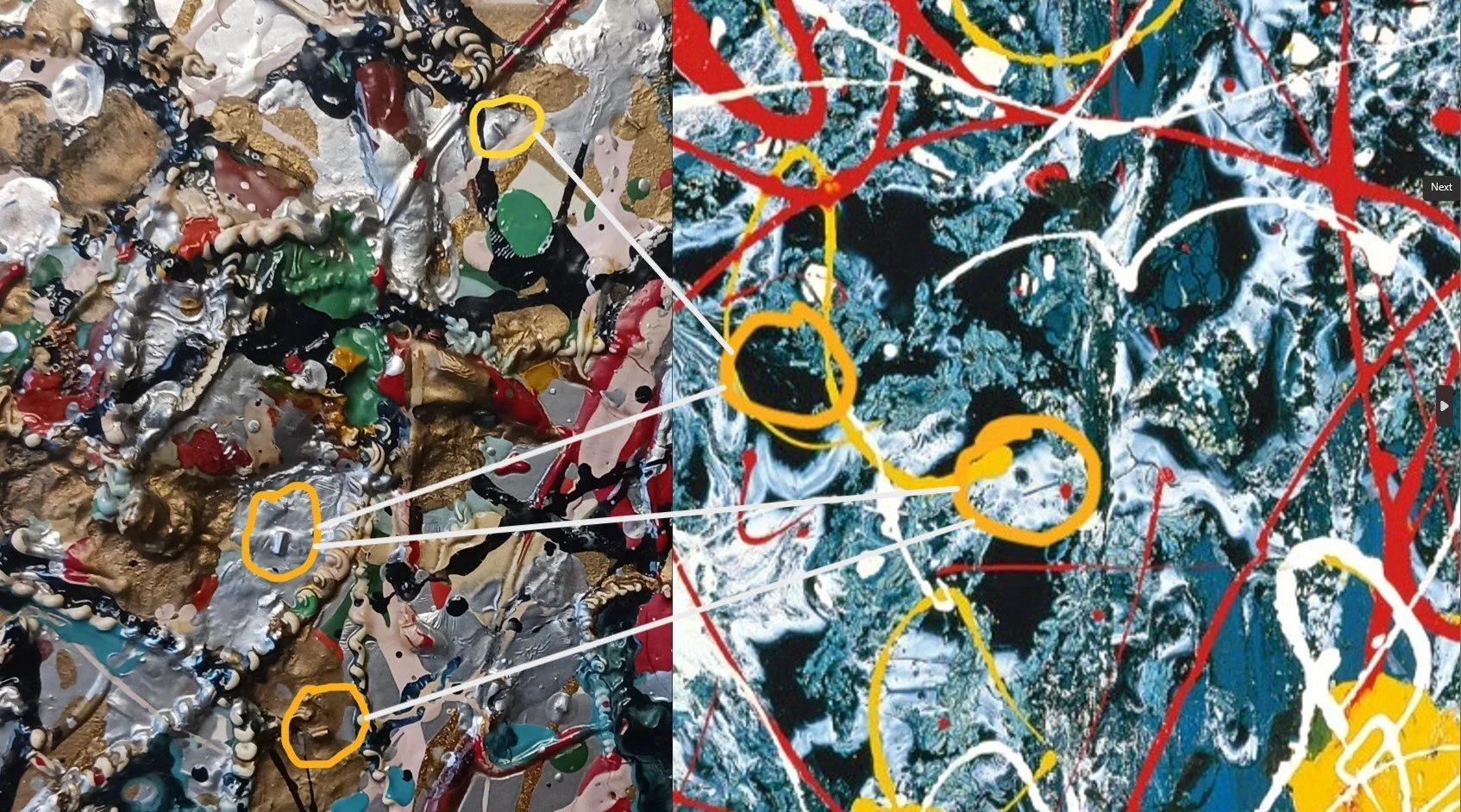
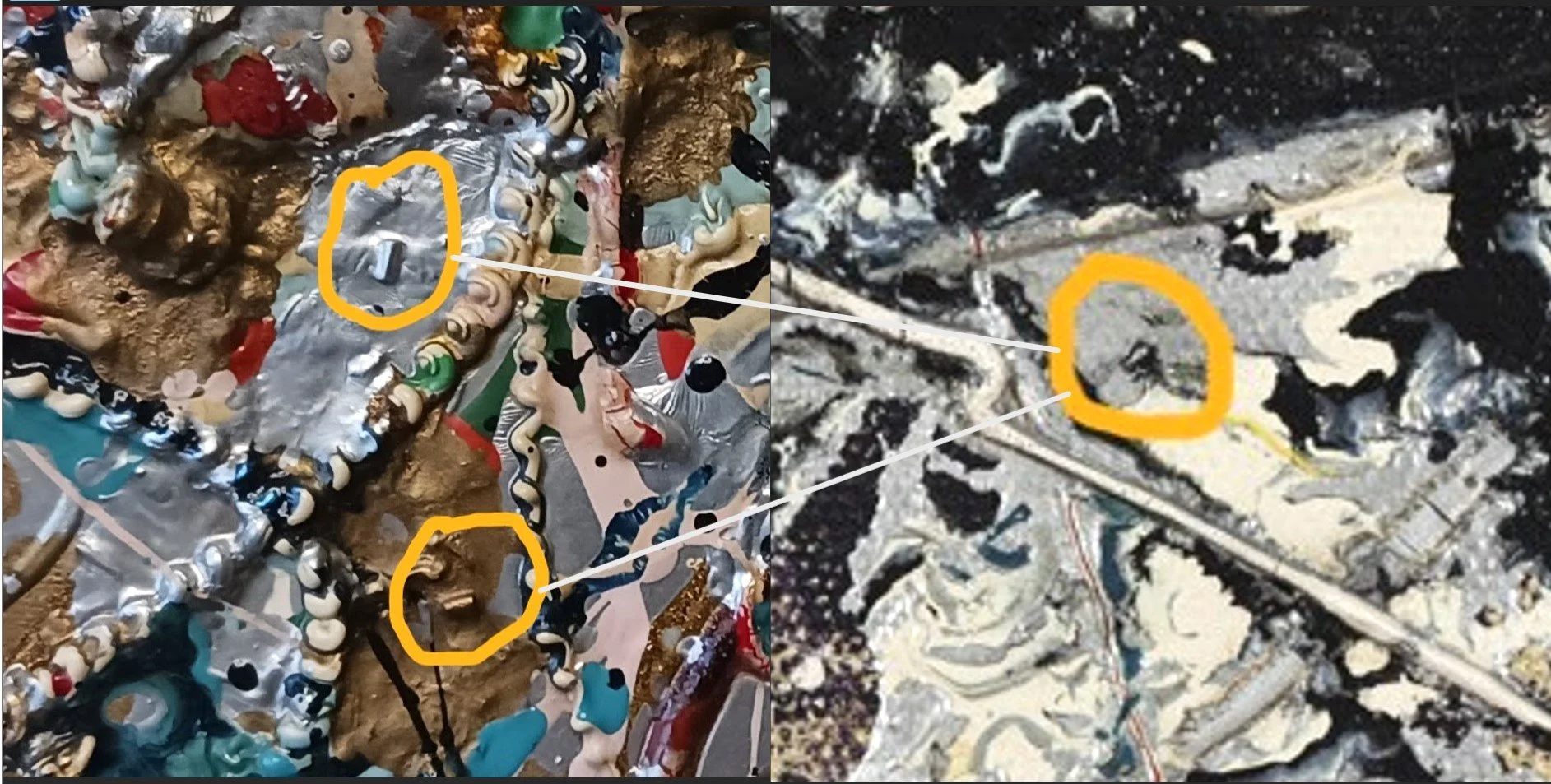
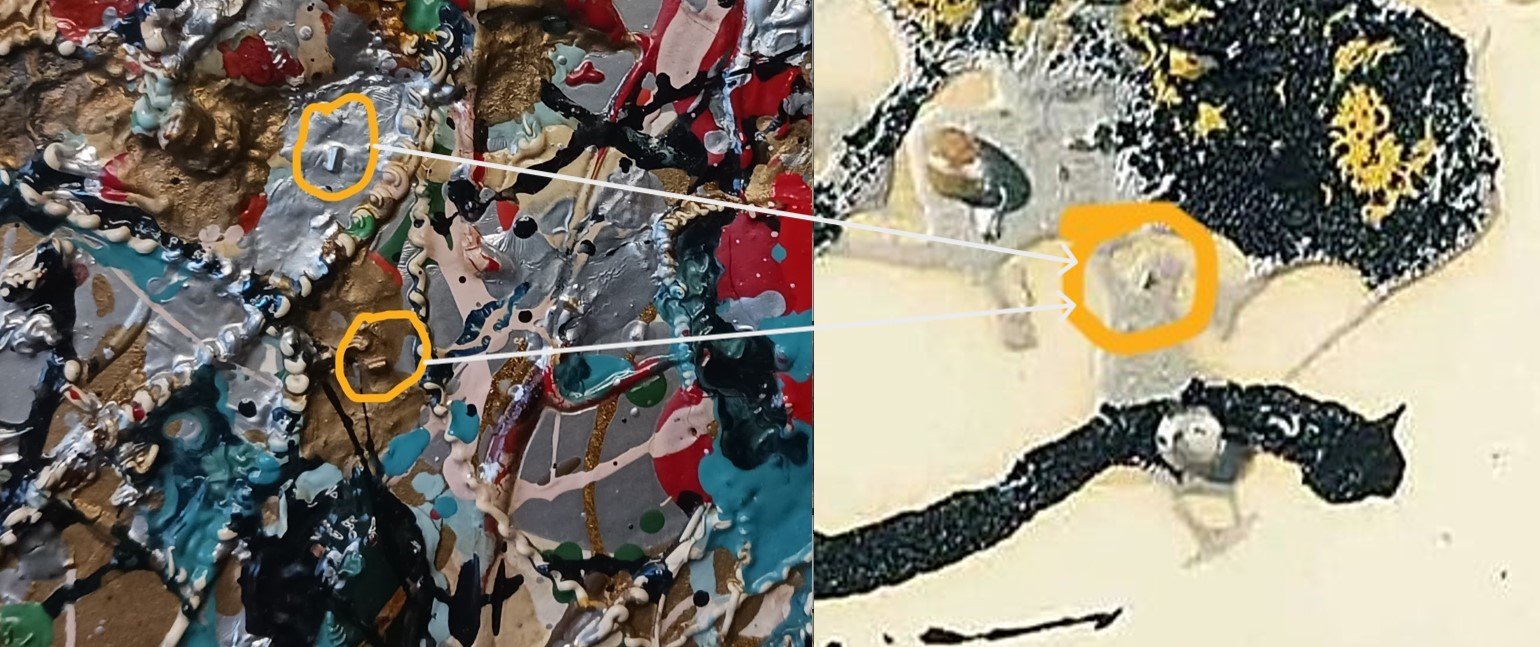
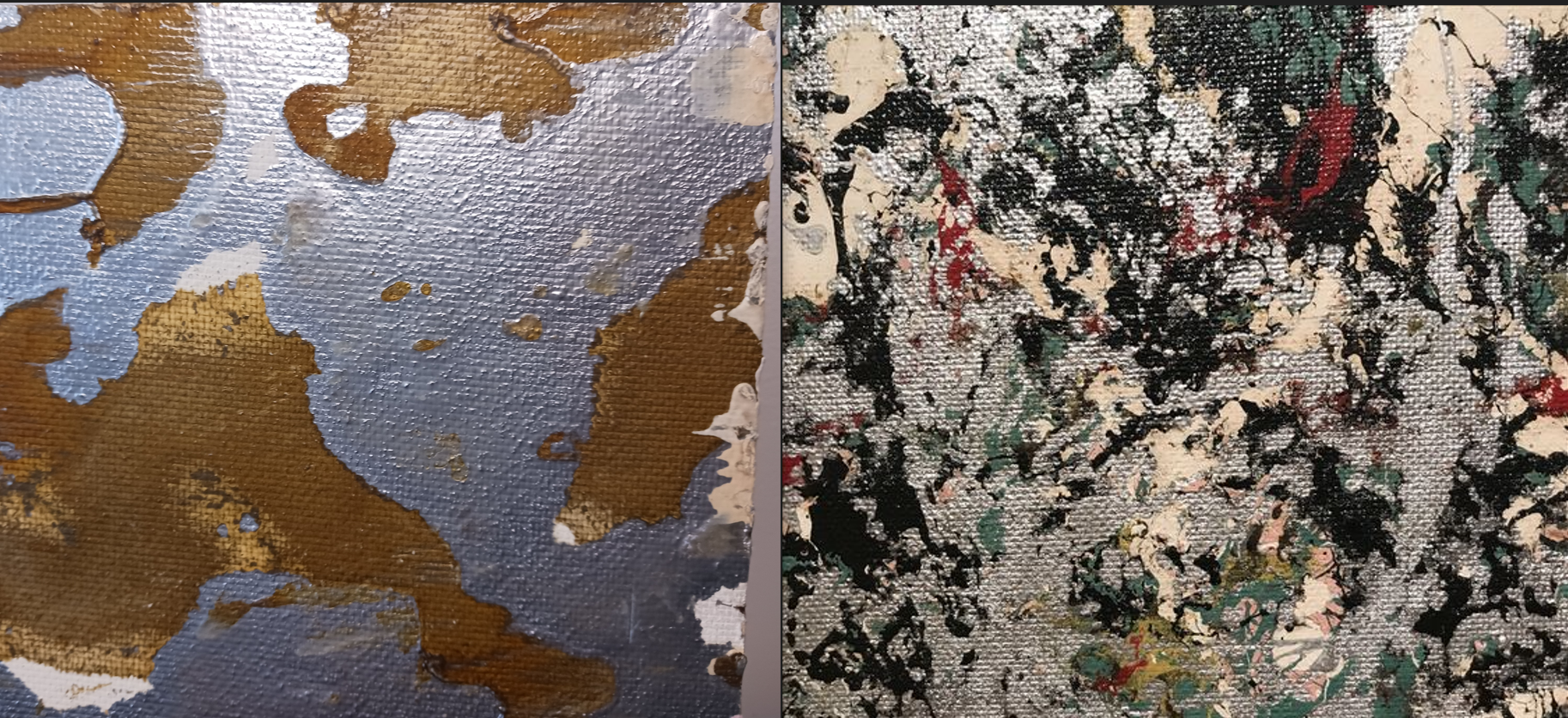
During our early examination of the painting, we discovered the presence of curious small cylindrical inclusions which appear incidental . In the months following, we examined high-resolution images of Jackson Pollock’s studio floor and known works and discovered the same small cylindrical inclusions! We believe these objects directly tie our painting to Jackson Pollock's studio.
Pollock’s studio floor
Example of similar squiggling and coiling
Pollock’s studio floor

Similar incidence of SCRAPING
BLUE POLES NUMBER 11 1952
[ Number 6 1948 ]
IDIOCYncrasies
[ Number 1A 1948 ]
[ BLUE POLES NUMBER 11 1952 ]
[ Untitled 1951]
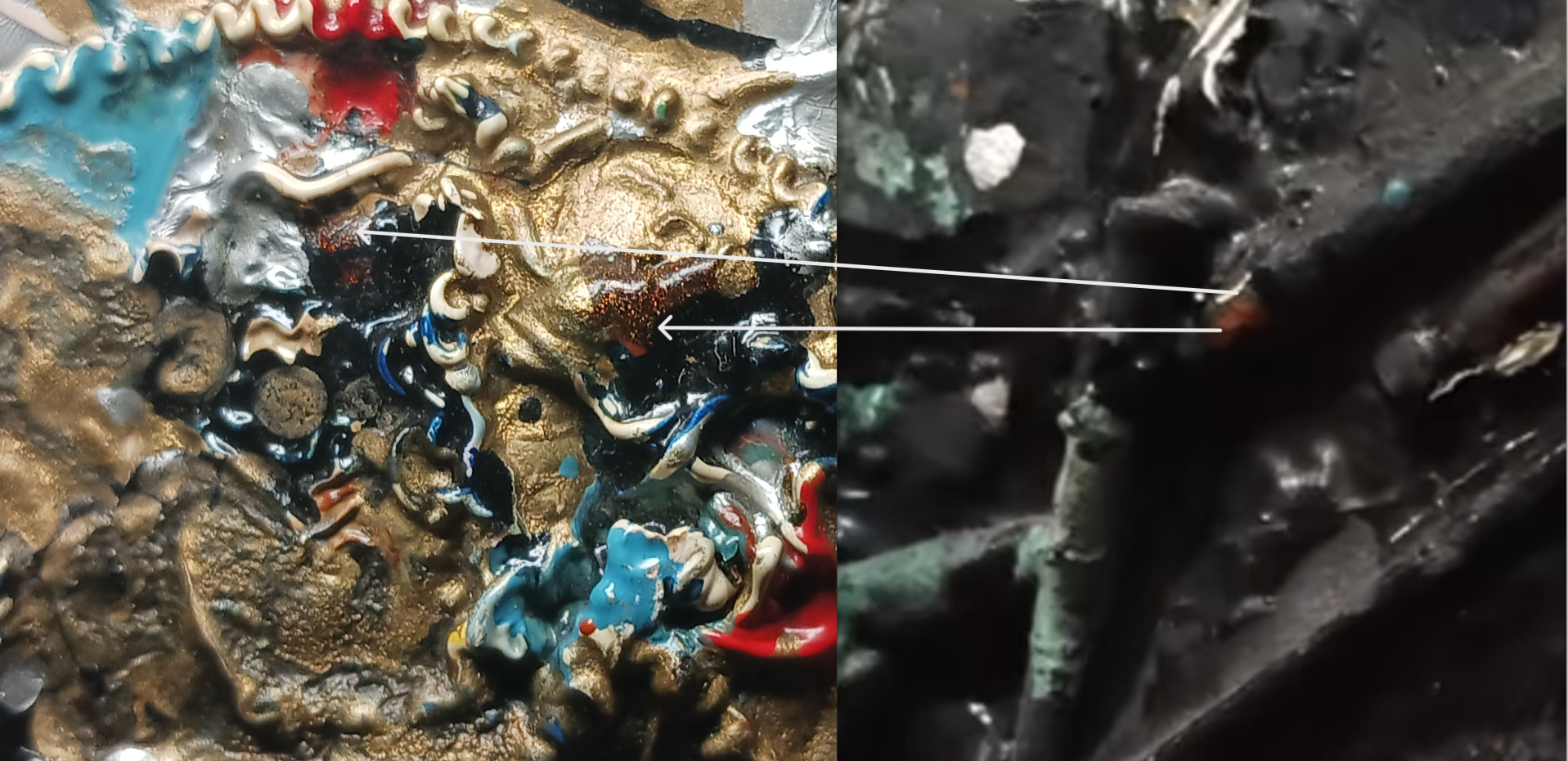
S i limar appearance of resin
[ NUMBER 4 , 1951 ]
Evidence of similar smearing of paint
[ NUMBER 21 , 1950 ]
[ NUMBER 211950 ]
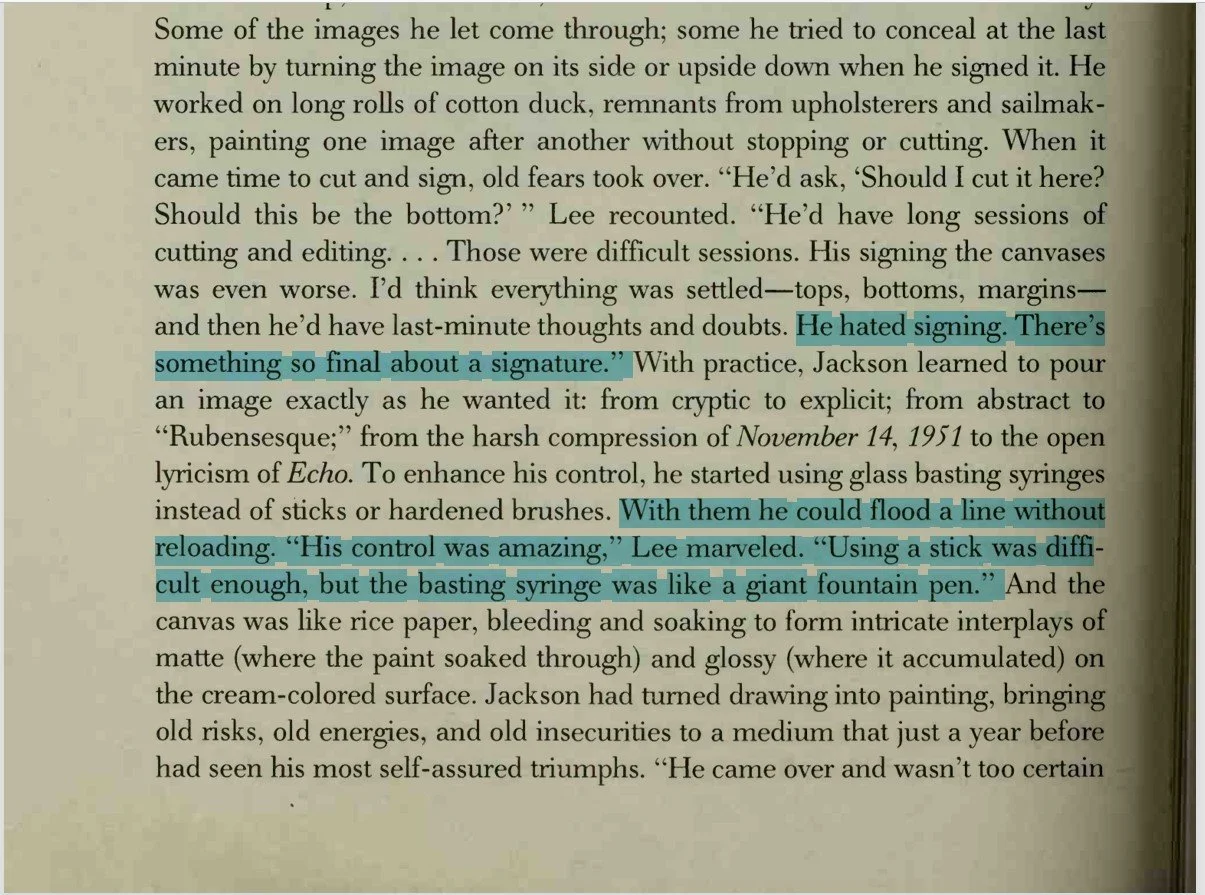
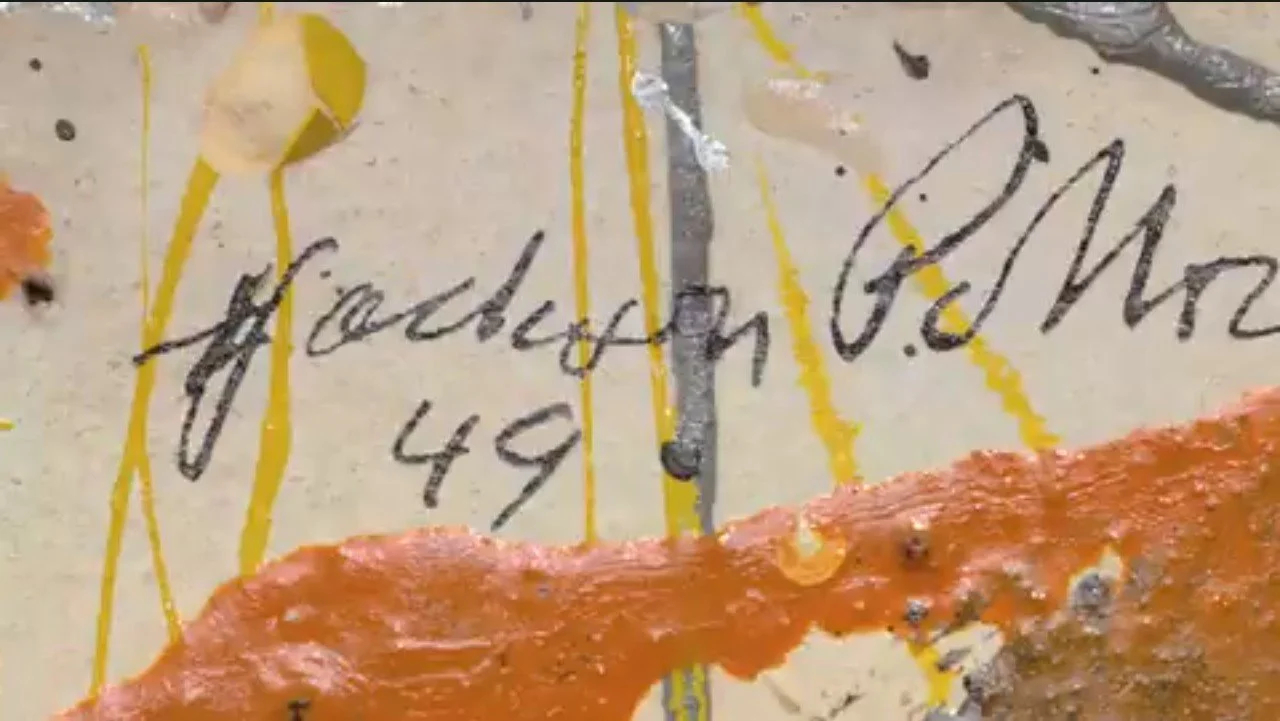
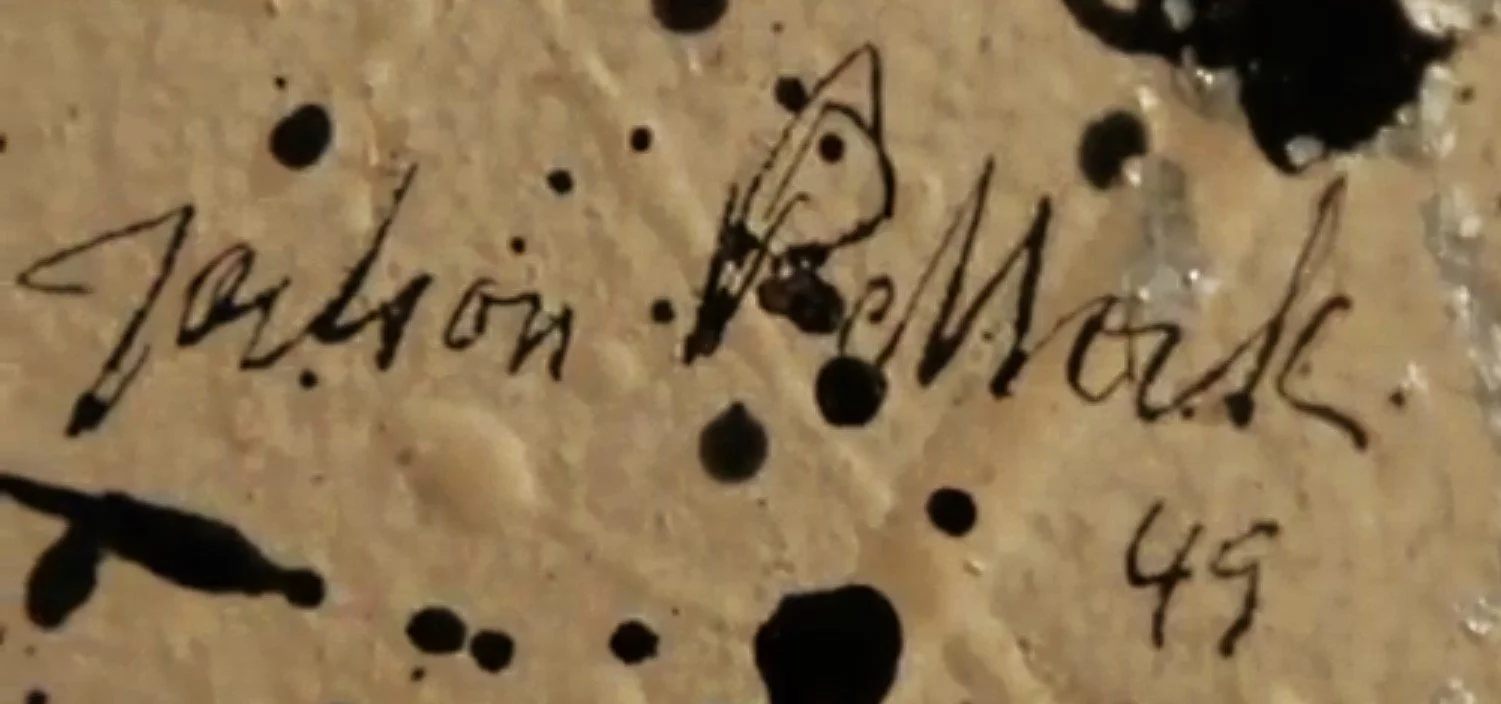
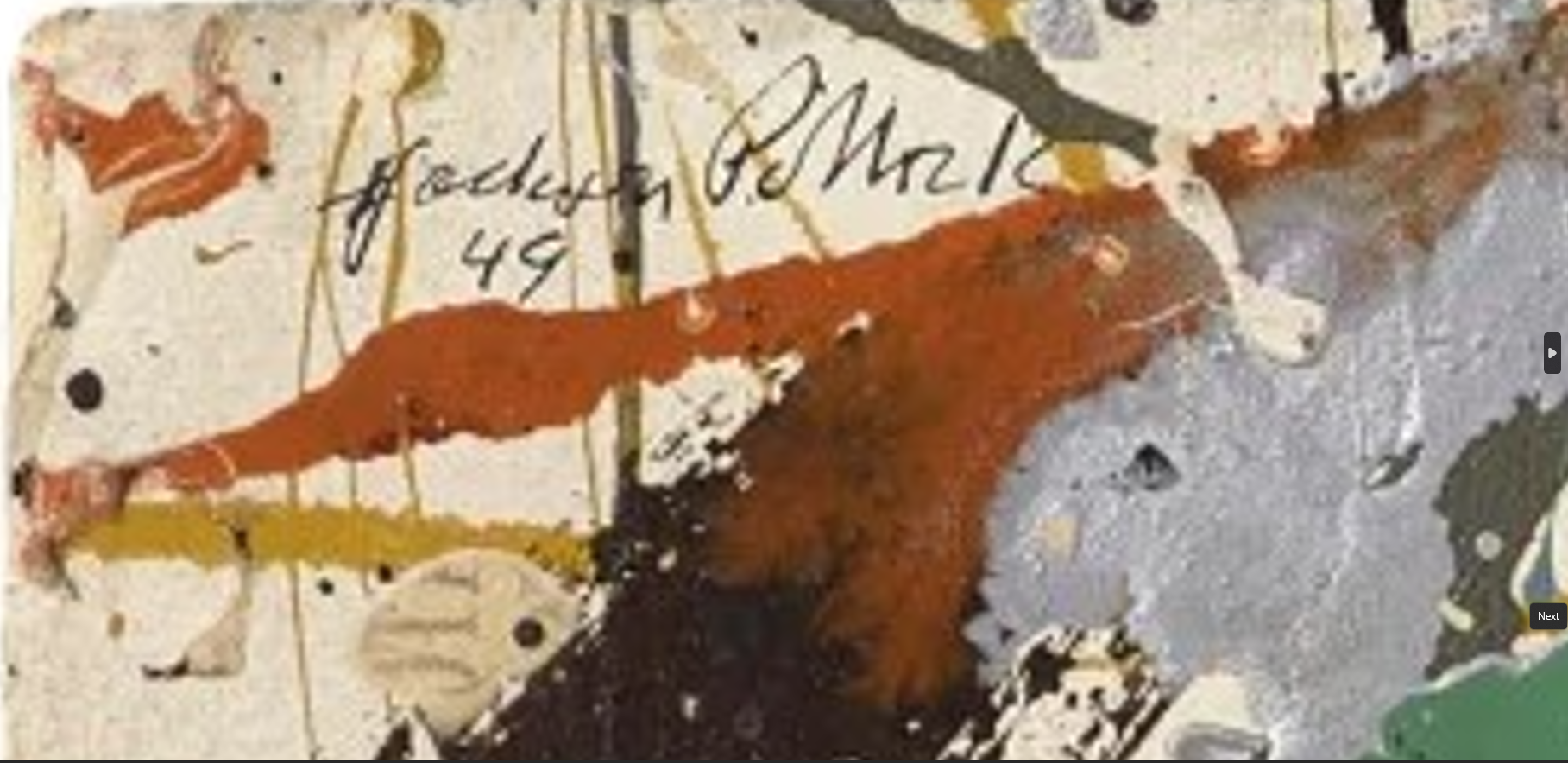
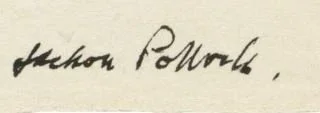
It was several months after attributing the painting to Jackson Pollock and actually seeing what it tells us about itself and its author, t hat we discovered the signature. That it was dripped though rare it is certainly not uncharacteristic. It is our theory that Pollock signed this painting using the same technique with which he painted it represents his heightened state of being and connection with his art. Why wouldn’t the artist once deemed “Jack the Dripper” drip/pour his signature. In the biography, JACKSON POLLOCK: An American Saga (p. 668), Lee Krasner directly references his use of a glass basting syringe “…like a giant fountain pen.”
SIGNATURE AND finderprint
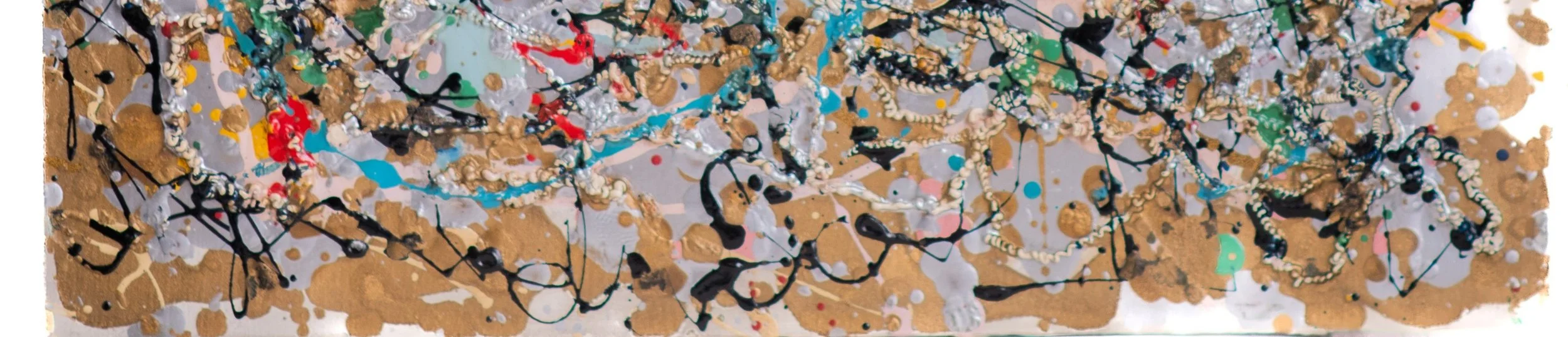
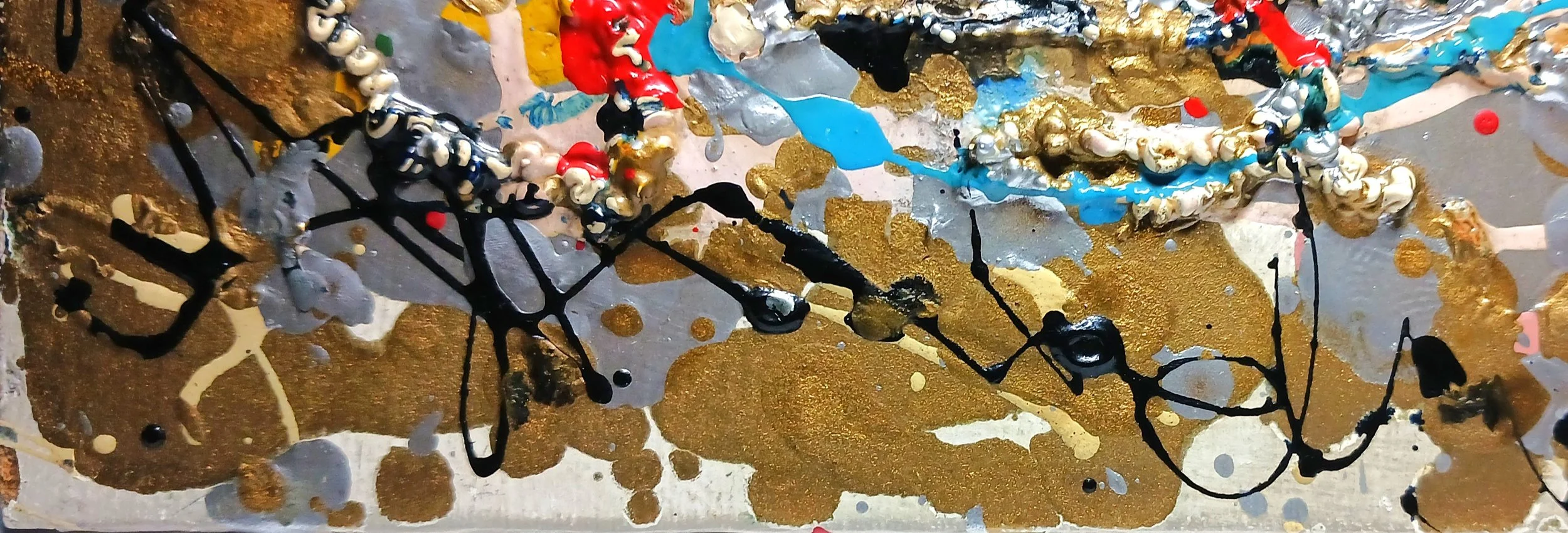

SIGNATURE EXAMPLES ON KNOWN WORKS
[ NUMBER 31, 1949 ]
[ NUMBER 17, 1949 ]
[ NUMBER 25, 1951 ]

FINGERPRINT
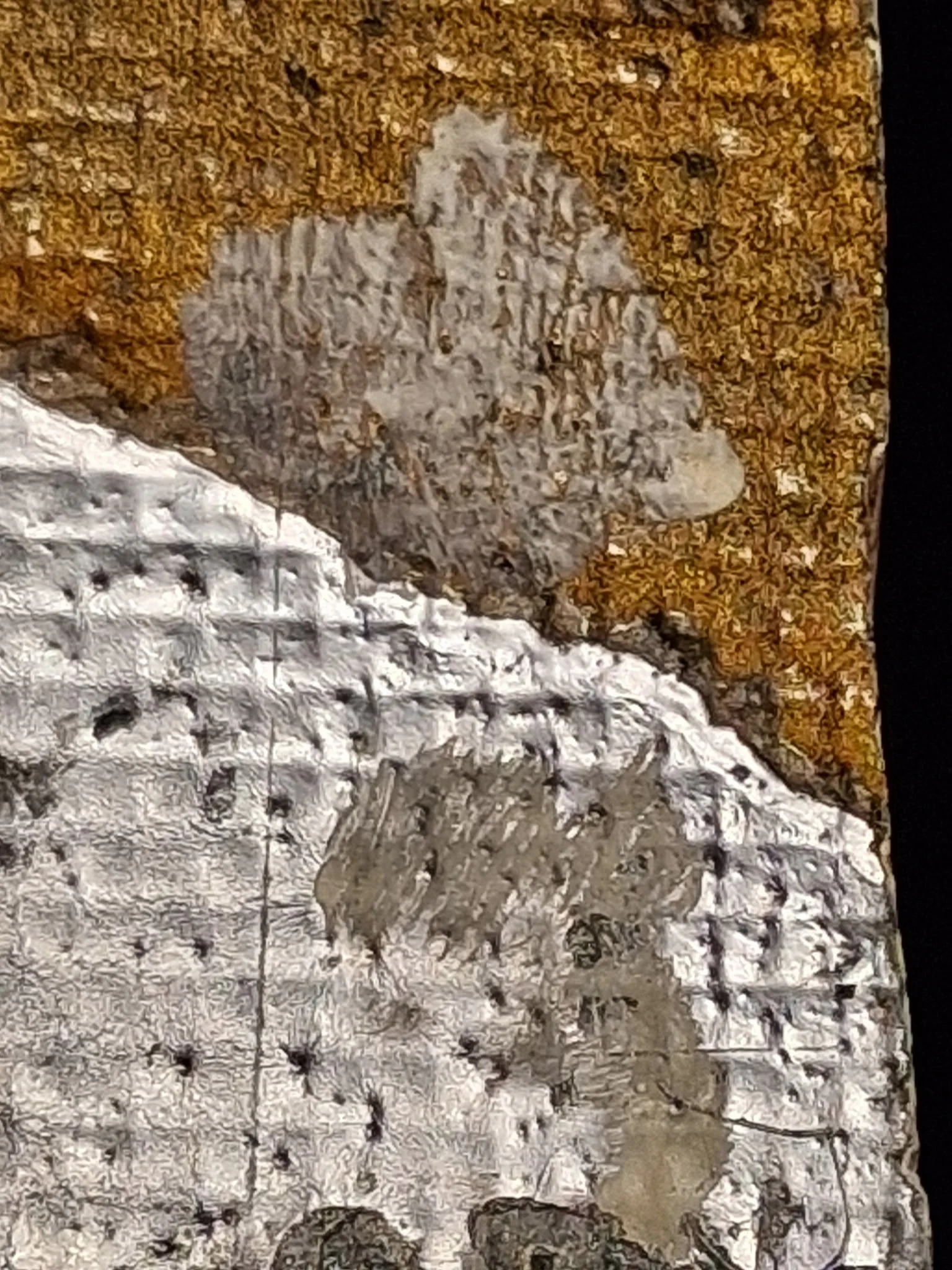
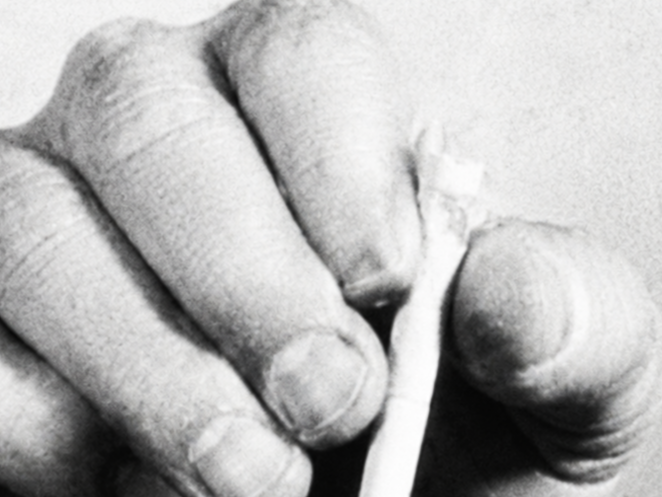
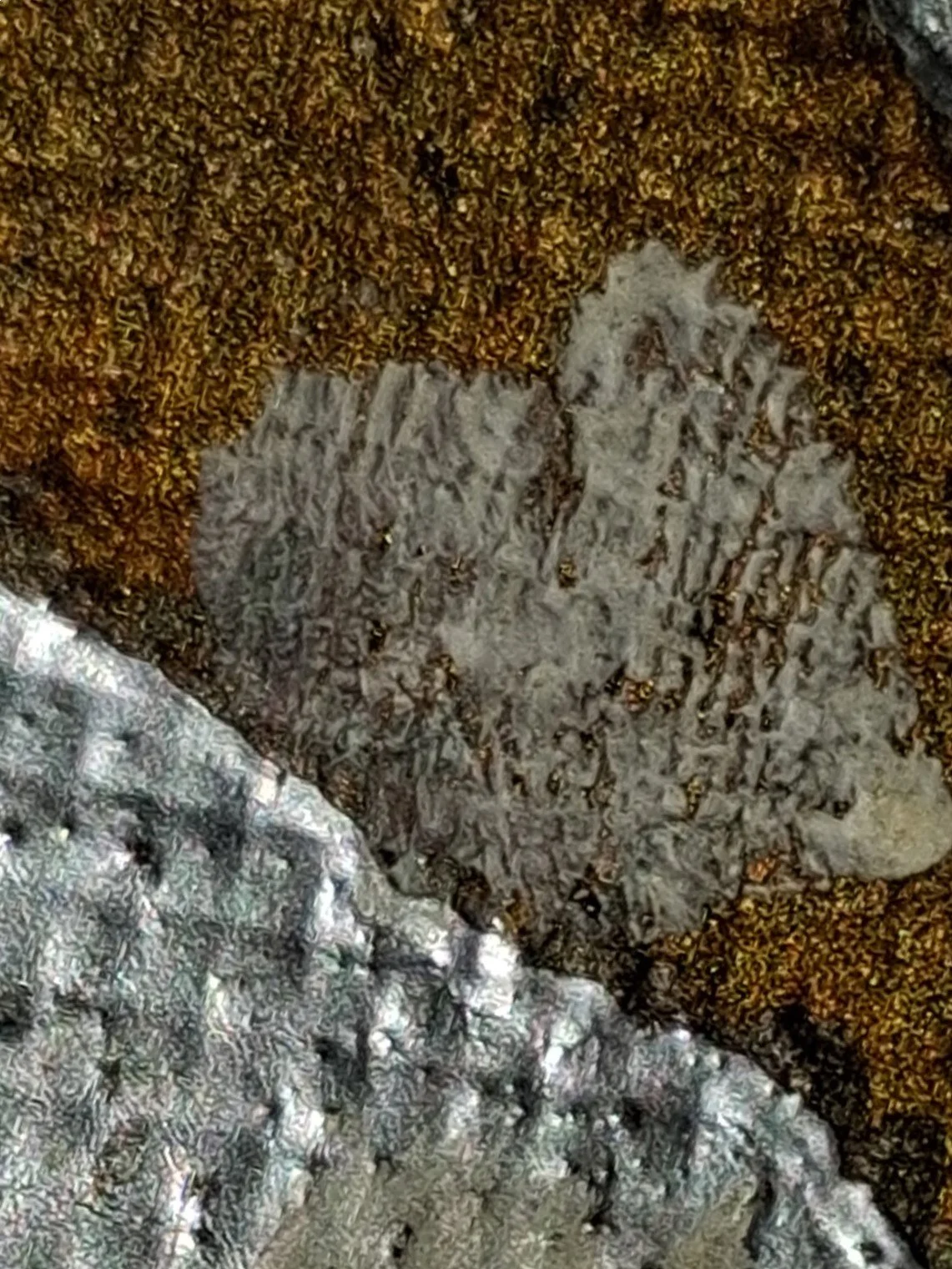
The curious shape of the print present on the edge of the back of the fiberboard baffled us for quite some time. It certainly appeared to be the print of some part of a hand yet what distinct part? It was only during our reading of jackson pollock: An American Saga (p.66) did we learn that when Jackson Pollock was three years old the tip of his right index finger was chopped off with an axe.
*Analysis PENDING.