THE Plausibility OF a Lost
Jackson Pollock Painting
We acquired the painting from a charity auction based in Chicago Illinois. It was listed as an unattributed splatter painting from the 1960s or 70s. Upon inquiry the seller stated the painting came from the estate of a Wisconsin art collector who had passed away a few years prior.
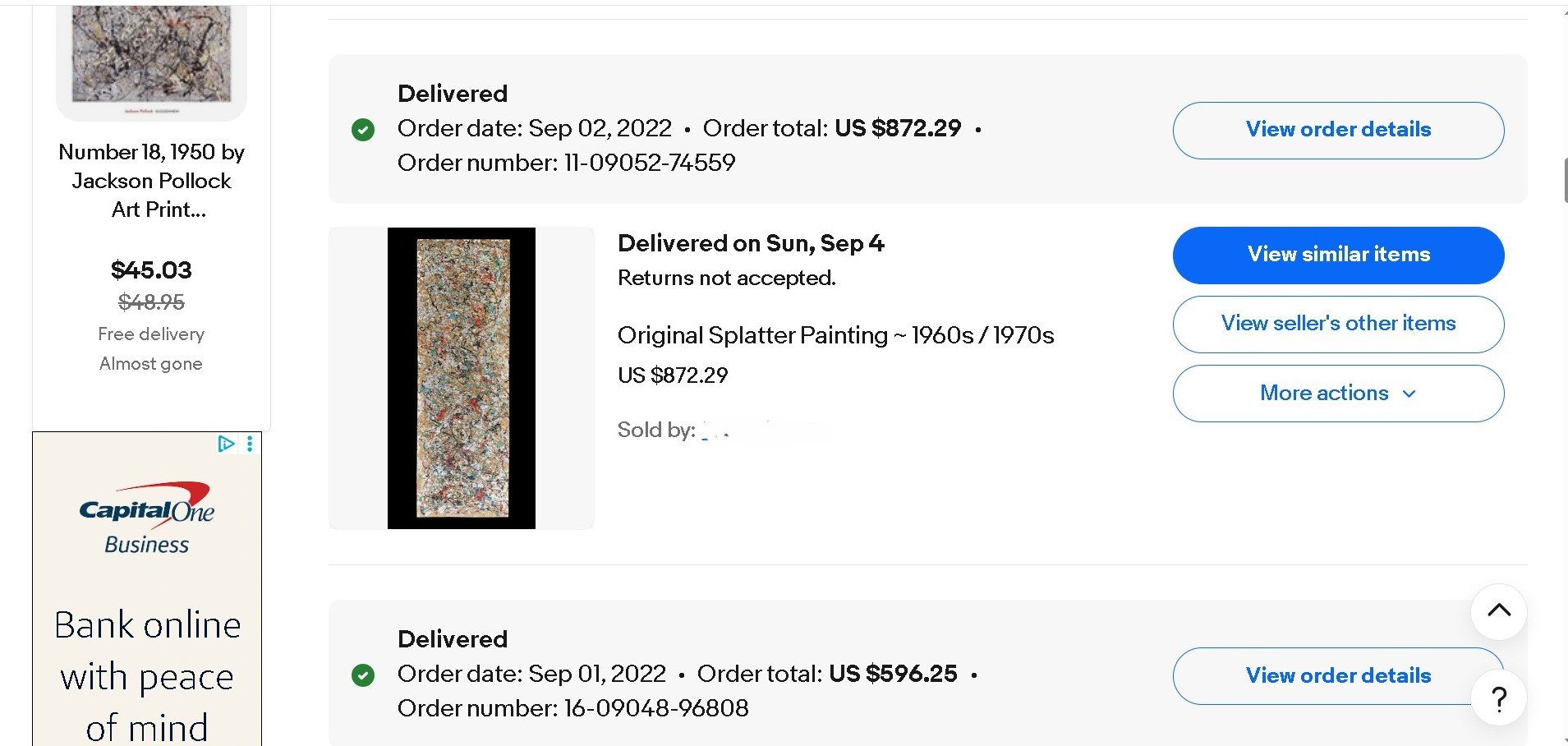
The possibility that a lost or previously undocumented Jackson Pollock painting could surface today is far more than a romantic notion — it is a conclusion supported by Pollock’s working methods, the historical gaps in his documented output, and the material realities of mid‑century American art practice. When these factors are considered together, the emergence of an unknow N Pollock becomes not only plausible but consistent with what we know about his studio life and the evolution of his artistic process.
Pollock’s early collectors were not archivists. Works were traded, gifted, stored, misplaced, and Sometimes forgotten. The art market of the 1940s and early 1950s lacked the rigorous documentation standards That later became the norm. Many artists of the era — including Pollock — did not maintain meticulous studio records, and galleries did not always track informal sales or exchanges.
Pollock’s most productive years, particularly from 1947 to 1951, were marked by extraordinary intensity. He worked on the floor of his Springs, Long Island studio, often moving between multiple unstretched canvases in rapid succession. Eyewitnesses describe a studio filled with works in various states of completion — some finished, some abandoned, some rolled up, and others given away informally. This environment naturally produced far more material than was ever formally catalogued.
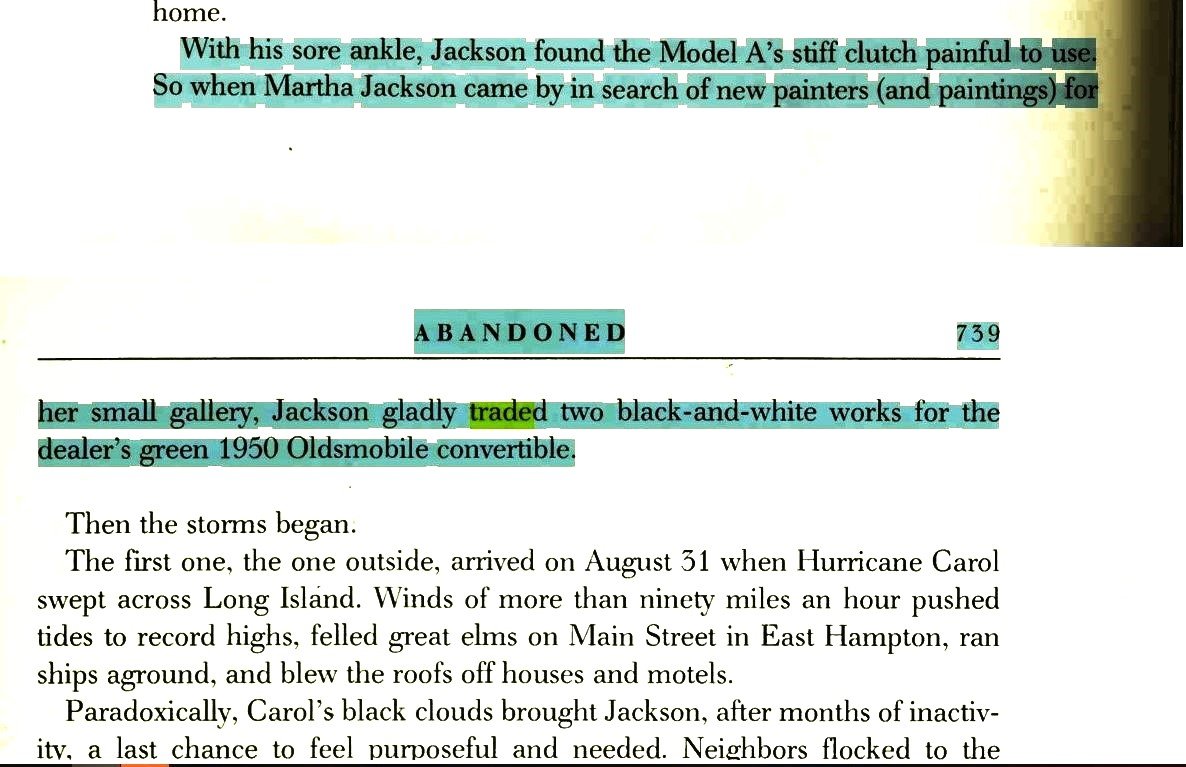
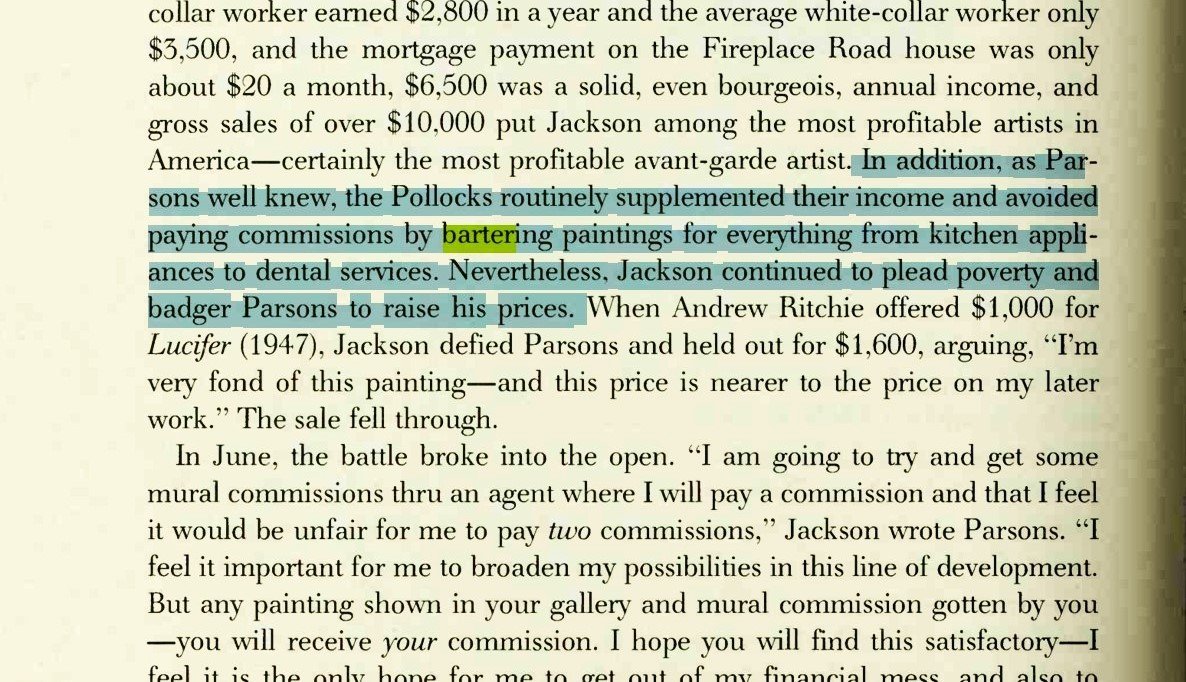
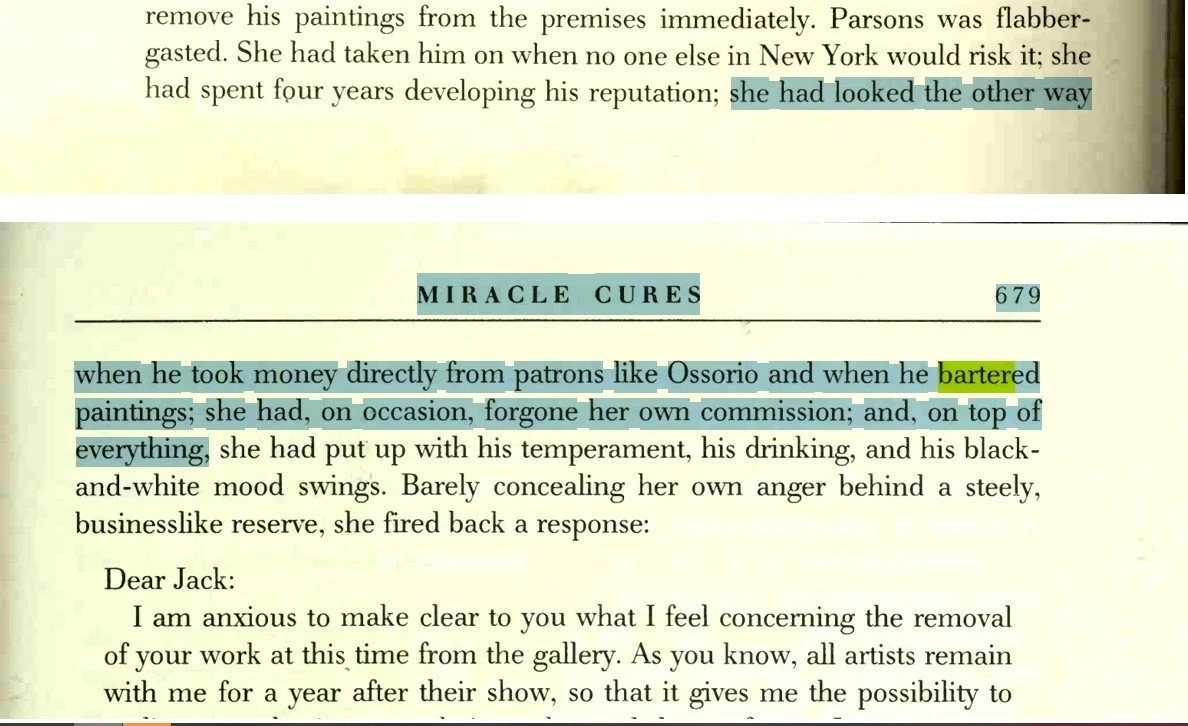
JACKSON Pollock BARTERED HIS PAINTINGS
As documented in his biography Jackson Pollock: An American Saga by Gregory White Smith and Steven Naifeh Clarkson N. Potter, Inc. 1989
Excerpt from: Page 624
Excerpt from: Page 679
Excerpt from: Page 739